THE ADVENTURE COLLECTIVE® · Independent discovery and booking for outdoor travel

Cross the Middle Atlas from Fez to the sweeping Erg Chebbi dunes on a three-day circuit that mixes cedar forests, Todra Gorge walks, camel rides and an overnight in a Berber tent. Practical routing and nightly stays make this a compact, immersive Sahara experience.
Cross the Middle Atlas from Fez to the sweeping Erg Chebbi dunes on a three-day circuit that mixes cedar forests, Todra Gorge walks, camel rides and an overnight in a Berber tent. Practical routing and nightly stays make this a compact, immersive Sahara experience.
The van hums away from Fez before dawn and the Atlas foothills unfurl like a weathered map. By midafternoon the dunes of Erg Chebbi loom: a raw sweep of wind-carved ridges that dare you to climb them. Camels rock forward at sunset, and the desert pulls the sky low and close, stars sharpening as the campfire dies.
Verified experiences and guided adventures in the surrounding area.
Operated by 3t Travel · Merzouga, Drâa-Tafilalet
The van hums away from Fez before dawn and the Atlas foothills unfurl like a weathered map. By midafternoon the dunes of Erg Chebbi loom: a raw sweep of wind-carved ridges that dare you to climb them. Camels rock forward at sunset, and the desert pulls the sky low and close, stars sharpening as the campfire dies.
This route threads Ifrane’s Euro-style streets, cedar forests where Barbary macaques call, and the sculpted red canyons of Todra Gorge. Geologically, the High Atlas is folded and faulted limestone and volcanic plateau; the Sahara here is a corridor of windblown quartz and gypsum sand accumulated around ancient riverbeds. Culturally the trip moves through Amazigh (Berber) communities, living kasbahs of mud-brick and palm-lined oases that remember caravan trade routes to Timbuktu.
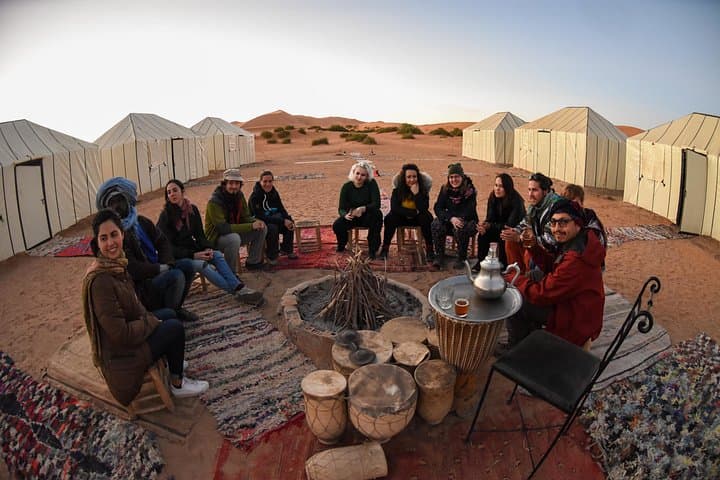
Expect two nights: one in a standard desert camp under a traditional tent and one in a simple hotel near Todra or Ouarzazate. Activities include a one-hour camel trek at sunset, sunrise viewing on the dunes, short gorge walks, and visits to Ait Ben Haddou’s ksar.
Practical notes: bring layered clothing for hot days and cold desert nights, at least 2–3 liters of water per day, sun protection, and sturdy closed shoes for walking on sand and in rocky gorges. Physical demands are moderate—camel riding is low-impact but some dune walking is involved. Pack a headlamp for camp and photocopies of travel documents; mobile signal is intermittent in remote stretches. Timing your arrival in Fez the night before keeps day one comfortable and stress-free.
Typical camel treks are about 45–60 minutes to reach the camp for sunset, with a shorter ride at sunrise if included.
One night is in a standard desert camp (Berber tent) and another in a 3-star hotel; upgrades may be possible depending on operator options.
Children can join but must be accompanied by adults; camel riding and long drives can be tiring for young kids.
Coverage is intermittent in desert stretches and some mountain passes; plan for limited connectivity and bring printed copies of key documents.
3t Travel operates guided outdoor trips and adventures with an emphasis on safety, stewardship, and memorable experiences.
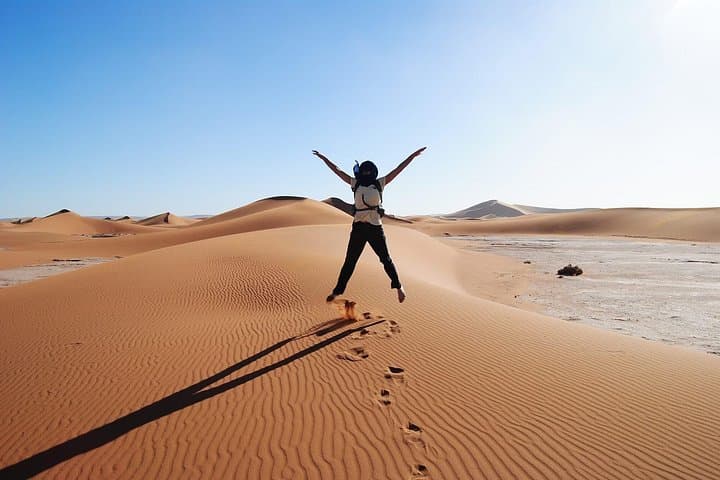


The van hums away from Fez before dawn and the Atlas foothills unfurl like a weathered map. By midafternoon the dunes of Erg Chebbi loom: a raw sweep of wind-carved ridges that dare you to climb them. Camels rock forward at sunset, and the desert pulls the sky low and close, stars sharpening as the campfire dies.
The van hums away from Fez before dawn and the Atlas foothills unfurl like a weathered map. By midafternoon the dunes of Erg Chebbi loom: a raw sweep of wind-carved ridges that dare you to climb them. Camels rock forward at sunset, and the desert pulls the sky low and close, stars sharpening as the campfire dies.
This route threads Ifrane’s Euro-style streets, cedar forests where Barbary macaques call, and the sculpted red canyons of Todra Gorge. Geologically, the High Atlas is folded and faulted limestone and volcanic plateau; the Sahara here is a corridor of windblown quartz and gypsum sand accumulated around ancient riverbeds. Culturally the trip moves through Amazigh (Berber) communities, living kasbahs of mud-brick and palm-lined oases that remember caravan trade routes to Timbuktu.
Expect two nights: one in a standard desert camp under a traditional tent and one in a simple hotel near Todra or Ouarzazate. Activities include a one-hour camel trek at sunset, sunrise viewing on the dunes, short gorge walks, and visits to Ait Ben Haddou’s ksar.
Practical notes: bring layered clothing for hot days and cold desert nights, at least 2–3 liters of water per day, sun protection, and sturdy closed shoes for walking on sand and in rocky gorges. Physical demands are moderate—camel riding is low-impact but some dune walking is involved. Pack a headlamp for camp and photocopies of travel documents; mobile signal is intermittent in remote stretches. Timing your arrival in Fez the night before keeps day one comfortable and stress-free.