THE ADVENTURE COLLECTIVE® · Independent discovery and booking for outdoor travel

Three days from Fez through cedar forests, the Ziz Valley and into Erg Chebbi deliver sunrise dunes, a camel trek and an overnight Berber camp. Expect long drives, dramatic landscapes and authentic cultural stops.
Three days from Fez through cedar forests, the Ziz Valley and into Erg Chebbi deliver sunrise dunes, a camel trek and an overnight Berber camp. Expect long drives, dramatic landscapes and authentic cultural stops.
You leave Fez before dawn and the road climbs through cedar forests where Barbary macaques watch from twisted trunks and mountain air smells of pine and cold stone.
Verified experiences and guided adventures in the surrounding area.
Operated by Desert Smile Tours · Merzouga, Drâa-Tafilalet
You leave Fez before dawn and the road climbs through cedar forests where Barbary macaques watch from twisted trunks and mountain air smells of pine and cold stone.
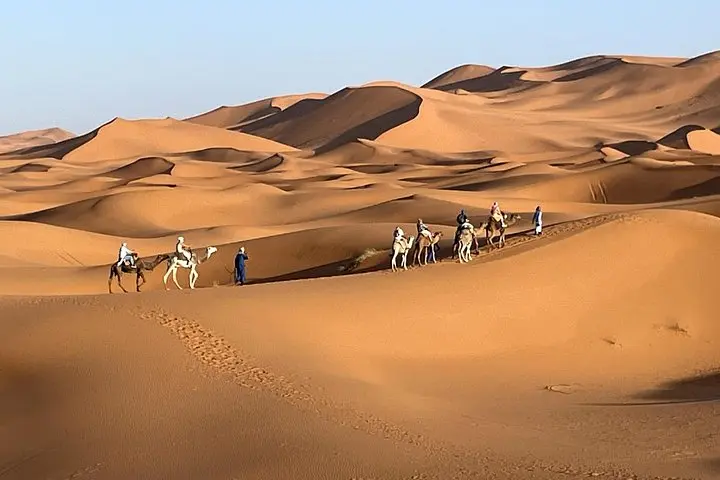
By midday the Middle Atlas opens into plateaus and the Ziz Valley unfurls below — a green ribbon of palms pushed up against ochre cliffs and the river that carved them. The drive itself tells much of Morocco's layered history: French-built Ifrane's alpine facades, Berber villages clinging to mountain shoulders, and caravan-era oases at the edge of the Sahara. Geologically, Erg Chebbi's dunes are wind-sculpted piles of billion-year-old sand, moving inch by inch under the desert's breath; cultural notes arrive in the form of Gnawa rhythms from Khamlia and the simple hospitality of nomadic hosts.
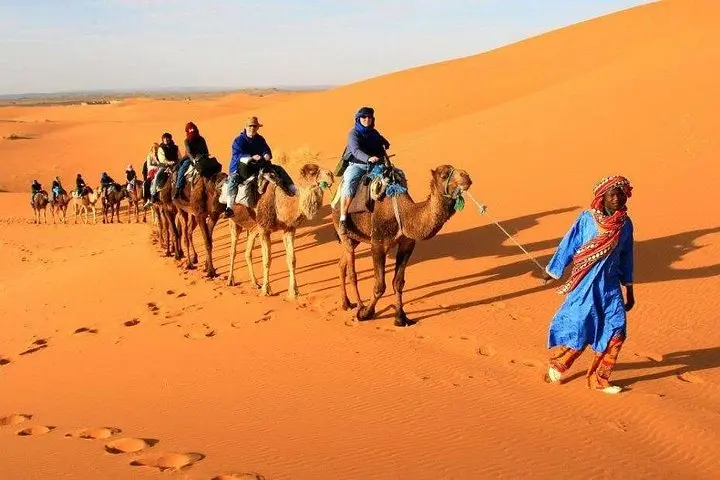
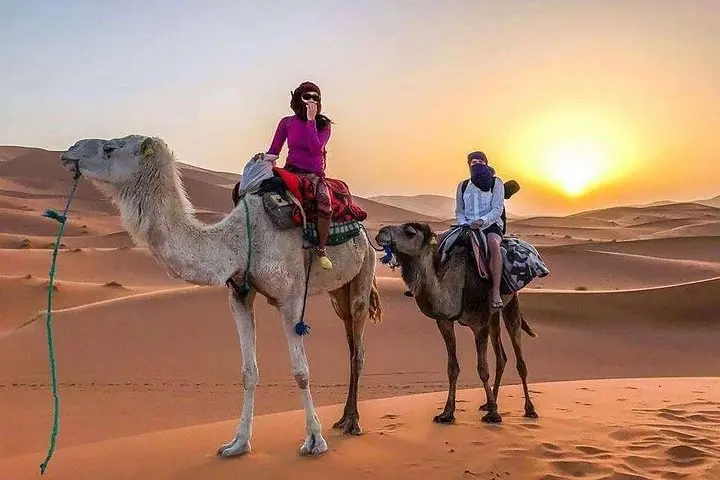
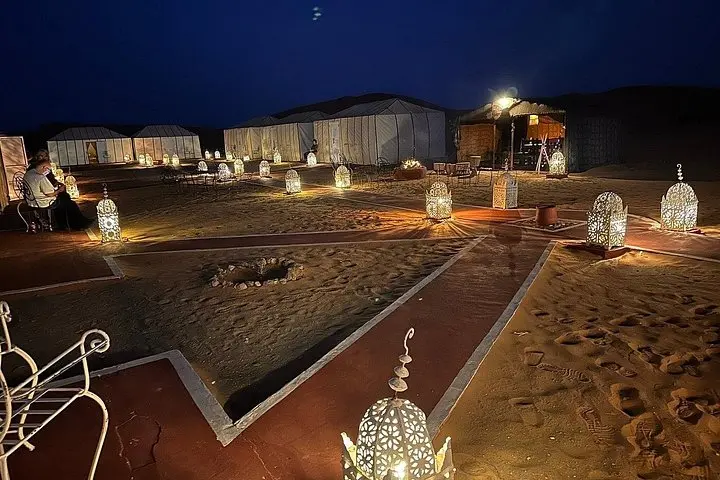
In Merzouga the desert takes on a personality — dunes that dare you to climb them at sunset, a silence that pushes outward until the stars feel close enough to touch. A late-afternoon camel trek deposits you at a Berber camp; supper includes slow-cooked Madfouna and stories around a fire.
Practical guidance: plan to rise early for two sunrises over the dunes, bring layered clothes for hot days and cold nights, and carry at least 2–3 liters of water per person while trekking. Footwear should handle soft sand and rocky piste; sunscreen, a headscarf, and small change for tips/market stops are essential. Expect basic camp sanitation, friendly local guides, and long driving stretches between stops — the reward is those skylines and the tactile, physical memory of walking on living dunes.
No — camel treks are suitable for beginners; animals are led by handlers and rides are typically short, though mounting and dismounting can be awkward for some.
Accommodations vary from basic nomadic-style tents to more comfortable desert camps with mattresses and shared bathrooms; confirm the level when booking.
Most itineraries include two dinners and two breakfasts; drinking water for the trip may be provided but bring extra for daytime hikes and personal needs.
Some operators run similar routes from Marrakech but durations and driving distances differ; check pickup options when booking to confirm departure city.
Desert Smile Tours operates guided outdoor trips and adventures with an emphasis on safety, stewardship, and memorable experiences.
You leave Fez before dawn and the road climbs through cedar forests where Barbary macaques watch from twisted trunks and mountain air smells of pine and cold stone.
You leave Fez before dawn and the road climbs through cedar forests where Barbary macaques watch from twisted trunks and mountain air smells of pine and cold stone.
By midday the Middle Atlas opens into plateaus and the Ziz Valley unfurls below — a green ribbon of palms pushed up against ochre cliffs and the river that carved them. The drive itself tells much of Morocco's layered history: French-built Ifrane's alpine facades, Berber villages clinging to mountain shoulders, and caravan-era oases at the edge of the Sahara. Geologically, Erg Chebbi's dunes are wind-sculpted piles of billion-year-old sand, moving inch by inch under the desert's breath; cultural notes arrive in the form of Gnawa rhythms from Khamlia and the simple hospitality of nomadic hosts.
In Merzouga the desert takes on a personality — dunes that dare you to climb them at sunset, a silence that pushes outward until the stars feel close enough to touch. A late-afternoon camel trek deposits you at a Berber camp; supper includes slow-cooked Madfouna and stories around a fire.
Practical guidance: plan to rise early for two sunrises over the dunes, bring layered clothes for hot days and cold nights, and carry at least 2–3 liters of water per person while trekking. Footwear should handle soft sand and rocky piste; sunscreen, a headscarf, and small change for tips/market stops are essential. Expect basic camp sanitation, friendly local guides, and long driving stretches between stops — the reward is those skylines and the tactile, physical memory of walking on living dunes.