THE ADVENTURE COLLECTIVE® · Independent discovery and booking for outdoor travel

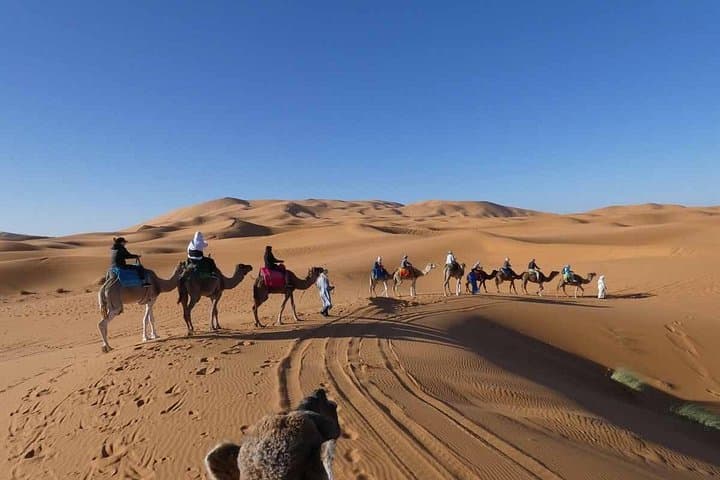
Swap Marrakech’s alleys for the open desert on a private 3-day tour to Merzouga. Ride camels across Erg Chebbi, sleep in a desert camp, and pass Ait Ben Haddou and the Todra and Dades gorges on the way.
Swap Marrakech’s alleys for the open desert on a private 3-day tour to Merzouga. Ride camels across Erg Chebbi, sleep in a desert camp, and pass Ait Ben Haddou and the Todra and Dades gorges on the way.
On the first morning the road opens like a map: the High Atlas rises, villages tighten against the slopes and the Tizi n'Tichka pass (about 2,260 m) delivers a cold, thin air before the land falls away toward Ouarzazate. Over three days you trade Marrakech’s medina lanes for wind-sculpted sand, sleep one night under the stars in a desert camp and cross geological thresholds — river-cut gorges, palm-filled oases and the towering Erg Chebbi dunes.
Verified experiences and guided adventures in the surrounding area.
Operated by Desert Sans Frontieres · Merzouga, Drâa-Tafilalet
On the first morning the road opens like a map: the High Atlas rises, villages tighten against the slopes and the Tizi n'Tichka pass (about 2,260 m) delivers a cold, thin air before the land falls away toward Ouarzazate. Over three days you trade Marrakech’s medina lanes for wind-sculpted sand, sleep one night under the stars in a desert camp and cross geological thresholds — river-cut gorges, palm-filled oases and the towering Erg Chebbi dunes.
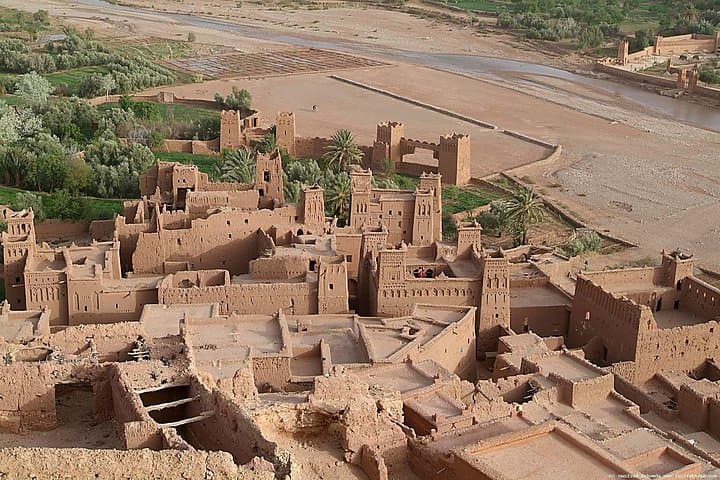
The route threads UNESCO-listed Ait Ben Haddou, a striking mud-brick kasbah that illustrates Morocco’s caravan and film history, then follows the Dades and Todra gorges where fluvial erosion has carved sheer canyons. Merzouga sits at roughly 730 m elevation; the Erg Chebbi dunes rise up to 150 m above the plain and challenge walkers with loose sand and steep slipfaces. Culturally, the tour passes through Berber communities where traditional agriculture and kasbah architecture remain visible in vernacular stone and adobe.
Practically: plan for long driving segments (6–8 hours on day 1 and day 3 with stops), moderate physical effort for short dune walks and camel rides, and large temperature swings between day and night. Bring layered clothing, a 2–3 L water system, sun protection and sturdy closed-toe shoes for dune approaches. Sunrise and sunset on the dunes are the scheduling highlights — aim for the early-morning light for the quietest experience. Respect local customs, pack out waste, and follow guides’ instructions for camel handling and campsite safety.
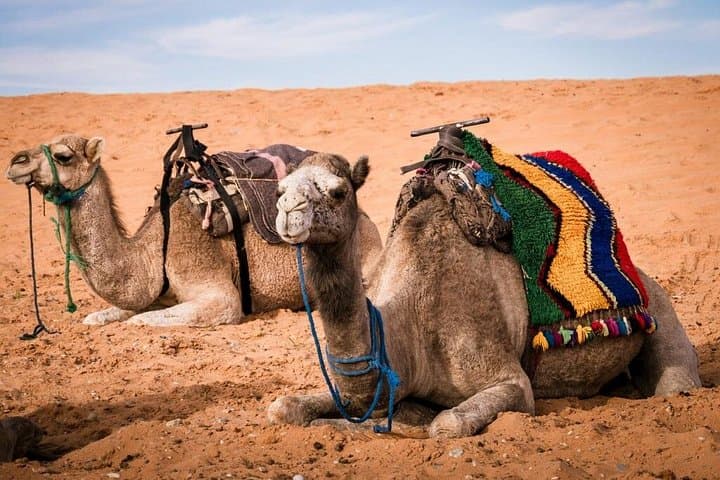
The camel ride is low-impact and guided; you’ll sit in a saddle and dismount for short walks on sand — no technical skill required.
You’ll stay in a local desert camp for one night, typically in a shared or private tent with basic bedding and a communal dinner around a campfire.
Yes — the itinerary includes long transfers via Tizi n'Tichka and back: plan for 6–8 hour driving segments with stops for sights and meals.
The tour notes indicate it’s suitable for many ages but is not recommended for travelers with serious heart conditions or pregnant guests; check with the operator for infant arrangements.
Desert Sans Frontieres operates guided outdoor trips and adventures with an emphasis on safety, stewardship, and memorable experiences.
On the first morning the road opens like a map: the High Atlas rises, villages tighten against the slopes and the Tizi n'Tichka pass (about 2,260 m) delivers a cold, thin air before the land falls away toward Ouarzazate. Over three days you trade Marrakech’s medina lanes for wind-sculpted sand, sleep one night under the stars in a desert camp and cross geological thresholds — river-cut gorges, palm-filled oases and the towering Erg Chebbi dunes.
On the first morning the road opens like a map: the High Atlas rises, villages tighten against the slopes and the Tizi n'Tichka pass (about 2,260 m) delivers a cold, thin air before the land falls away toward Ouarzazate. Over three days you trade Marrakech’s medina lanes for wind-sculpted sand, sleep one night under the stars in a desert camp and cross geological thresholds — river-cut gorges, palm-filled oases and the towering Erg Chebbi dunes.
The route threads UNESCO-listed Ait Ben Haddou, a striking mud-brick kasbah that illustrates Morocco’s caravan and film history, then follows the Dades and Todra gorges where fluvial erosion has carved sheer canyons. Merzouga sits at roughly 730 m elevation; the Erg Chebbi dunes rise up to 150 m above the plain and challenge walkers with loose sand and steep slipfaces. Culturally, the tour passes through Berber communities where traditional agriculture and kasbah architecture remain visible in vernacular stone and adobe.
Practically: plan for long driving segments (6–8 hours on day 1 and day 3 with stops), moderate physical effort for short dune walks and camel rides, and large temperature swings between day and night. Bring layered clothing, a 2–3 L water system, sun protection and sturdy closed-toe shoes for dune approaches. Sunrise and sunset on the dunes are the scheduling highlights — aim for the early-morning light for the quietest experience. Respect local customs, pack out waste, and follow guides’ instructions for camel handling and campsite safety.