THE ADVENTURE COLLECTIVE® · Independent discovery and booking for outdoor travel

Cross the High Atlas and sleep beneath the dunes on this compact 3-day loop from Marrakech to Merzouga. Expect a mix of long scenic drives, a short camel trek, nights in a Dades Gorge hotel and a Sahara camp, and dramatic sunrise over Erg Chebbi.
Cross the High Atlas and sleep beneath the dunes on this compact 3-day loop from Marrakech to Merzouga. Expect a mix of long scenic drives, a short camel trek, nights in a Dades Gorge hotel and a Sahara camp, and dramatic sunrise over Erg Chebbi.
A low sun lifts off the High Atlas as the minibus threads hairpin turns and the city noise falls behind. By midafternoon the landscape opens — ochre plateaus, kasbah ruins, and a single-track road that pushes east until sand becomes the horizon.
Verified experiences and guided adventures in the surrounding area.
Operated by Marrakech unique activities · Merzouga, Drâa-Tafilalet
A low sun lifts off the High Atlas as the minibus threads hairpin turns and the city noise falls behind. By midafternoon the landscape opens — ochre plateaus, kasbah ruins, and a single-track road that pushes east until sand becomes the horizon.
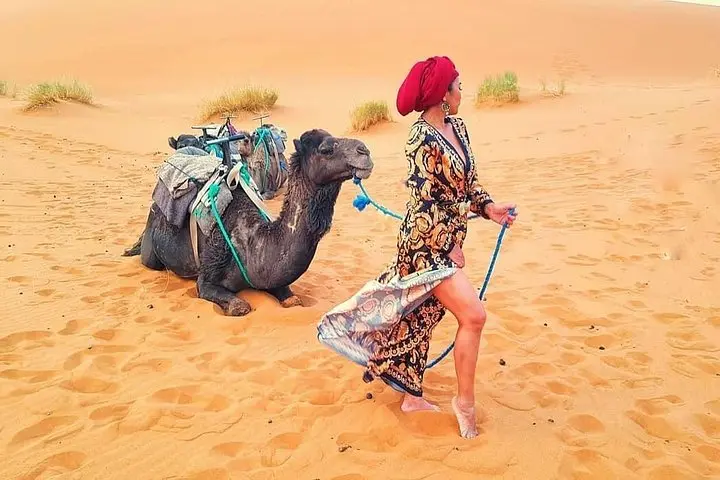
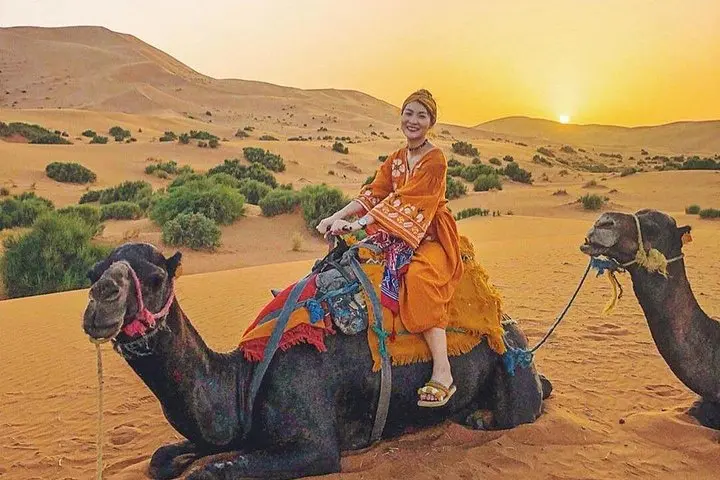
The route follows old caravan corridors used by Berber traders; geology here shifts from volcanic highlands to the wind-sculpted dunes of Erg Chebbi. Travelers spend night two in the Dades Valley, a corridor of layered red cliffs worn by seasonal rivers, before arriving at Merzouga where camels step through dunes and the desert breathes around a temporary camp.
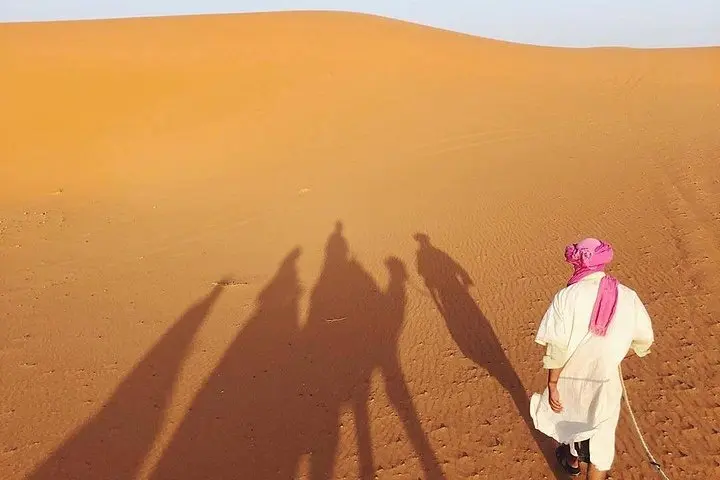
Cultural notes: local families in oases still raise date palms and herd goats, and you’ll encounter traditional mud-brick architecture and small ksar villages. The camel trek is short and steady — a practical introduction to nomad-style travel rather than a full expedition — with an evening spent at a desert camp under broad stars.
Practical guidance: pack layers — daytime heats quickly, nights cool sharply — and carry at least 2–3 liters of water per day. Expect long stretches in the minibus (roughly 9–10 hours total driving spread over 3 days), short hikes around viewpoints, and a 1–2 hour camel ride across the dunes at sunrise or sunset. Footwear should be closed shoes for rocky stretches and sandals for camp. Bring sunscreen, a headscarf for wind and sand, and a small daypack for essentials.
This trip suits travelers wanting a compact desert introduction with comfortable logistics rather than hardcore trekking.
The scheduled camel ride across Erg Chebbi is typically 1–2 hours, timed for sunset or sunrise; it’s a gentle pace suitable for beginners.
Yes—operators describe the activity as physically easy; infants may sit in laps on transport but camel comfort varies by rider size and age, so check with the operator first.
Shared minibus transport, two nights’ accommodation (one in Dades Gorge, one in Sahara camp), two breakfasts, two dinners and a camel ride are included per the listing.
Expect roughly 9–10 hours of driving spread across 3 days as the route crosses the High Atlas and approaches the eastern Sahara.
Marrakech unique activities operates guided outdoor trips and adventures with an emphasis on safety, stewardship, and memorable experiences.
A low sun lifts off the High Atlas as the minibus threads hairpin turns and the city noise falls behind. By midafternoon the landscape opens — ochre plateaus, kasbah ruins, and a single-track road that pushes east until sand becomes the horizon.
A low sun lifts off the High Atlas as the minibus threads hairpin turns and the city noise falls behind. By midafternoon the landscape opens — ochre plateaus, kasbah ruins, and a single-track road that pushes east until sand becomes the horizon.
The route follows old caravan corridors used by Berber traders; geology here shifts from volcanic highlands to the wind-sculpted dunes of Erg Chebbi. Travelers spend night two in the Dades Valley, a corridor of layered red cliffs worn by seasonal rivers, before arriving at Merzouga where camels step through dunes and the desert breathes around a temporary camp.
Cultural notes: local families in oases still raise date palms and herd goats, and you’ll encounter traditional mud-brick architecture and small ksar villages. The camel trek is short and steady — a practical introduction to nomad-style travel rather than a full expedition — with an evening spent at a desert camp under broad stars.
Practical guidance: pack layers — daytime heats quickly, nights cool sharply — and carry at least 2–3 liters of water per day. Expect long stretches in the minibus (roughly 9–10 hours total driving spread over 3 days), short hikes around viewpoints, and a 1–2 hour camel ride across the dunes at sunrise or sunset. Footwear should be closed shoes for rocky stretches and sandals for camp. Bring sunscreen, a headscarf for wind and sand, and a small daypack for essentials.
This trip suits travelers wanting a compact desert introduction with comfortable logistics rather than hardcore trekking.