THE ADVENTURE COLLECTIVE® · Independent discovery and booking for outdoor travel

Cross the High Atlas, ride camels into Erg Chebbi, and sleep under jaimas for a three‑day loop from Marrakech. This tour pairs cinematic landscapes with practical logistics—ideal for first‑time desert travelers.
Cross the High Atlas, ride camels into Erg Chebbi, and sleep under jaimas for a three‑day loop from Marrakech. This tour pairs cinematic landscapes with practical logistics—ideal for first‑time desert travelers.
The sun slides low and the dunes of Erg Chebbi take on a copper edge as your convoy climbs toward the small village of Merzouga. Wind-scoured ridges throw long shadows; a string of camels picks its way up a slope while the camp’s jaimas wait like patient hosts on the lee side of a dune.
Verified experiences and guided adventures in the surrounding area.
Operated by Marruecos Bohemio · Merzouga, Drâa-Tafilalet
The sun slides low and the dunes of Erg Chebbi take on a copper edge as your convoy climbs toward the small village of Merzouga. Wind-scoured ridges throw long shadows; a string of camels picks its way up a slope while the camp’s jaimas wait like patient hosts on the lee side of a dune.
This route traces old caravan corridors over the High Atlas and down the Road of 1001 Kasbahs. Geologically the landscape shifts from volcanic folds at the Tizi n’Tichka pass to the wind-shaped quartz-sand of Erg Chebbi — dunes that migrate and breathe with each season. Culturally the trip threads through Berber villages and fortified ksars, with Aït Ben Haddou offering a clear reminder of film history and pre‑modern trade routes.
Expect a mixture of long driving days, short guided walks, and camel transfers timed to sunrise and sunset for the best light. Nights in a jaima are cool and quiet; guides often play local rhythms and serve tagine. The desert is deceptively demanding: dry air and daytime heat contrast with chilly nights, and sand makes every step fractionally harder.
Practical guidance: carry at least 2 liters of water, sun protection, and a warm layer for nights. Wear shoes you don’t mind getting sand in and practice slow, steady pacing on dunes. Plan for early starts, limited cellular service in remote stretches, and an itinerary that returns to Marrakech by late afternoon on day three. This is an accessible, immersive desert experience for travelers ready to swap city hustle for wind, stars, and long horizons.
Yes—many families join; camel rides and camp accommodations are family‑friendly, but expect long drives and early starts that can challenge very young children.
Basic facilities are provided at tourist camps; private tents may have shared bathroom blocks. Ask the operator for exact camp amenities if you need private facilities.
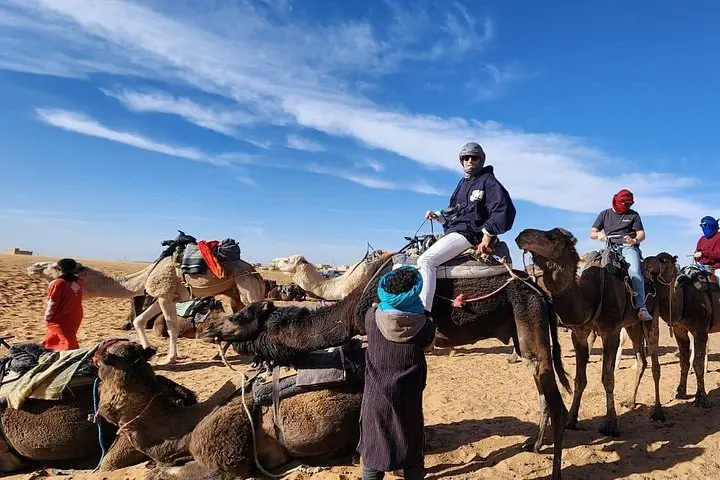
Camel rides are gentle but require mounting/dismounting balance; dune walks are low‑impact but tiring on soft sand—moderate fitness is recommended.
Sunrise and sunset offer the warmest light and strongest shadows for texture; plan camel transfers around these windows for best photos.
Marruecos Bohemio operates guided outdoor trips and adventures with an emphasis on safety, stewardship, and memorable experiences.
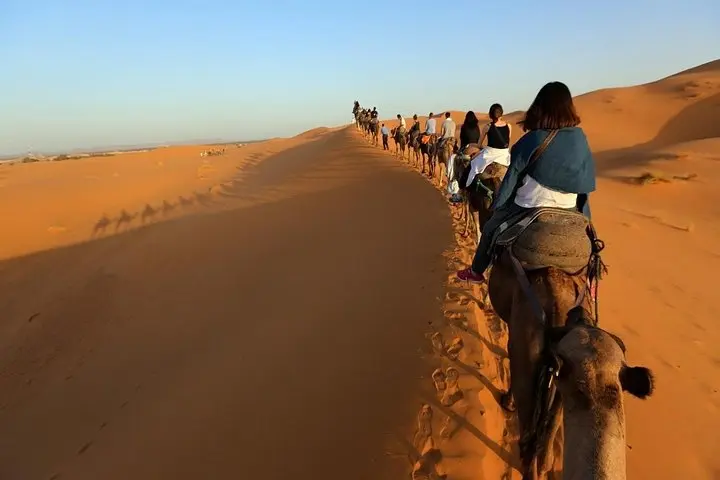
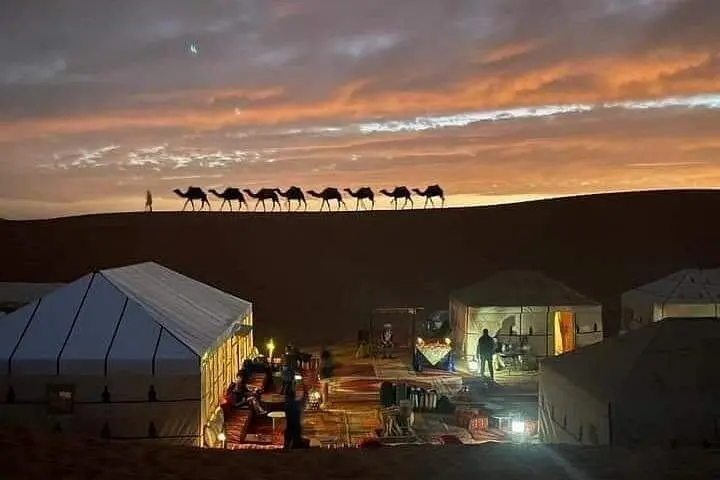
The sun slides low and the dunes of Erg Chebbi take on a copper edge as your convoy climbs toward the small village of Merzouga. Wind-scoured ridges throw long shadows; a string of camels picks its way up a slope while the camp’s jaimas wait like patient hosts on the lee side of a dune.
The sun slides low and the dunes of Erg Chebbi take on a copper edge as your convoy climbs toward the small village of Merzouga. Wind-scoured ridges throw long shadows; a string of camels picks its way up a slope while the camp’s jaimas wait like patient hosts on the lee side of a dune.
This route traces old caravan corridors over the High Atlas and down the Road of 1001 Kasbahs. Geologically the landscape shifts from volcanic folds at the Tizi n’Tichka pass to the wind-shaped quartz-sand of Erg Chebbi — dunes that migrate and breathe with each season. Culturally the trip threads through Berber villages and fortified ksars, with Aït Ben Haddou offering a clear reminder of film history and pre‑modern trade routes.
Expect a mixture of long driving days, short guided walks, and camel transfers timed to sunrise and sunset for the best light. Nights in a jaima are cool and quiet; guides often play local rhythms and serve tagine. The desert is deceptively demanding: dry air and daytime heat contrast with chilly nights, and sand makes every step fractionally harder.
Practical guidance: carry at least 2 liters of water, sun protection, and a warm layer for nights. Wear shoes you don’t mind getting sand in and practice slow, steady pacing on dunes. Plan for early starts, limited cellular service in remote stretches, and an itinerary that returns to Marrakech by late afternoon on day three. This is an accessible, immersive desert experience for travelers ready to swap city hustle for wind, stars, and long horizons.