THE ADVENTURE COLLECTIVE® · Independent discovery and booking for outdoor travel

Cross the High Atlas, wander UNESCO-listed Ait Ben Haddou, and sleep under desert stars on a shared 3-day trip from Marrakech to Merzouga. Expect long drives, camel treks at dusk and dawn, sand-boarding, and nights in simple desert camps.
Cross the High Atlas, wander UNESCO-listed Ait Ben Haddou, and sleep under desert stars on a shared 3-day trip from Marrakech to Merzouga. Expect long drives, camel treks at dusk and dawn, sand-boarding, and nights in simple desert camps.
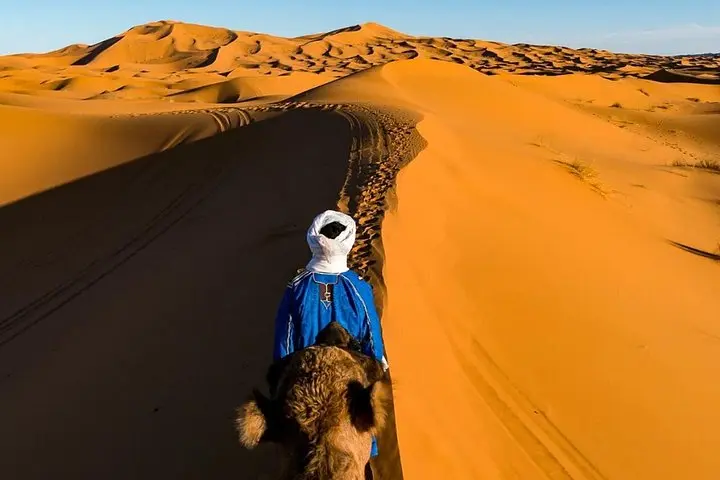
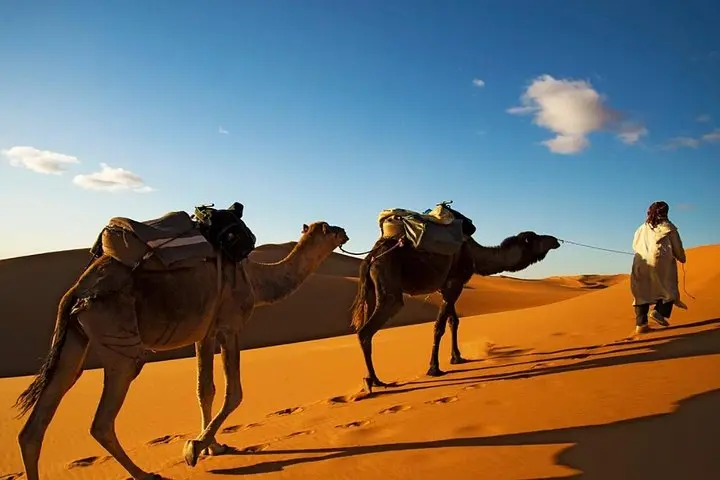
The sun is a slow hand tracing the ridges of Erg Chebbi as a string of camels picks its way over the dune crests. On this three-day route from Marrakech, the landscape moves from olive groves and High Atlas passes to rose-scented valleys and finally the ochre waves of the Sahara; drivers and passengers trade city noise for long horizons.
Verified experiences and guided adventures in the surrounding area.
Operated by Time Out travel · Merzouga, Drâa-Tafilalet
The sun is a slow hand tracing the ridges of Erg Chebbi as a string of camels picks its way over the dune crests. On this three-day route from Marrakech, the landscape moves from olive groves and High Atlas passes to rose-scented valleys and finally the ochre waves of the Sahara; drivers and passengers trade city noise for long horizons.
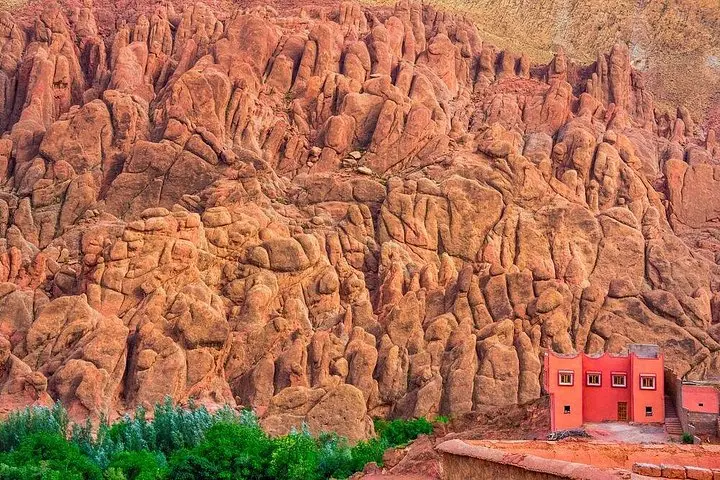
The itinerary threads through history: Kasbah Ait Ben Haddou, a fortified adobe village that doubled for Hollywood epics; the rose fields of Kalaa M’gouna; the sculpted cliffs of Todgha Gorge; and the caravan-town Rissani, once a node on trans-Saharan trade routes. Geologically, the shift from folded Atlas strata to the wind-sorted sands of Erg Chebbi is stark—rocky plateaus give way to crescent dunes shaped by persistent northerly winds. Local Berber culture informs the camp stays and cuisine; shared tents and small hotels emphasize hospitality and simple comforts.
Travelers should expect long drives (roughly 8–10 hours total each way across two travel days), one overnight in a Dades Valley hotel, and a desert night in a shared nomad tent or upgraded option. Highlights: a sunset camel ride across Erg Chebbi, sunrise trek, sand-boarding, and visits to kasbahs and gorges. Practical notes: pack layered clothing for hot days and cold nights, sturdy closed-toe shoes for rocky and sandy terrain, sunscreen, and a refillable water bottle. The tour is suited to those with moderate fitness who can handle bumpy roads and short sand walks—no technical skills required but a readiness for long-haul travel is essential.
Yes—pickup and drop-off at Marrakech accommodations are included for this shared tour.
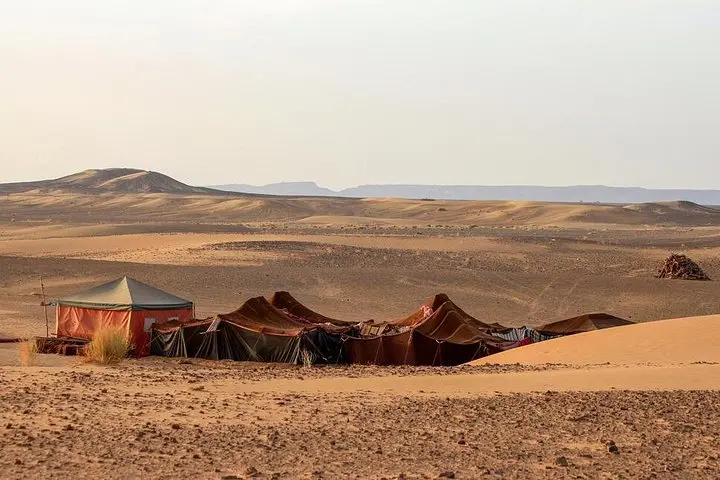
Overnight is typically a shared nomad-style tent in the desert camp; upgrades to private options may be available for an extra fee.
The advertised camel trek is about two hours at sunset and a shorter sunrise ride the following morning for views and return to the lodge.
No—this tour is not recommended for travelers with significant spinal, cardiovascular conditions, or for pregnant travelers due to bumpy roads and camel riding.
Time Out travel operates guided outdoor trips and adventures with an emphasis on safety, stewardship, and memorable experiences.
The sun is a slow hand tracing the ridges of Erg Chebbi as a string of camels picks its way over the dune crests. On this three-day route from Marrakech, the landscape moves from olive groves and High Atlas passes to rose-scented valleys and finally the ochre waves of the Sahara; drivers and passengers trade city noise for long horizons.
The sun is a slow hand tracing the ridges of Erg Chebbi as a string of camels picks its way over the dune crests. On this three-day route from Marrakech, the landscape moves from olive groves and High Atlas passes to rose-scented valleys and finally the ochre waves of the Sahara; drivers and passengers trade city noise for long horizons.
The itinerary threads through history: Kasbah Ait Ben Haddou, a fortified adobe village that doubled for Hollywood epics; the rose fields of Kalaa M’gouna; the sculpted cliffs of Todgha Gorge; and the caravan-town Rissani, once a node on trans-Saharan trade routes. Geologically, the shift from folded Atlas strata to the wind-sorted sands of Erg Chebbi is stark—rocky plateaus give way to crescent dunes shaped by persistent northerly winds. Local Berber culture informs the camp stays and cuisine; shared tents and small hotels emphasize hospitality and simple comforts.
Travelers should expect long drives (roughly 8–10 hours total each way across two travel days), one overnight in a Dades Valley hotel, and a desert night in a shared nomad tent or upgraded option. Highlights: a sunset camel ride across Erg Chebbi, sunrise trek, sand-boarding, and visits to kasbahs and gorges. Practical notes: pack layered clothing for hot days and cold nights, sturdy closed-toe shoes for rocky and sandy terrain, sunscreen, and a refillable water bottle. The tour is suited to those with moderate fitness who can handle bumpy roads and short sand walks—no technical skills required but a readiness for long-haul travel is essential.