THE ADVENTURE COLLECTIVE® · Independent discovery and booking for outdoor travel

Ride camels across Erg Chebbi, sleep under Berber tents, and surf sand dunes on this three-day loop from Marrakech. A mix of Atlas Mountain passes, UNESCO sites, and raw desert makes it an easy but unforgettable introduction to the Sahara.
Ride camels across Erg Chebbi, sleep under Berber tents, and surf sand dunes on this three-day loop from Marrakech. A mix of Atlas Mountain passes, UNESCO sites, and raw desert makes it an easy but unforgettable introduction to the Sahara.
A low sun breaks over red sand as the minibus slips from the Atlas foothills onto plains that tighten into the ribbed curves of Erg Chebbi. The air sharpens; dunes rise like slow waves and the convoy hums toward a horizon that refuses to stay put. Travelers trade asphalt for camel saddles, riding in single file as the desert nudges them forward.
Verified experiences and guided adventures in the surrounding area.
Operated by Imperial Trail Tours · Merzouga, Errachidia Province
A low sun breaks over red sand as the minibus slips from the Atlas foothills onto plains that tighten into the ribbed curves of Erg Chebbi. The air sharpens; dunes rise like slow waves and the convoy hums toward a horizon that refuses to stay put. Travelers trade asphalt for camel saddles, riding in single file as the desert nudges them forward.
The route threads Tizi n'Tichka pass with views across High Atlas villages, then passes the earthen towers of Ait Ben Haddou—a UNESCO ksar built of mud-brick that speaks to the region's caravan history. Geologically, the Erg Chebbi dunes are wind-sculpted Jurassic sand sitting atop an ancient basin; culturally, this is Tafilalet country, shaped by centuries of trade, palm oases, and Berber hospitality.
Expect long driving legs balanced by close, tactile desert moments: sunset camel treks, a night in shared Berber tents accompanied by drums, a dawn climb for sunrise photos, and optional sandboarding on steep dune faces. Nights are cold; days can be fiercely hot. Facilities are basic in camp but hotels in Merzouga and Tinghir provide showers and comfortable beds before and after the desert night.
Practical guidance: pack light for the camel transfer, bring layered clothing, sun protection, and a refillable water bottle. Plan for early starts through mountain passes and late arrivals back in Marrakech. Respect local customs—ask before photographing people—and leave no trace: dunes recover slowly and human impact lingers.
Larger luggage stays at the Merzouga hotel; bring a small overnight bag for the camel transfer with essentials—guides will store the main bag securely.
Yes—camel rides for sunset and sunrise are generally gentle and suitable for most ages, though mobility to mount and dismount is required.
Two dinners and two breakfasts are included; guides can usually accommodate common dietary needs if notified in advance during booking.
No prior experience required—guides demonstrate sandboarding techniques and dunes are suitable for beginners under supervision.
Imperial Trail Tours operates guided outdoor trips and adventures with an emphasis on safety, stewardship, and memorable experiences.
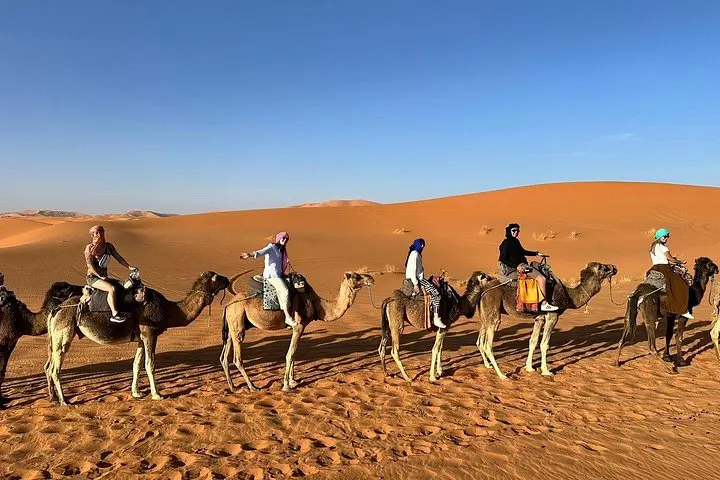
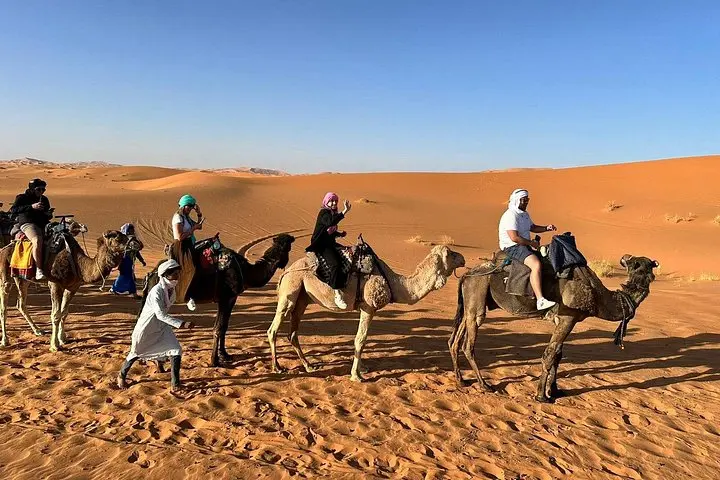
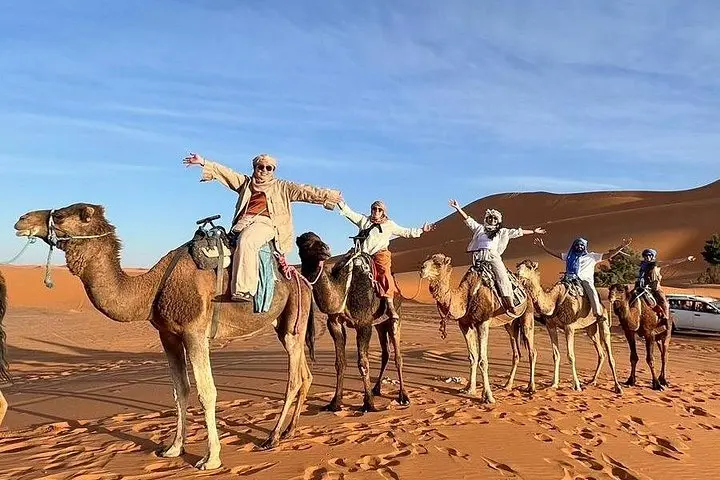
A low sun breaks over red sand as the minibus slips from the Atlas foothills onto plains that tighten into the ribbed curves of Erg Chebbi. The air sharpens; dunes rise like slow waves and the convoy hums toward a horizon that refuses to stay put. Travelers trade asphalt for camel saddles, riding in single file as the desert nudges them forward.
A low sun breaks over red sand as the minibus slips from the Atlas foothills onto plains that tighten into the ribbed curves of Erg Chebbi. The air sharpens; dunes rise like slow waves and the convoy hums toward a horizon that refuses to stay put. Travelers trade asphalt for camel saddles, riding in single file as the desert nudges them forward.
The route threads Tizi n'Tichka pass with views across High Atlas villages, then passes the earthen towers of Ait Ben Haddou—a UNESCO ksar built of mud-brick that speaks to the region's caravan history. Geologically, the Erg Chebbi dunes are wind-sculpted Jurassic sand sitting atop an ancient basin; culturally, this is Tafilalet country, shaped by centuries of trade, palm oases, and Berber hospitality.
Expect long driving legs balanced by close, tactile desert moments: sunset camel treks, a night in shared Berber tents accompanied by drums, a dawn climb for sunrise photos, and optional sandboarding on steep dune faces. Nights are cold; days can be fiercely hot. Facilities are basic in camp but hotels in Merzouga and Tinghir provide showers and comfortable beds before and after the desert night.
Practical guidance: pack light for the camel transfer, bring layered clothing, sun protection, and a refillable water bottle. Plan for early starts through mountain passes and late arrivals back in Marrakech. Respect local customs—ask before photographing people—and leave no trace: dunes recover slowly and human impact lingers.