THE ADVENTURE COLLECTIVE® · Independent discovery and booking for outdoor travel

Cross the High Atlas, explore Ait Ben Haddou and sleep under the stars in a luxury Merzouga bivouac. This 3-day route mixes mountain passes, river canyons and the color-changing dunes of Erg Chebbi—ideal for travelers who want culture, geology and a classic Sahara camel trek.
Cross the High Atlas, explore Ait Ben Haddou and sleep under the stars in a luxury Merzouga bivouac. This 3-day route mixes mountain passes, river canyons and the color-changing dunes of Erg Chebbi—ideal for travelers who want culture, geology and a classic Sahara camel trek.
Sand shifts under camel hooves as the atlas silhouette fades behind the convoy—this is the entry point to the Sahara most travelers imagine. The 3-day loop from Marrakech to Merzouga threads the High Atlas at the Tizi n’Tichka pass (≈2,260 m), winds through the kasbahs of Ait Ben Haddou, drops into the rose-scented Dades Valley and finishes at the color-changing ripples of Erg Chebbi, dune heights near 150 m.
Verified experiences and guided adventures in the surrounding area.
Operated by Open Travel - Day Tours · Merzouga, Drâa-Tafilalet
Sand shifts under camel hooves as the atlas silhouette fades behind the convoy—this is the entry point to the Sahara most travelers imagine. The 3-day loop from Marrakech to Merzouga threads the High Atlas at the Tizi n’Tichka pass (≈2,260 m), winds through the kasbahs of Ait Ben Haddou, drops into the rose-scented Dades Valley and finishes at the color-changing ripples of Erg Chebbi, dune heights near 150 m.
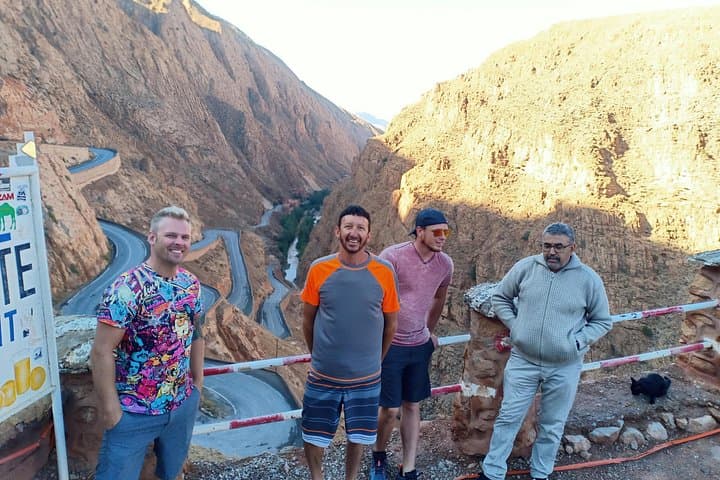
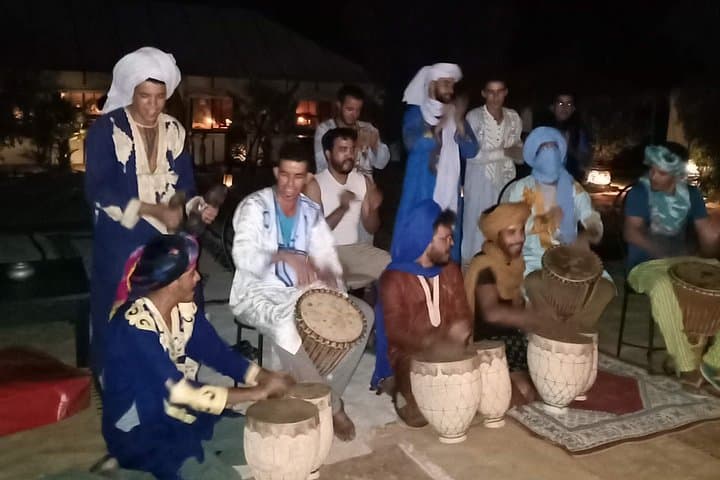
Geology and history arrive together: folded Atlas ranges of metamorphic rock give way to wind-sculpted dunes and gravel plains that mark old caravan routes. Visitors walk Todgha Gorge beneath cliffs that soar several hundred meters, explore mud-brick kasbah architecture in towns that once serviced trans-Saharan trade, and glimpse nomad traditions at a private luxury bivouac outside Merzouga where local hosts play drums beside the campfire.
Practical guidance is straightforward. Expect roughly 550–600 km of driving round-trip on mostly paved roads with curving mountain passes and short stretches of rocky desert before Merzouga. Wear sturdy walking shoes for canyon walks, and bring 2–3 liters of water per day while in the dunes. Desert temperatures swing: strong sun by day, sharp cool after sunset—pack sun protection plus a warm layer for night. Cash is useful in small towns; tipping drivers and camp staff is customary. Sunrise and sunset camel treks provide the best light for dunes and are scheduled to avoid the hottest hours.
This itinerary balances scenic drives, short hikes, cultural stops, and an easy overnight in a luxury desert camp—accessible to most travelers who can manage a few hours in the saddle and several long driving segments.
Expect roughly 550–600 km round-trip; the eastbound leg is about 8–10 hours including stops, depending on traffic and photo breaks.
Camel rides across Erg Chebbi are gentle and short (sunset and sunrise treks typically 1–2 hours); riders of most ages can join but those with serious back issues should avoid the saddle.
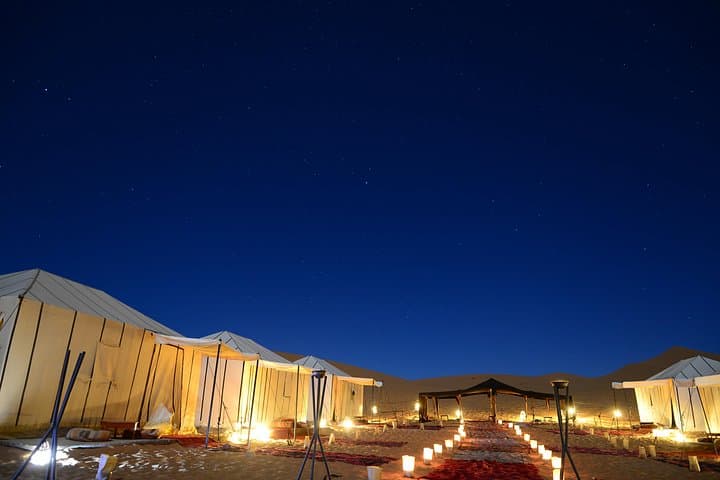
The tour includes an upgraded bivouac with private tented rooms or luxury nomad-style tents, shared facilities, and a communal dinner and campfire entertainment.
This private tour includes driver/guide transport, hotel and camp accommodations as stated; local guides can be hired at sites like Ait Ben Haddou if desired.
Open Travel - Day Tours operates guided outdoor trips and adventures with an emphasis on safety, stewardship, and memorable experiences.

Sand shifts under camel hooves as the atlas silhouette fades behind the convoy—this is the entry point to the Sahara most travelers imagine. The 3-day loop from Marrakech to Merzouga threads the High Atlas at the Tizi n’Tichka pass (≈2,260 m), winds through the kasbahs of Ait Ben Haddou, drops into the rose-scented Dades Valley and finishes at the color-changing ripples of Erg Chebbi, dune heights near 150 m.
Sand shifts under camel hooves as the atlas silhouette fades behind the convoy—this is the entry point to the Sahara most travelers imagine. The 3-day loop from Marrakech to Merzouga threads the High Atlas at the Tizi n’Tichka pass (≈2,260 m), winds through the kasbahs of Ait Ben Haddou, drops into the rose-scented Dades Valley and finishes at the color-changing ripples of Erg Chebbi, dune heights near 150 m.
Geology and history arrive together: folded Atlas ranges of metamorphic rock give way to wind-sculpted dunes and gravel plains that mark old caravan routes. Visitors walk Todgha Gorge beneath cliffs that soar several hundred meters, explore mud-brick kasbah architecture in towns that once serviced trans-Saharan trade, and glimpse nomad traditions at a private luxury bivouac outside Merzouga where local hosts play drums beside the campfire.
Practical guidance is straightforward. Expect roughly 550–600 km of driving round-trip on mostly paved roads with curving mountain passes and short stretches of rocky desert before Merzouga. Wear sturdy walking shoes for canyon walks, and bring 2–3 liters of water per day while in the dunes. Desert temperatures swing: strong sun by day, sharp cool after sunset—pack sun protection plus a warm layer for night. Cash is useful in small towns; tipping drivers and camp staff is customary. Sunrise and sunset camel treks provide the best light for dunes and are scheduled to avoid the hottest hours.
This itinerary balances scenic drives, short hikes, cultural stops, and an easy overnight in a luxury desert camp—accessible to most travelers who can manage a few hours in the saddle and several long driving segments.