THE ADVENTURE COLLECTIVE® · Independent discovery and booking for outdoor travel

Travel from Ouarzazate to the painted kasbahs of Ait Ben Haddou, cut through the Todra Gorges, and spend two nights at a Berber camp beside the towering Erg Chebbi dunes. This three-day route combines culture, geology and a classic desert overnight.
Travel from Ouarzazate to the painted kasbahs of Ait Ben Haddou, cut through the Todra Gorges, and spend two nights at a Berber camp beside the towering Erg Chebbi dunes. This three-day route combines culture, geology and a classic desert overnight.
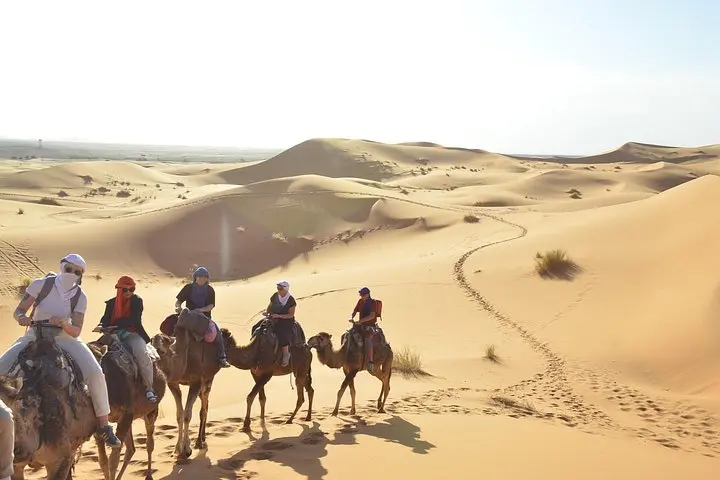
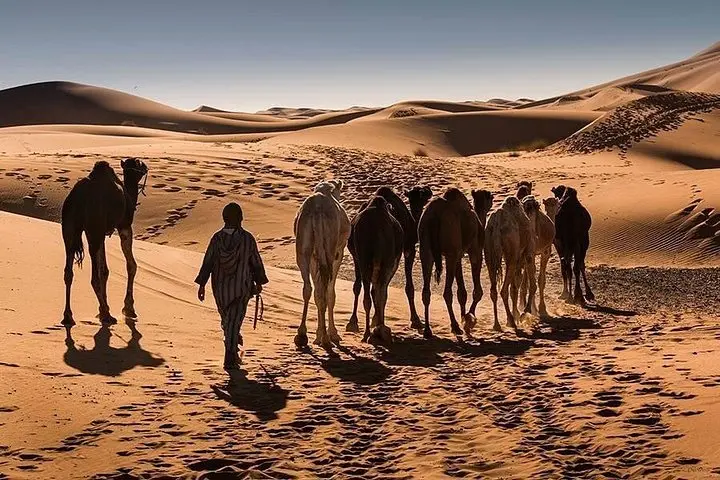
The road out of Ouarzazate peels away from the Atlas foothills and into an open, sun-baked landscape where mud-brick kasbahs puncture the horizon and the air tastes of dust and spice. On day one you move through Ait Ben Haddou’s ochre alleyways — a living film set of clay architecture — before crossing arid plains toward Tinghir and the gorge-carved corridor of Todra. By evening the Erg Chebbi dunes rise like a living wall; camels step sure-footed across shifting sand and the camp’s lamps bloom as the sky cools.
Verified experiences and guided adventures in the surrounding area.
Operated by Marrakesh Travel Services · Merzouga, Drâa-Tafilalet
The road out of Ouarzazate peels away from the Atlas foothills and into an open, sun-baked landscape where mud-brick kasbahs puncture the horizon and the air tastes of dust and spice. On day one you move through Ait Ben Haddou’s ochre alleyways — a living film set of clay architecture — before crossing arid plains toward Tinghir and the gorge-carved corridor of Todra. By evening the Erg Chebbi dunes rise like a living wall; camels step sure-footed across shifting sand and the camp’s lamps bloom as the sky cools.
This route traces long histories: trans-Saharan trade routes, Berber settlements, and 20th-century film production centered in Ouarzazate. Geologically the Todra Gorges reveal vertical limestone walls carved by seasonal rivers, while the Erg Chebbi dunes are wind-built quartz and sand, constantly remade by the sirocco.
Culturally, expect Berber hospitality — mint tea, shared dinners, and live music around the fire. The camp experience is straightforward: bivouac tents with basic facilities, dinner under stars, and a sunrise camel ride back across the ridgelines.
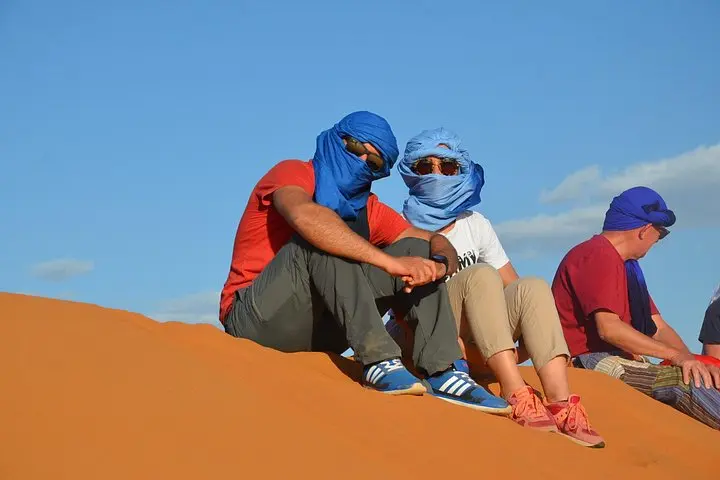
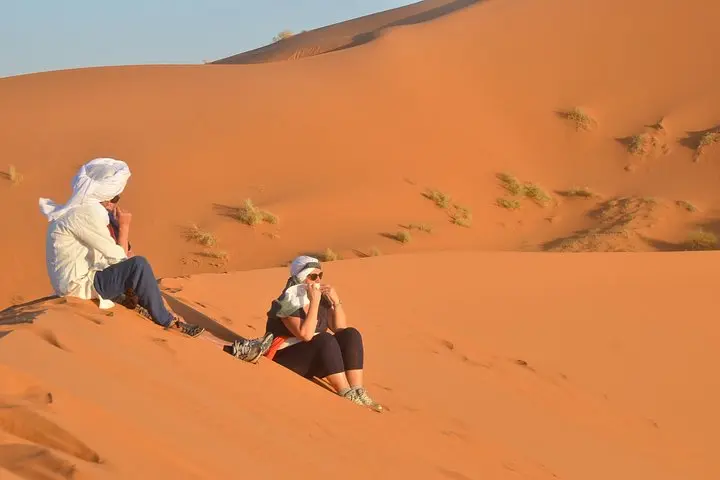
Practical tips: book sun protection and a good pair of walking shoes for uneven trails in Todra; desert temperatures swing dramatically, so layer; carry at least 2–3 liters of water per day and a small emergency kit. Plan travel times around the light—sunset and sunrise are when the dunes are most photogenic and coolest. Respect local customs, follow guide instructions on dunes and campsites, and leave no trace — the desert’s surfaces are fragile and recover slowly.
Typical camel rides are 45–60 minutes for sunset and sunrise transfers between the village and the camp; alternatives like 4x4 or quad are sometimes offered.
Camps are basic to mid-range: private or shared tents, mattresses, blankets, and communal dining; hot showers may be available at some camps but not guaranteed.
Many operators accept families and older travelers if mobility is okay; camel rides and uneven ground can be challenging—check in advance about infant seating and medical needs.
Visa requirements depend on nationality—check Moroccan embassy guidance; routine vaccinations are generally recommended, and carry any personal medications in travel packs.
Marrakesh Travel Services operates guided outdoor trips and adventures with an emphasis on safety, stewardship, and memorable experiences.
The road out of Ouarzazate peels away from the Atlas foothills and into an open, sun-baked landscape where mud-brick kasbahs puncture the horizon and the air tastes of dust and spice. On day one you move through Ait Ben Haddou’s ochre alleyways — a living film set of clay architecture — before crossing arid plains toward Tinghir and the gorge-carved corridor of Todra. By evening the Erg Chebbi dunes rise like a living wall; camels step sure-footed across shifting sand and the camp’s lamps bloom as the sky cools.
The road out of Ouarzazate peels away from the Atlas foothills and into an open, sun-baked landscape where mud-brick kasbahs puncture the horizon and the air tastes of dust and spice. On day one you move through Ait Ben Haddou’s ochre alleyways — a living film set of clay architecture — before crossing arid plains toward Tinghir and the gorge-carved corridor of Todra. By evening the Erg Chebbi dunes rise like a living wall; camels step sure-footed across shifting sand and the camp’s lamps bloom as the sky cools.
This route traces long histories: trans-Saharan trade routes, Berber settlements, and 20th-century film production centered in Ouarzazate. Geologically the Todra Gorges reveal vertical limestone walls carved by seasonal rivers, while the Erg Chebbi dunes are wind-built quartz and sand, constantly remade by the sirocco.
Culturally, expect Berber hospitality — mint tea, shared dinners, and live music around the fire. The camp experience is straightforward: bivouac tents with basic facilities, dinner under stars, and a sunrise camel ride back across the ridgelines.
Practical tips: book sun protection and a good pair of walking shoes for uneven trails in Todra; desert temperatures swing dramatically, so layer; carry at least 2–3 liters of water per day and a small emergency kit. Plan travel times around the light—sunset and sunrise are when the dunes are most photogenic and coolest. Respect local customs, follow guide instructions on dunes and campsites, and leave no trace — the desert’s surfaces are fragile and recover slowly.