
3-Day Merzouga Desert Trip from Marrakech to Fes: Camel Ride, Kasbahs & Sahara Camp
Cross the High Atlas, explore Aït Ben Haddou and the Todra Gorges, then ride camels onto Erg Chebbi for a night under the stars. This three-day private journey from Marrakech to Fes mixes geology, Berber culture, and unforgettable desert light.
An Adventure In Merzouga.
Cross the High Atlas, explore Aït Ben Haddou and the Todra Gorges, then ride camels onto Erg Chebbi for a night under the stars. This three-day private journey from Marrakech to Fes mixes geology, Berber culture, and unforgettable desert light.
Read the full experience
The sun leans low over ochre dunes as your convoy slows and a line of camels steps into silhouette — this is the opening scene of a three-day crossing from Marrakech to Fes via Merzouga. You leave the bustle of Marrakech early, climb the High Atlas (Tizi n’Tichka reaches roughly 2,260 m), and watch the land change from terraced agriculture to red rock and then to sweeping sand.
The sun leans low over ochre dunes as your convoy slows and a line of camels steps into silhouette — this is the opening scene of a three-day crossing from Marrakech to Fes via Merzouga. You leave the bustle of Marrakech early, climb the High Atlas (Tizi n’Tichka reaches roughly 2,260 m), and watch the land change from terraced agriculture to red rock and then to sweeping sand.
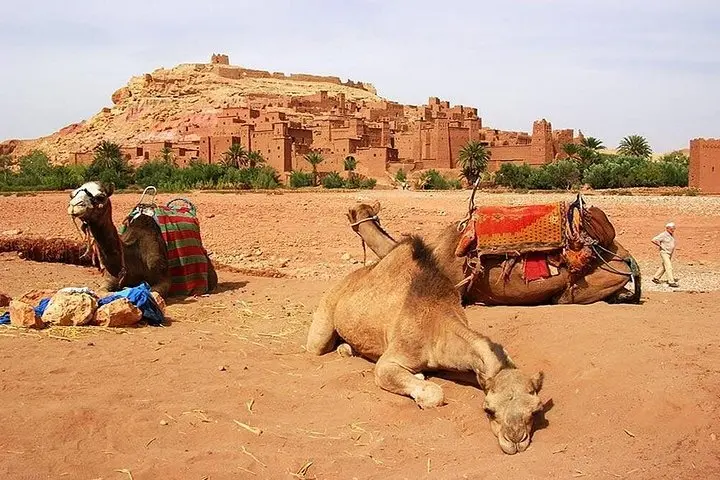
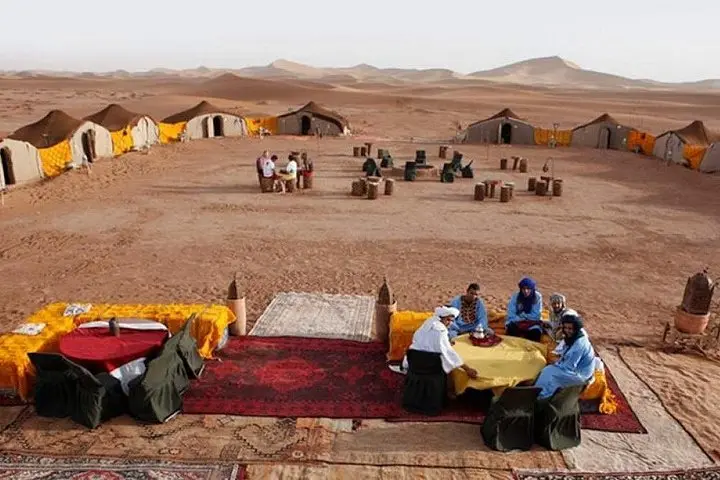
History sits in the walls here: Aït Ben Haddou, a UNESCO ksar, was once a caravan stronghold on trans-Saharan trade routes. Geology explains the route’s drama — the Todra and Dades gorges carve deep slot canyons with vertical limestone walls up to 300 m, while the Erg Chebbi dunes east of Merzouga rise in rippled waves of sand more than 100 m high. Culture threads through every stop: Berber villages, Gnawa musicians near Khamlia, and nomad-run bivouacs that still practice centuries-old hospitality.
Practical guidance: expect long drives (several 3–6 hour stretches) mostly on paved roads but with soft sand during final approach to camps. Camel rides are slow and steady; arrivals at camps often occur at sunset. Nights in the desert are cold — pack warm layers and a headlamp. Bring cash for remote villages and small tips for guides. Hydration is crucial in daytime heat; a 2–3 L water capacity is sensible. Timing matters: sunrise over the dunes is the most striking light for photographs, and mornings are the coolest for short hikes around the dunes. Overall this route blends low-impact trekking, cultural stops, and easy camel travel — accessible to most fit travelers who are prepared for changing temperatures and dusty terrain.
Frequently asked questions
Yes — camel rides to and from the desert camp are included and timed for sunset and sunrise on most itineraries.
The itinerary notes accessibility for a wide range of fitness levels, but camels and sand can be challenging; contact the operator about specific mobility needs and vehicle access.
Typical inclusions are dinner and breakfast at the camp and at hotels; lunch stops occur at local restaurants en route (confirm any dietary needs in advance).
Private pickup is offered from Marrakech accommodations; confirm your arrival details when booking to arrange timed transfers.
About This Experience
Excursions Tours Marrakesh operates guided outdoor trips and adventures with an emphasis on safety, stewardship, and memorable experiences.
Adventure tips
Recommended gear
- Sturdy walking shoes: Protects feet during rocky gorge walks and village streets; helps with traction on packed sand.
- Insulating layer (fleece or down): Desert nights and high‑altitude passes can be cold—bring a warm mid-layer for evenings and early mornings.
- Sun protection (hat, sunglasses, sunscreen): Strong sun and reflective sand make sun protection essential during daytime activities.
- 2–3 L hydration system or water bottles: Maintains hydration during long drives, dune walks, and camel transfers where water is limited.
Photos of the experience
Related adventures & guides
Read the full experience
The sun leans low over ochre dunes as your convoy slows and a line of camels steps into silhouette — this is the opening scene of a three-day crossing from Marrakech to Fes via Merzouga. You leave the bustle of Marrakech early, climb the High Atlas (Tizi n’Tichka reaches roughly 2,260 m), and watch the land change from terraced agriculture to red rock and then to sweeping sand.
The sun leans low over ochre dunes as your convoy slows and a line of camels steps into silhouette — this is the opening scene of a three-day crossing from Marrakech to Fes via Merzouga. You leave the bustle of Marrakech early, climb the High Atlas (Tizi n’Tichka reaches roughly 2,260 m), and watch the land change from terraced agriculture to red rock and then to sweeping sand.
History sits in the walls here: Aït Ben Haddou, a UNESCO ksar, was once a caravan stronghold on trans-Saharan trade routes. Geology explains the route’s drama — the Todra and Dades gorges carve deep slot canyons with vertical limestone walls up to 300 m, while the Erg Chebbi dunes east of Merzouga rise in rippled waves of sand more than 100 m high. Culture threads through every stop: Berber villages, Gnawa musicians near Khamlia, and nomad-run bivouacs that still practice centuries-old hospitality.
Practical guidance: expect long drives (several 3–6 hour stretches) mostly on paved roads but with soft sand during final approach to camps. Camel rides are slow and steady; arrivals at camps often occur at sunset. Nights in the desert are cold — pack warm layers and a headlamp. Bring cash for remote villages and small tips for guides. Hydration is crucial in daytime heat; a 2–3 L water capacity is sensible. Timing matters: sunrise over the dunes is the most striking light for photographs, and mornings are the coolest for short hikes around the dunes. Overall this route blends low-impact trekking, cultural stops, and easy camel travel — accessible to most fit travelers who are prepared for changing temperatures and dusty terrain.
Make a day of it nearby.
Verified experiences and guided adventures in the surrounding area.