THE ADVENTURE COLLECTIVE® · Independent discovery and booking for outdoor travel
Cross the High Atlas, visit Ait Ben Haddou and watch sunset from the crest of Erg Chebbi on this three‑day desert circuit from Marrakech. Long drives but unforgettable dunes, a camel ride, and a night under Saharan stars await.
Cross the High Atlas, visit Ait Ben Haddou and watch sunset from the crest of Erg Chebbi on this three‑day desert circuit from Marrakech. Long drives but unforgettable dunes, a camel ride, and a night under Saharan stars await.
You leave Marrakech at first light, the city shrinking as the road climbs Tizi n’Tichka and the High Atlas pins the horizon with serrated passes. The driver skims hairpin turns and the windows frame kasbahs and terraced slopes until red earth gives way to arid plains and the dunes of Erg Chebbi rise like a living wall.
Verified experiences and guided adventures in the surrounding area.
Operated by Atlas Mountain Trekking · Merzouga, Drâa-Tafilalet
You leave Marrakech at first light, the city shrinking as the road climbs Tizi n’Tichka and the High Atlas pins the horizon with serrated passes. The driver skims hairpin turns and the windows frame kasbahs and terraced slopes until red earth gives way to arid plains and the dunes of Erg Chebbi rise like a living wall.
The route is a corridor of Moroccan history: Ait Ben Haddou’s fortified clay houses recall caravan trade and film crews, the Valley of the Roses perfumes the air in spring, and ksours punctuate the landscape where Berber communities have worked oasis pockets for centuries. Geologically, Erg Chebbi is a mobile sand sea shaped by Saharan winds; dunes shift daily, catching light and daring you to climb them at sunset.
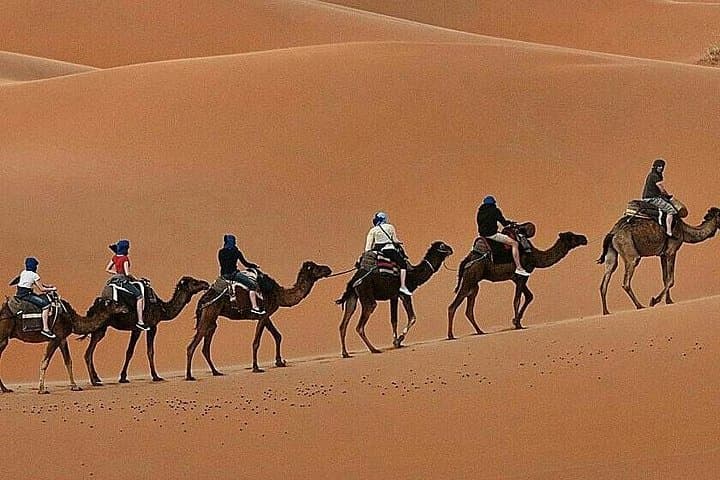
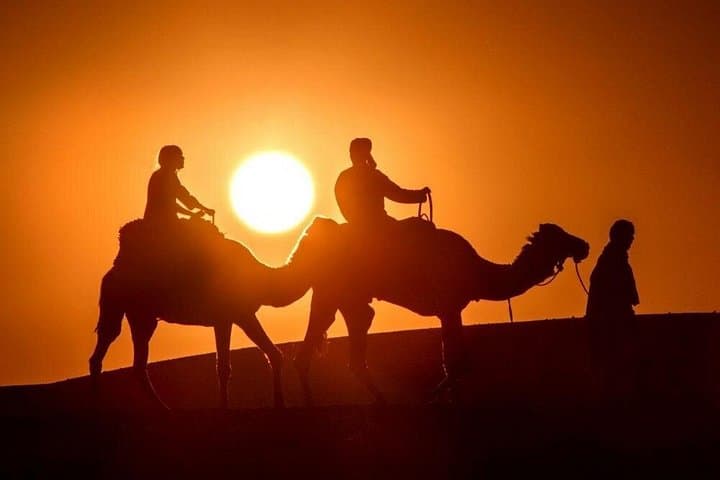
Expect long drives (roughly 6 hours Day 1, 4 hours Day 2, 8 hours Day 3), two nights accommodation including one in a desert camp, a sunset and sunrise camel ride, and an evening around tam‑tam drums. Nights are cold and clear—bring warm layers; days are sun‑baked so sun protection and hydration are essential. Footing on dunes is soft and tiring; moderate fitness makes climbs more comfortable.
Practical tips: plan for early starts and flexible stops at viewpoints, confirm pickup points in Marrakech, and respect local customs—ask before photographing people and keep noise low at camps. The reward is elemental: a starry vault and quiet that rearranges your sense of scale.
Yes—the evening itinerary includes a short camel trek from the road-end to the camp; alternatives may be available but should be confirmed when booking.
Sand walking is tiring; most climbs are short but expect soft footing—moderate fitness is recommended.
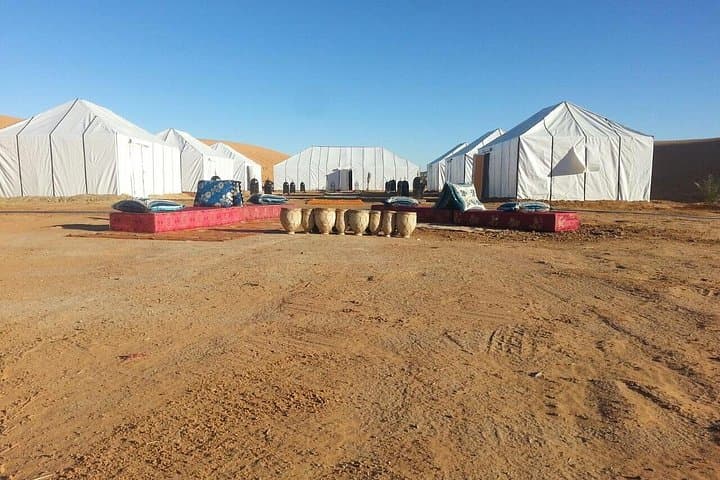
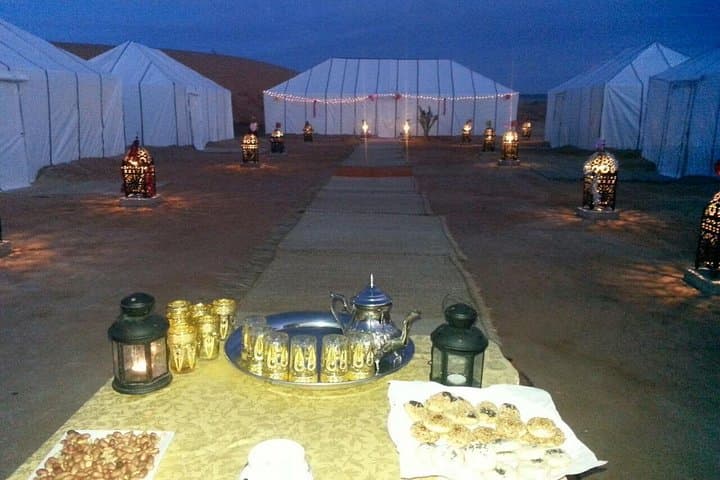
Overnight is in a traditional desert camp in shared or private tents depending on booking; basic bedding is provided and meals are included.
Yes—tours typically include pickup from central Marrakech meeting points or selected riads; verify your exact pickup location when you book.
Atlas Mountain Trekking operates guided outdoor trips and adventures with an emphasis on safety, stewardship, and memorable experiences.
You leave Marrakech at first light, the city shrinking as the road climbs Tizi n’Tichka and the High Atlas pins the horizon with serrated passes. The driver skims hairpin turns and the windows frame kasbahs and terraced slopes until red earth gives way to arid plains and the dunes of Erg Chebbi rise like a living wall.
You leave Marrakech at first light, the city shrinking as the road climbs Tizi n’Tichka and the High Atlas pins the horizon with serrated passes. The driver skims hairpin turns and the windows frame kasbahs and terraced slopes until red earth gives way to arid plains and the dunes of Erg Chebbi rise like a living wall.
The route is a corridor of Moroccan history: Ait Ben Haddou’s fortified clay houses recall caravan trade and film crews, the Valley of the Roses perfumes the air in spring, and ksours punctuate the landscape where Berber communities have worked oasis pockets for centuries. Geologically, Erg Chebbi is a mobile sand sea shaped by Saharan winds; dunes shift daily, catching light and daring you to climb them at sunset.
Expect long drives (roughly 6 hours Day 1, 4 hours Day 2, 8 hours Day 3), two nights accommodation including one in a desert camp, a sunset and sunrise camel ride, and an evening around tam‑tam drums. Nights are cold and clear—bring warm layers; days are sun‑baked so sun protection and hydration are essential. Footing on dunes is soft and tiring; moderate fitness makes climbs more comfortable.
Practical tips: plan for early starts and flexible stops at viewpoints, confirm pickup points in Marrakech, and respect local customs—ask before photographing people and keep noise low at camps. The reward is elemental: a starry vault and quiet that rearranges your sense of scale.
