THE ADVENTURE COLLECTIVE® · Independent discovery and booking for outdoor travel

Three days of motorbike riding across Vietnam’s northern karst plateau, from Bac Sum Pass to Ma Pi Leng and the Nho Que River. This hard-edged Easy Rider route mixes high passes, homestays and a short river boat—ideal for riders who want maximum scenery in minimal time.
Three days of motorbike riding across Vietnam’s northern karst plateau, from Bac Sum Pass to Ma Pi Leng and the Nho Que River. This hard-edged Easy Rider route mixes high passes, homestays and a short river boat—ideal for riders who want maximum scenery in minimal time.
Morning fog peels off the limestone ridges as riders peel away from Ha Giang town—engine hum matching the slow, steady heartbeat of the mountains. Over three days on a hired motorbike with an Easy Rider, the road threads through Bac Sum Pass, Quan Ba’s Heaven Gate, the jagged Dong Van Karst Plateau and the hairpins of Ma Pi Leng.
Verified experiences and guided adventures in the surrounding area.
Operated by Authentuc PU LUONG · Ha Giang, Ha Giang Province
Morning fog peels off the limestone ridges as riders peel away from Ha Giang town—engine hum matching the slow, steady heartbeat of the mountains. Over three days on a hired motorbike with an Easy Rider, the road threads through Bac Sum Pass, Quan Ba’s Heaven Gate, the jagged Dong Van Karst Plateau and the hairpins of Ma Pi Leng.
This landscape has been shaped by tectonics and time: the Dong Van Plateau is a UNESCO-recognized karst region of weathered limestone and steep escarpments, rising from roughly 300 m in valley floors to about 1,500–1,600 m on the highest passes. Culturally, the route traces Hmong, Tay and Dao villages; the Vuong family palace at Sa Phin is an early-20th-century relic of local rule and the French colonial era.
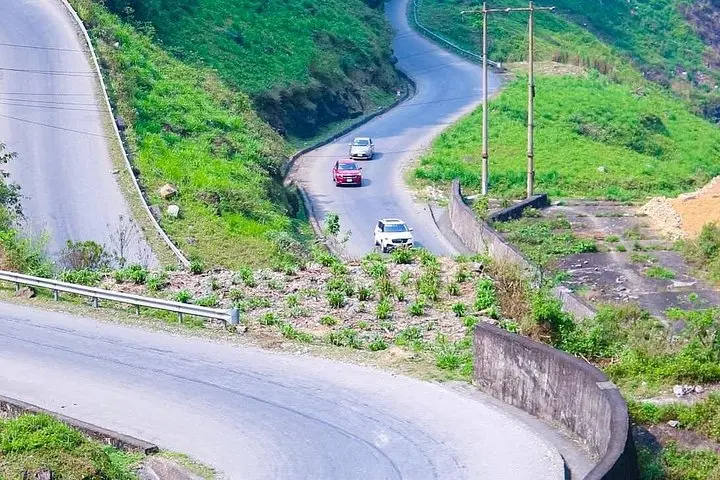
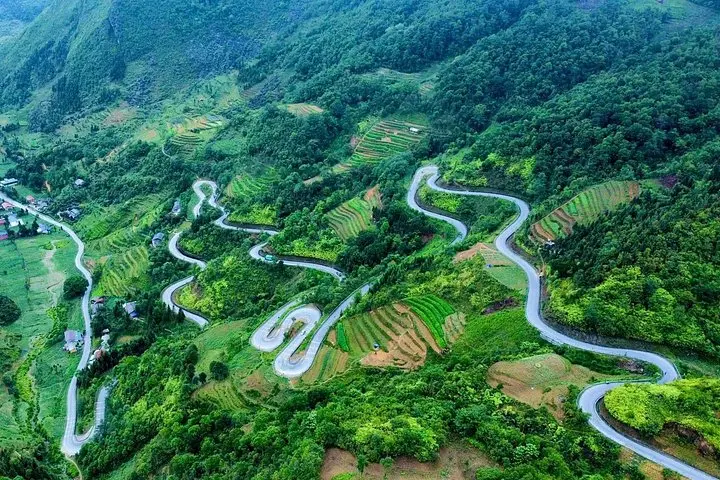
Expect paved but narrow mountain roads, occasional gravel sections and sharp switchbacks. Daily riding averages 100–140 km with long daylight hours on clear days; Ma Pi Leng offers panoramic drops to the Nho Que River where a short boat trip softens the ride’s edge. Night stops are basic homestays or small guesthouses; meals center on rice, local herbs, and slow-cooked pork or fish.
Practical guidance: bring layered waterproofs, a helmet and gloves, and plan fuel stops—stations are sparse between towns. Ride conservatively on descending switchbacks, allow buffer time for weather and landslides, and respect local customs when entering villages. With moderate fitness, basic motorcycle skills and situational awareness, the Ha Giang loop is a compact, high-reward mountain adventure.
Yes—participants should be comfortable riding a motorbike on steep, narrow roads and handling occasional gravel; an Easy Rider (driver) is provided so non-riders can also join as passengers.
Mostly paved but narrow with sharp hairpins and some short unpaved or rough stretches; landslides can occur after heavy rain so flexibility is important.
Typical inclusions are sleeper-bus transfers Hanoi–Ha Giang return, motorbike with an Easy Rider, local guide, meals as listed, selected entrance fees, boat trip on the Nho Que River and homestay accommodations.
Altitude is moderate (up to ~1,500 m); temperatures can drop significantly at dawn and on passes—layering is essential and those with cardiovascular or spinal conditions should avoid the trip.
Authentuc PU LUONG operates guided outdoor trips and adventures with an emphasis on safety, stewardship, and memorable experiences.
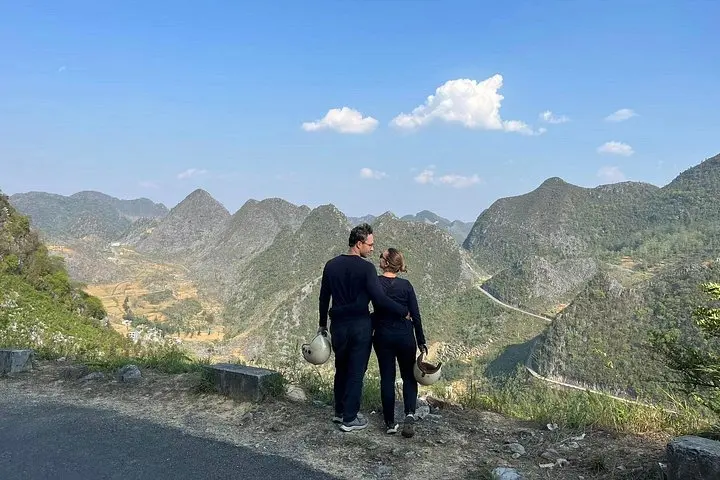
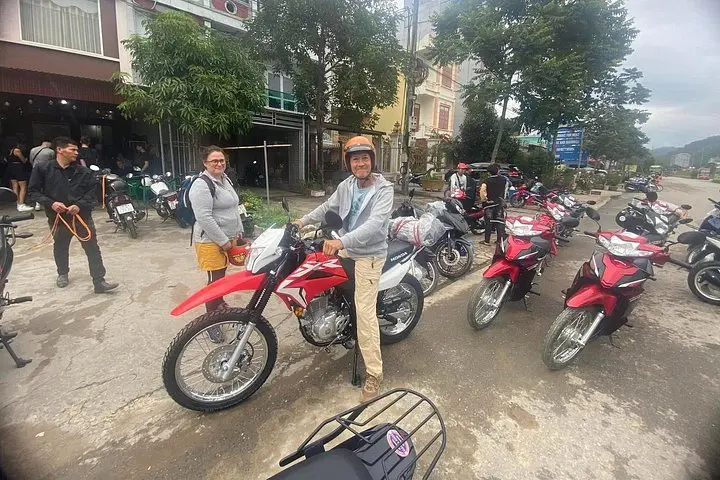
Morning fog peels off the limestone ridges as riders peel away from Ha Giang town—engine hum matching the slow, steady heartbeat of the mountains. Over three days on a hired motorbike with an Easy Rider, the road threads through Bac Sum Pass, Quan Ba’s Heaven Gate, the jagged Dong Van Karst Plateau and the hairpins of Ma Pi Leng.
Morning fog peels off the limestone ridges as riders peel away from Ha Giang town—engine hum matching the slow, steady heartbeat of the mountains. Over three days on a hired motorbike with an Easy Rider, the road threads through Bac Sum Pass, Quan Ba’s Heaven Gate, the jagged Dong Van Karst Plateau and the hairpins of Ma Pi Leng.
This landscape has been shaped by tectonics and time: the Dong Van Plateau is a UNESCO-recognized karst region of weathered limestone and steep escarpments, rising from roughly 300 m in valley floors to about 1,500–1,600 m on the highest passes. Culturally, the route traces Hmong, Tay and Dao villages; the Vuong family palace at Sa Phin is an early-20th-century relic of local rule and the French colonial era.
Expect paved but narrow mountain roads, occasional gravel sections and sharp switchbacks. Daily riding averages 100–140 km with long daylight hours on clear days; Ma Pi Leng offers panoramic drops to the Nho Que River where a short boat trip softens the ride’s edge. Night stops are basic homestays or small guesthouses; meals center on rice, local herbs, and slow-cooked pork or fish.
Practical guidance: bring layered waterproofs, a helmet and gloves, and plan fuel stops—stations are sparse between towns. Ride conservatively on descending switchbacks, allow buffer time for weather and landslides, and respect local customs when entering villages. With moderate fitness, basic motorcycle skills and situational awareness, the Ha Giang loop is a compact, high-reward mountain adventure.