
3-Day Mount Bromo and Ijen Crater Tour from Yogyakarta to Bali
Witness sunrise over Mount Bromo and chase the rare blue fire of Kawah Ijen on a three-day transfer from Yogyakarta to Bali. This compact itinerary packs two of East Java’s most dramatic volcanic experiences with local guides, hotel stays, and transport included.
An Adventure In Probolinggo.
Witness sunrise over Mount Bromo and chase the rare blue fire of Kawah Ijen on a three-day transfer from Yogyakarta to Bali. This compact itinerary packs two of East Java’s most dramatic volcanic experiences with local guides, hotel stays, and transport included.
Read the full experience
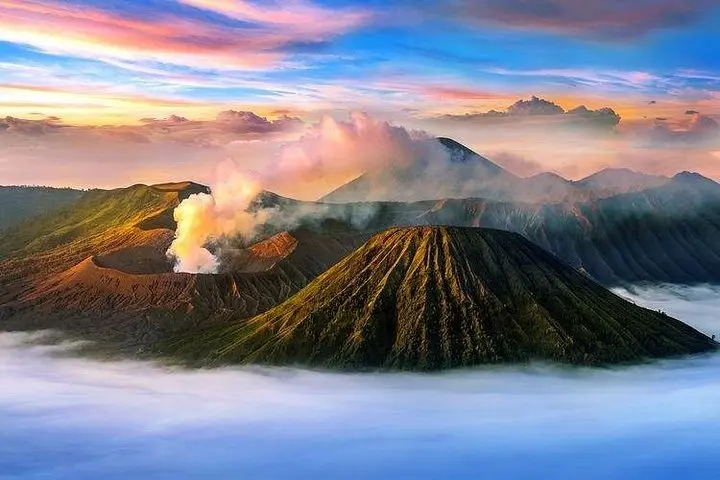
You step out of the jeep into a pre-dawn cold that feels unusually sharp for Java. Pananjakan’s ridge frames the horizon: black silhouettes of volcanoes, steam rising like breath. At sunrise, Bromo’s crater puffs and shifts, a raw, volcanic theater; later you follow the ribbon of road east toward Kawah Ijen, where a sulfurous haze and the elusive blue fire await.
You step out of the jeep into a pre-dawn cold that feels unusually sharp for Java. Pananjakan’s ridge frames the horizon: black silhouettes of volcanoes, steam rising like breath. At sunrise, Bromo’s crater puffs and shifts, a raw, volcanic theater; later you follow the ribbon of road east toward Kawah Ijen, where a sulfurous haze and the elusive blue fire await.
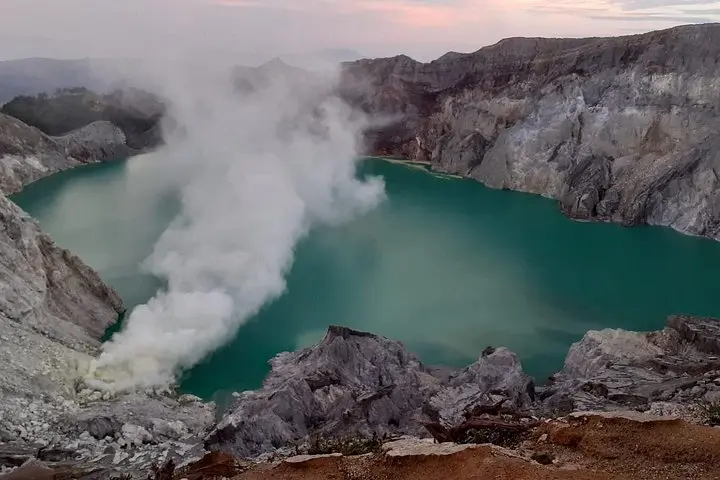
These two sites are geological opposites: Bromo sits on the broad Tengger caldera, shaped by repeated eruptions and persistent winds; Ijen is a stratovolcano with an acidic crater lake and active sulfur mining. The Tengger people maintain cultural traditions here, most visibly the Yadnya Kasada offerings tossed into Bromo’s maw. Banyuwangi’s miners and guides have worked Ijen for generations, extracting sulfur by hand and navigating toxic fumes.
Expect steep stone staircases to Bromo’s rim, a sandy sea of the “Sea of Sand,” and a 3–4 hour pre-dawn ascent at Ijen from the base to the rim. Blue fire appears only in darkness and requires an early, sometimes windy climb; visibility and gas conditions decide the show.
Practical guidance: book dry-season dates (April–October) for clearer skies, pack a warm layer and headlamp, and bring a respirator or good filter for Ijen’s sulfur. Allow time between sites—driving is long—and choose experienced local guides for safety around gases and steep trails. Respect mining areas and Tengger customs: small offerings and quiet at sacred points go a long way.
Frequently asked questions
Blue fire is visible only in darkness—plan a pre-dawn ascent on a clear, low-wind morning; visibility depends on gas and light conditions.
Both sites are below high-altitude thresholds (Bromo ~2,329 m, Ijen rim ~2,443 m) but early starts, cold, and exertion can affect breathing; take it steady and hydrate.
Yes with caution: stay on marked trails and follow guides’ instructions—sulfur areas can have thin crusts and unstable ground.
Yes—this itinerary includes private transport, local driver/guide service, and overnight accommodations near Bromo and Ijen, with drop-off in Bali.
About This Experience
Ayla Tour operates guided outdoor trips and adventures with an emphasis on safety, stewardship, and memorable experiences.
Adventure tips
Recommended gear
- Headlamp with fresh batteries: Hands-free light for pre-dawn ascents and uneven terrain.
- Sturdy hiking shoes (grippy soles): Supports ankle stability on sand, volcanic rock, and stairs.
- Warm insulated jacket: Temperatures at sunrise can drop sharply at high elevations.
- N95 respirator or reusable gas mask: Reduces exposure to sulfur fumes at Ijen’s crater rim.
Photos of the experience
Related adventures & guides
Read the full experience
You step out of the jeep into a pre-dawn cold that feels unusually sharp for Java. Pananjakan’s ridge frames the horizon: black silhouettes of volcanoes, steam rising like breath. At sunrise, Bromo’s crater puffs and shifts, a raw, volcanic theater; later you follow the ribbon of road east toward Kawah Ijen, where a sulfurous haze and the elusive blue fire await.
You step out of the jeep into a pre-dawn cold that feels unusually sharp for Java. Pananjakan’s ridge frames the horizon: black silhouettes of volcanoes, steam rising like breath. At sunrise, Bromo’s crater puffs and shifts, a raw, volcanic theater; later you follow the ribbon of road east toward Kawah Ijen, where a sulfurous haze and the elusive blue fire await.
These two sites are geological opposites: Bromo sits on the broad Tengger caldera, shaped by repeated eruptions and persistent winds; Ijen is a stratovolcano with an acidic crater lake and active sulfur mining. The Tengger people maintain cultural traditions here, most visibly the Yadnya Kasada offerings tossed into Bromo’s maw. Banyuwangi’s miners and guides have worked Ijen for generations, extracting sulfur by hand and navigating toxic fumes.
Expect steep stone staircases to Bromo’s rim, a sandy sea of the “Sea of Sand,” and a 3–4 hour pre-dawn ascent at Ijen from the base to the rim. Blue fire appears only in darkness and requires an early, sometimes windy climb; visibility and gas conditions decide the show.
Practical guidance: book dry-season dates (April–October) for clearer skies, pack a warm layer and headlamp, and bring a respirator or good filter for Ijen’s sulfur. Allow time between sites—driving is long—and choose experienced local guides for safety around gases and steep trails. Respect mining areas and Tengger customs: small offerings and quiet at sacred points go a long way.
Make a day of it nearby.
Verified experiences and guided adventures in the surrounding area.