THE ADVENTURE COLLECTIVE® · Independent discovery and booking for outdoor travel
Three days, two nights and a midnight summit push takes you from Arusha’s savanna into Meru’s crater rim. This hut-to-hut ascent blends wildlife-rich walking with high-altitude ridge travel and panoramic views of Kilimanjaro — all led by certified guides and an armed ranger.
Three days, two nights and a midnight summit push takes you from Arusha’s savanna into Meru’s crater rim. This hut-to-hut ascent blends wildlife-rich walking with high-altitude ridge travel and panoramic views of Kilimanjaro — all led by certified guides and an armed ranger.
The night before the climb, Arusha hums with low diesel and fresh-roasted coffee; by dawn the town peels away and the minivan dumps you at Momella Gate, where the trail tilts into forest and the air tastes like wet earth. The Ngarenanyuki River dares you forward, its white water threading the valley as guides sort packs and porters sling duffels. On Day One the path feels like a walking safari — giraffes lift their heads from acacia, zebras scatter like punctuation — until the trail narrows and the canopy closes above Miriakamba Hut at 2,500 m.
Verified experiences and guided adventures in the surrounding area.
Operated by Destiny Explorers · Arusha, Arusha Region
The night before the climb, Arusha hums with low diesel and fresh-roasted coffee; by dawn the town peels away and the minivan dumps you at Momella Gate, where the trail tilts into forest and the air tastes like wet earth. The Ngarenanyuki River dares you forward, its white water threading the valley as guides sort packs and porters sling duffels. On Day One the path feels like a walking safari — giraffes lift their heads from acacia, zebras scatter like punctuation — until the trail narrows and the canopy closes above Miriakamba Hut at 2,500 m.
Mount Meru is geologically young: a stratovolcano that rises abruptly from the Rift Valley and forms a dramatic amphitheater around a collapsed crater and the Ash Cone. Culturally it sits in the shadow of Kilimanjaro but has its own history of volcanic eruptions and local Maasai lore; the mountain’s flanks have been travel corridors for centuries and today support Arusha National Park’s mosaic of montane forest, moorland and ash fields.
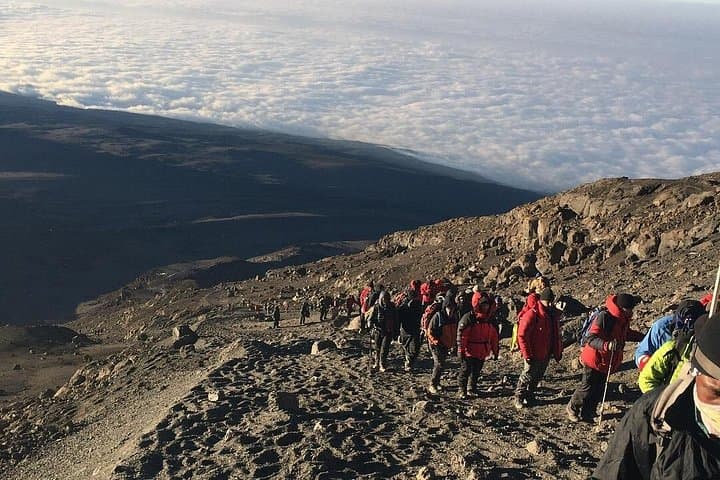
The itinerary is compact but purposeful. Day Two gains roughly 1,050 m over 5 km to Saddle Hut (3,550 m) along a ridge that reveals Meru’s crater and the black Ash Cone. Acclimatize with the optional scramble up Little Meru (3,820 m) before an early dinner. The summit push starts at midnight: a steep hour to Rhino Point (3,800 m), then a knife-edge ridge of ash and rock to Cobra Point (4,350 m), and the final hour to Meru Peak at 4,562 m. Sunrise here can reveal Kilimanjaro floating on a sea of cloud — a hard-earned panorama.
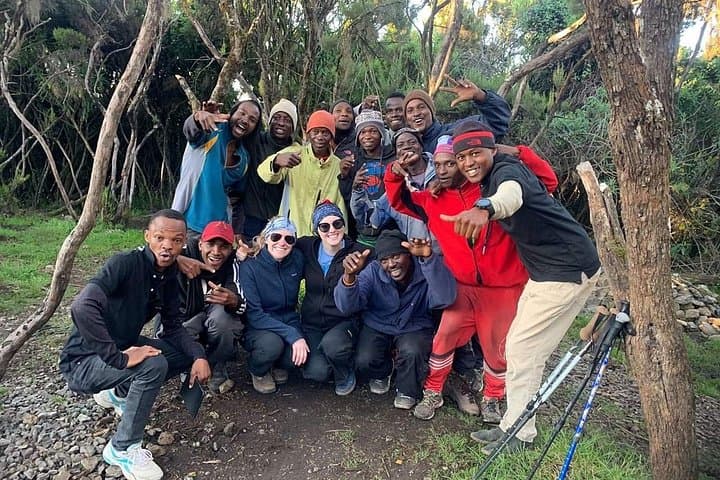
This is a guided, hut-based climb. Guides hold Wilderness First Responder certification and an armed ranger accompanies every party above the park’s lower boundary; porters and a cook handle logistics and meals are included. Expect simple huts, hot dinners in the mess, and a team that moves with practiced efficiency.
Practical guidance: bring layered clothing for damp forests and high-altitude wind, a reliable headlamp for the midnight ascent, and break in waterproof boots — the upper sections are loose ash and scree. Hydration and pacing matter more than speed; avoid alcohol and caffeine the day before and during higher nights. If you’re prone to altitude sickness, discuss medication and breathing strategies with your guide before departure.
Timing: the climb runs year-round, but long rains (March–May) make trails slippery and visibility poor; the drier months (June–September, December–February) are more stable. Allow travel time to Arusha or Moshi after the descent; transfer logistics are included.
For trekkers who want a technical summit without extended logistics, Mount Meru is a compact, dramatic alternative to Kilimanjaro: less crowded, intensely varied terrain, and a route that rewards steady pacing with vast Rift Valley views and the rare thrill of a crater-side sunrise.
No technical climbing skills are required—the route is a strenuous trek rather than a technical ascent, but prior multi-day hiking experience and good fitness are recommended.
Overnight accommodations are in simple mountain huts and are typically shared dormitory-style with communal facilities.
Yes—an armed ranger from Tanzania National Parks accompanies parties above certain points for safety and to deter poaching activities.
The trip includes breakfasts, lunches and dinners as listed in the itinerary, prepared by the mountain cook and served at the huts and camps.
The drier months (June–September and December–February) offer more stable weather and clearer summit views; long rains (March–May) can make trails muddy and visibility poor.
Yes—transport from Momella Gate to Arusha or Moshi is arranged at the end of the trek as part of the transfer logistics.
Destiny Explorers operates guided outdoor trips and adventures with an emphasis on safety, stewardship, and memorable experiences.
The night before the climb, Arusha hums with low diesel and fresh-roasted coffee; by dawn the town peels away and the minivan dumps you at Momella Gate, where the trail tilts into forest and the air tastes like wet earth. The Ngarenanyuki River dares you forward, its white water threading the valley as guides sort packs and porters sling duffels. On Day One the path feels like a walking safari — giraffes lift their heads from acacia, zebras scatter like punctuation — until the trail narrows and the canopy closes above Miriakamba Hut at 2,500 m.
The night before the climb, Arusha hums with low diesel and fresh-roasted coffee; by dawn the town peels away and the minivan dumps you at Momella Gate, where the trail tilts into forest and the air tastes like wet earth. The Ngarenanyuki River dares you forward, its white water threading the valley as guides sort packs and porters sling duffels. On Day One the path feels like a walking safari — giraffes lift their heads from acacia, zebras scatter like punctuation — until the trail narrows and the canopy closes above Miriakamba Hut at 2,500 m.
Mount Meru is geologically young: a stratovolcano that rises abruptly from the Rift Valley and forms a dramatic amphitheater around a collapsed crater and the Ash Cone. Culturally it sits in the shadow of Kilimanjaro but has its own history of volcanic eruptions and local Maasai lore; the mountain’s flanks have been travel corridors for centuries and today support Arusha National Park’s mosaic of montane forest, moorland and ash fields.
The itinerary is compact but purposeful. Day Two gains roughly 1,050 m over 5 km to Saddle Hut (3,550 m) along a ridge that reveals Meru’s crater and the black Ash Cone. Acclimatize with the optional scramble up Little Meru (3,820 m) before an early dinner. The summit push starts at midnight: a steep hour to Rhino Point (3,800 m), then a knife-edge ridge of ash and rock to Cobra Point (4,350 m), and the final hour to Meru Peak at 4,562 m. Sunrise here can reveal Kilimanjaro floating on a sea of cloud — a hard-earned panorama.
This is a guided, hut-based climb. Guides hold Wilderness First Responder certification and an armed ranger accompanies every party above the park’s lower boundary; porters and a cook handle logistics and meals are included. Expect simple huts, hot dinners in the mess, and a team that moves with practiced efficiency.
Practical guidance: bring layered clothing for damp forests and high-altitude wind, a reliable headlamp for the midnight ascent, and break in waterproof boots — the upper sections are loose ash and scree. Hydration and pacing matter more than speed; avoid alcohol and caffeine the day before and during higher nights. If you’re prone to altitude sickness, discuss medication and breathing strategies with your guide before departure.
Timing: the climb runs year-round, but long rains (March–May) make trails slippery and visibility poor; the drier months (June–September, December–February) are more stable. Allow travel time to Arusha or Moshi after the descent; transfer logistics are included.
For trekkers who want a technical summit without extended logistics, Mount Meru is a compact, dramatic alternative to Kilimanjaro: less crowded, intensely varied terrain, and a route that rewards steady pacing with vast Rift Valley views and the rare thrill of a crater-side sunrise.
