THE ADVENTURE COLLECTIVE® · Independent discovery and booking for outdoor travel

A three-day Nile cruise from Aswan to Luxor pairs relaxed river travel with concentrated visits to Philae, Kom Ombo, Edfu and the Valley of the Kings — plus an optional pilgrimage to Abu Simbel. Expect early starts for key monuments, guided walks on ancient stone, and comfortable nights aboard a full-board cruise.
A three-day Nile cruise from Aswan to Luxor pairs relaxed river travel with concentrated visits to Philae, Kom Ombo, Edfu and the Valley of the Kings — plus an optional pilgrimage to Abu Simbel. Expect early starts for key monuments, guided walks on ancient stone, and comfortable nights aboard a full-board cruise.
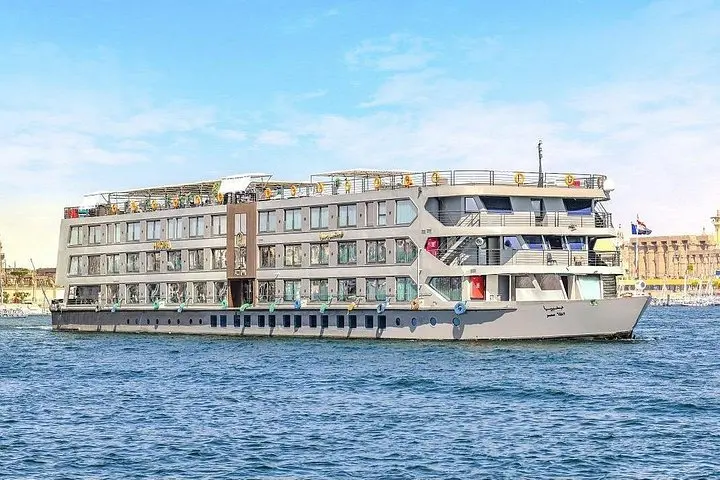
Dawn arrives slow and gold on the Nile; the cruise slips from Aswan’s quay and the river widens, palms and low cliffs sliding past like pages of history. On deck the water nudges the boat forward while the domes and pylons of the pharaonic past punctuate the horizon — Philae’s island temple, Kom Ombo’s twin gods, and the hulking silhouettes of Abu Simbel far to the south.
Verified experiences and guided adventures in the surrounding area.
Operated by Fly in Minute · Aswan, Aswan Governorate
Dawn arrives slow and gold on the Nile; the cruise slips from Aswan’s quay and the river widens, palms and low cliffs sliding past like pages of history. On deck the water nudges the boat forward while the domes and pylons of the pharaonic past punctuate the horizon — Philae’s island temple, Kom Ombo’s twin gods, and the hulking silhouettes of Abu Simbel far to the south.
This corridor of Upper Egypt sits on layered sandstone and alluvial plain where millennia of riverine civilization concentrated temples and tombs. Modern engineering — the Aswan High Dam and the relocation of Abu Simbel in the 1960s — shaped the landscape as dramatically as any pharaoh. Local culture reflects Nubian and Egyptian rhythms: boatmen, market traders, and guides who read hieroglyphs as naturally as the weather.
Practical rhythm: days are guided shore excursions with short walks on uneven stone, early starts for long transfers (the Abu Simbel option requires a predawn drive), and evenings aboard with full board accommodation. Expect narrow temple passageways, stair climbs at mortuary temples, and sunny, wind-cut decks between stops.
Bring sun protection, comfortable closed-toe shoes for temple floors, and a small daypack for water and camera. Cash in Egyptian pounds makes small purchases and tipping straightforward. Wheelchair access is limited at some sites despite claims of accessibility; check specific requirements in advance. For travelers wanting history without heavy exertion, the cruise balances relaxed river time with concentrated cultural site visits — the Nile itself insists you slow down and pay attention.
Abu Simbel is offered as an optional early-morning excursion; it often requires a separate transfer and may not include entrance fees in the base price.
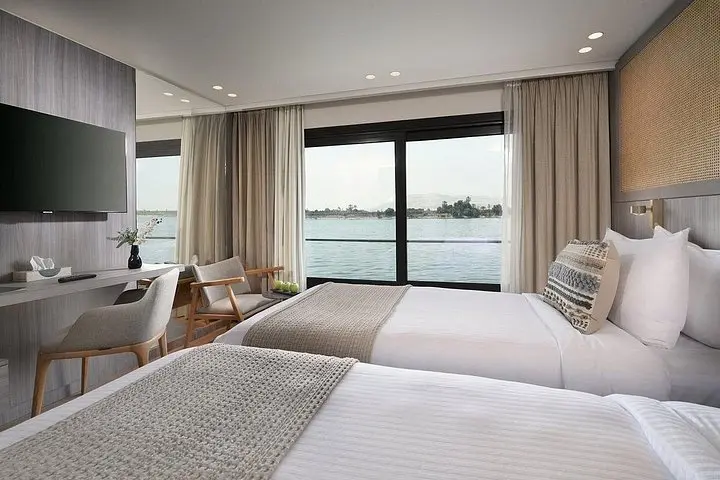
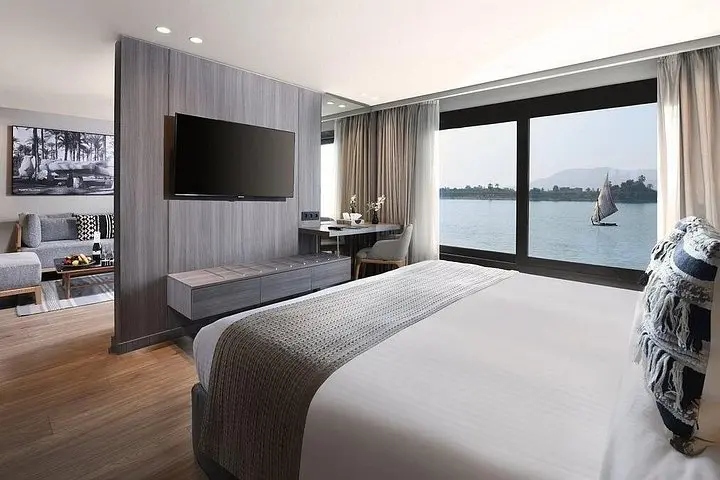
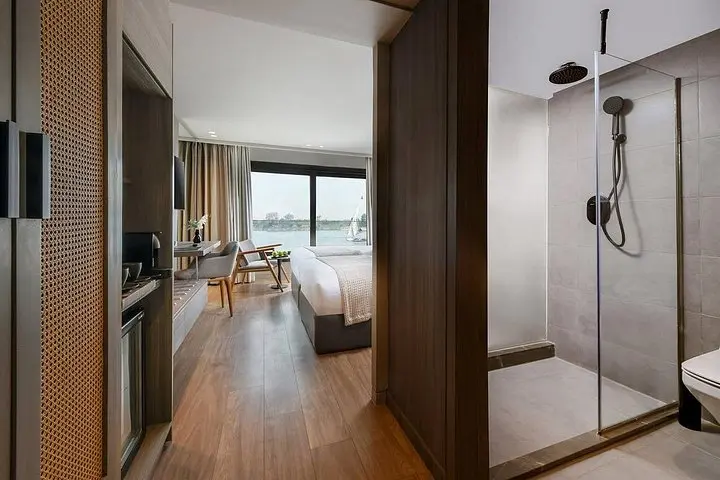
The cruise includes full board meals as listed (breakfast, lunch and dinner) but alcohol and specialty drinks may be extra depending on the vessel's policy.
The operator lists general wheelchair accessibility, but many temple sites have uneven ground and stairs; contact the provider with specific mobility needs before booking.
If a hot air balloon component is cancelled due to weather, a partial refund policy is typically in place (the operator notes a refund amount for canceled balloon rides).
Fly in Minute operates guided outdoor trips and adventures with an emphasis on safety, stewardship, and memorable experiences.
Dawn arrives slow and gold on the Nile; the cruise slips from Aswan’s quay and the river widens, palms and low cliffs sliding past like pages of history. On deck the water nudges the boat forward while the domes and pylons of the pharaonic past punctuate the horizon — Philae’s island temple, Kom Ombo’s twin gods, and the hulking silhouettes of Abu Simbel far to the south.
Dawn arrives slow and gold on the Nile; the cruise slips from Aswan’s quay and the river widens, palms and low cliffs sliding past like pages of history. On deck the water nudges the boat forward while the domes and pylons of the pharaonic past punctuate the horizon — Philae’s island temple, Kom Ombo’s twin gods, and the hulking silhouettes of Abu Simbel far to the south.
This corridor of Upper Egypt sits on layered sandstone and alluvial plain where millennia of riverine civilization concentrated temples and tombs. Modern engineering — the Aswan High Dam and the relocation of Abu Simbel in the 1960s — shaped the landscape as dramatically as any pharaoh. Local culture reflects Nubian and Egyptian rhythms: boatmen, market traders, and guides who read hieroglyphs as naturally as the weather.
Practical rhythm: days are guided shore excursions with short walks on uneven stone, early starts for long transfers (the Abu Simbel option requires a predawn drive), and evenings aboard with full board accommodation. Expect narrow temple passageways, stair climbs at mortuary temples, and sunny, wind-cut decks between stops.
Bring sun protection, comfortable closed-toe shoes for temple floors, and a small daypack for water and camera. Cash in Egyptian pounds makes small purchases and tipping straightforward. Wheelchair access is limited at some sites despite claims of accessibility; check specific requirements in advance. For travelers wanting history without heavy exertion, the cruise balances relaxed river time with concentrated cultural site visits — the Nile itself insists you slow down and pay attention.