THE ADVENTURE COLLECTIVE® · Independent discovery and booking for outdoor travel

Three days of off-road trails, remote Thai villages and bamboo rafting in Pu Luong Nature Reserve. This practical guide outlines kms, terrain, culture and what to pack for the trek from Hanoi.
Three days of off-road trails, remote Thai villages and bamboo rafting in Pu Luong Nature Reserve. This practical guide outlines kms, terrain, culture and what to pack for the trek from Hanoi.
You step off the minibus into a cool wash of mountain air and the first line of terraces unfurls below—green ribbons cut into steep slopes, water channels glinting like veins. The track ahead is a mix of packed dirt, rutted off-road trails and low jungle steps; streams will cross your path and wooden bridges will creak underfoot.
Verified experiences and guided adventures in the surrounding area.
Operated by Local Tours ASIA · Quan Hoa, Thanh Hoa
You step off the minibus into a cool wash of mountain air and the first line of terraces unfurls below—green ribbons cut into steep slopes, water channels glinting like veins. The track ahead is a mix of packed dirt, rutted off-road trails and low jungle steps; streams will cross your path and wooden bridges will creak underfoot.
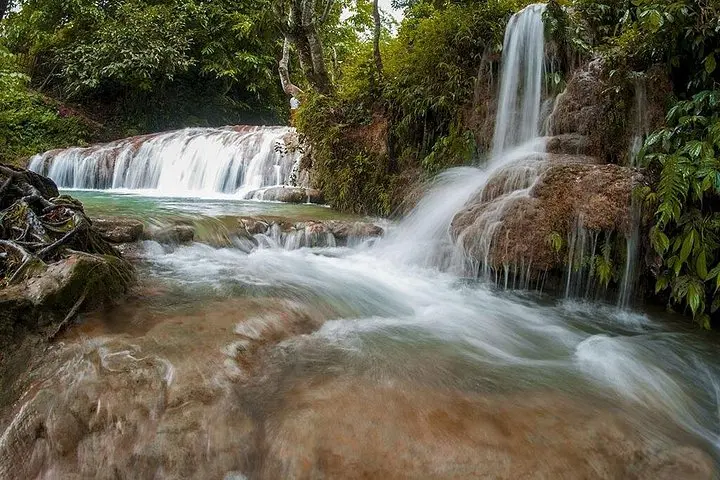
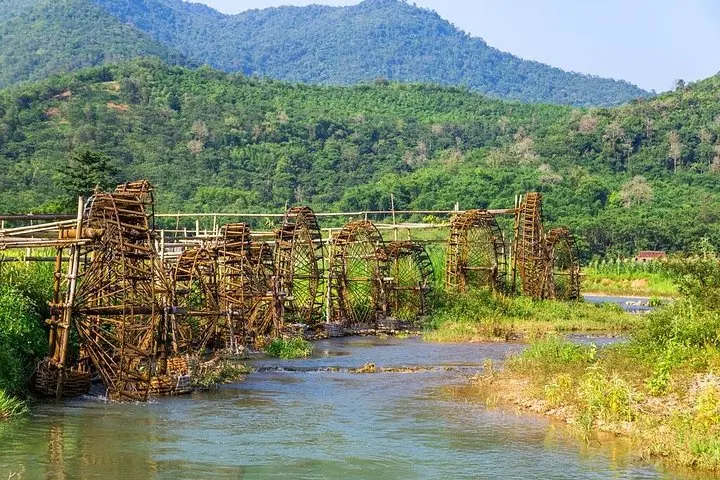
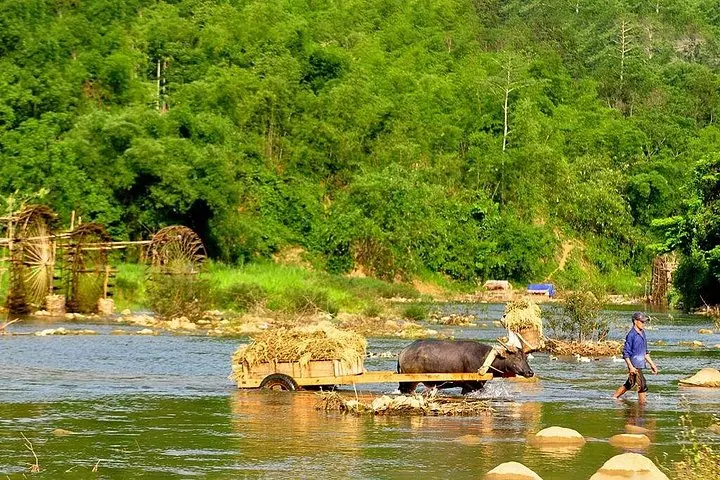
Pu Luong sits on the western edge of Thanh Hóa province where limestone ridges and folded karst meet broad, human-carved rice terraces. The area has long been home to Thai ethnic villages whose stilt houses, giant water wheels and communal paddies shape the local rhythm. Geology here creates abrupt climbs and sheltered stream valleys; expect a few hundred metres of ascent scattered across single-day hikes and a persistent clay underfoot when wet.
Over three days you’ll trek roughly 30–35 km total—day one’s 10 km off-road approach to Kho Muong and the reserve’s largest cave, day two’s 19 km mixed trails through Don, Uoi and Hieu villages, and a shorter riverside loop with bamboo rafting on day three. Guides lead village visits and arrange stays in shared stilt houses or private rooms; meals are local and filling.
Practical edge: start early to avoid midday heat, pack a waterproof layer for sudden tropical downpours, and bring cash for small purchases in villages. Footwear with good grip and ankle support matters—mud and river crossings are common. Hydrate often and plan for limited charging; solar packs work well. The reserve rewards steady pacing: when a river dares you to cross, take it slow and enjoy the quiet of rural mountain life.
You should have moderate fitness—able to walk 3–6 hours a day on uneven terrain with a few hundred metres of ascent; guides adjust pace to the group.
The tour departs from central Hanoi (pick-up near the Old Quarter) and returns to Hanoi at the end of day three.
Accommodations are shared stilt houses or private rooms depending on booking; local breakfasts, lunches and dinners are included as listed in the itinerary.
Rafting is on calm, shallow sections and guided by locals; non-swimmers should wear life vests and follow the guide’s instructions.
Local Tours ASIA operates guided outdoor trips and adventures with an emphasis on safety, stewardship, and memorable experiences.

You step off the minibus into a cool wash of mountain air and the first line of terraces unfurls below—green ribbons cut into steep slopes, water channels glinting like veins. The track ahead is a mix of packed dirt, rutted off-road trails and low jungle steps; streams will cross your path and wooden bridges will creak underfoot.
You step off the minibus into a cool wash of mountain air and the first line of terraces unfurls below—green ribbons cut into steep slopes, water channels glinting like veins. The track ahead is a mix of packed dirt, rutted off-road trails and low jungle steps; streams will cross your path and wooden bridges will creak underfoot.
Pu Luong sits on the western edge of Thanh Hóa province where limestone ridges and folded karst meet broad, human-carved rice terraces. The area has long been home to Thai ethnic villages whose stilt houses, giant water wheels and communal paddies shape the local rhythm. Geology here creates abrupt climbs and sheltered stream valleys; expect a few hundred metres of ascent scattered across single-day hikes and a persistent clay underfoot when wet.
Over three days you’ll trek roughly 30–35 km total—day one’s 10 km off-road approach to Kho Muong and the reserve’s largest cave, day two’s 19 km mixed trails through Don, Uoi and Hieu villages, and a shorter riverside loop with bamboo rafting on day three. Guides lead village visits and arrange stays in shared stilt houses or private rooms; meals are local and filling.
Practical edge: start early to avoid midday heat, pack a waterproof layer for sudden tropical downpours, and bring cash for small purchases in villages. Footwear with good grip and ankle support matters—mud and river crossings are common. Hydrate often and plan for limited charging; solar packs work well. The reserve rewards steady pacing: when a river dares you to cross, take it slow and enjoy the quiet of rural mountain life.