THE ADVENTURE COLLECTIVE® · Independent discovery and booking for outdoor travel

Explore Hamar bull-jumping, Karo body painting, Mursi lip plates and lively Dimeka markets on a focused three-day circuit from Jinka. Expect dusty roads, intimate cultural encounters, and short drives between riverside villages.
Explore Hamar bull-jumping, Karo body painting, Mursi lip plates and lively Dimeka markets on a focused three-day circuit from Jinka. Expect dusty roads, intimate cultural encounters, and short drives between riverside villages.
You arrive to a rough runway and a sky that seems larger here — the plane sets you down at Jinka and the low hills of the Omo Valley spread outward, dust catching the late light. The first day’s drive pushes through red-earth tracks toward Turmi, where Hamar villages cluster and the bull-jumping arena pulses with ritual energy.
Verified experiences and guided adventures in the surrounding area.
Operated by Papyrus Tours · Jinka, Southern Nations, Nationalities, and Peoples' Region
You arrive to a rough runway and a sky that seems larger here — the plane sets you down at Jinka and the low hills of the Omo Valley spread outward, dust catching the late light. The first day’s drive pushes through red-earth tracks toward Turmi, where Hamar villages cluster and the bull-jumping arena pulses with ritual energy.
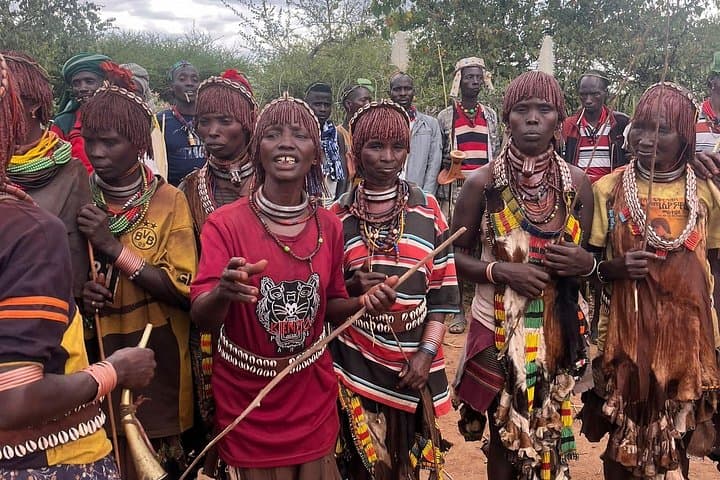
This landscape is young, shaped by the Omo River’s seasonal moods and the volcanic highlands that sit upstream. The valley is as much cultural geology as physical: river bends define settlement, and mud-plastered homes, beadwork and body paint map lines of identity. The Hamar, Karo, Mursi, Banna, Tsemay and Ari peoples here maintain distinct traditions — from the Hamar’s red-clay hair and bull-jumping rite to the Mursi women’s lip plates and the Karo’s detailed body painting along the riverbanks. Markets — Dimeka on market day — are where cattle, crops and crafts trade hands and stories.
Practically, expect dusty roads, hot afternoons and close encounters rather than curated performances: this is observational travel with local negotiation. Accommodations range from basic lodges in Turmi and Jinka to camping if you opt in. Bring breathable clothing that respects local norms, carry water, and plan for early starts when temperatures are cooler. Guides and local drivers are essential for timing market visits and ceremonies; photography etiquette and small gifts go a long way. Over three days you’ll rotate between riverside settlements and market squares, finish with a flight back to Addis, and leave with a firmer sense of how people and landscape shape each other along the Omo.
Routine vaccinations are recommended; consult a travel clinic for malaria prophylaxis and carry basic first-aid and water-purification options.
Always ask permission first — some rituals are private and guides will advise when photography is appropriate or not.
Options range from simple lodges in Turmi and Jinka to camping; facilities are basic compared with urban hotels but comfortable enough for short stays.
Market visits occur on specific days (e.g., Dimeka on Saturdays); guides will plan the itinerary around market days to maximize cultural encounters.
Papyrus Tours operates guided outdoor trips and adventures with an emphasis on safety, stewardship, and memorable experiences.


You arrive to a rough runway and a sky that seems larger here — the plane sets you down at Jinka and the low hills of the Omo Valley spread outward, dust catching the late light. The first day’s drive pushes through red-earth tracks toward Turmi, where Hamar villages cluster and the bull-jumping arena pulses with ritual energy.
You arrive to a rough runway and a sky that seems larger here — the plane sets you down at Jinka and the low hills of the Omo Valley spread outward, dust catching the late light. The first day’s drive pushes through red-earth tracks toward Turmi, where Hamar villages cluster and the bull-jumping arena pulses with ritual energy.
This landscape is young, shaped by the Omo River’s seasonal moods and the volcanic highlands that sit upstream. The valley is as much cultural geology as physical: river bends define settlement, and mud-plastered homes, beadwork and body paint map lines of identity. The Hamar, Karo, Mursi, Banna, Tsemay and Ari peoples here maintain distinct traditions — from the Hamar’s red-clay hair and bull-jumping rite to the Mursi women’s lip plates and the Karo’s detailed body painting along the riverbanks. Markets — Dimeka on market day — are where cattle, crops and crafts trade hands and stories.
Practically, expect dusty roads, hot afternoons and close encounters rather than curated performances: this is observational travel with local negotiation. Accommodations range from basic lodges in Turmi and Jinka to camping if you opt in. Bring breathable clothing that respects local norms, carry water, and plan for early starts when temperatures are cooler. Guides and local drivers are essential for timing market visits and ceremonies; photography etiquette and small gifts go a long way. Over three days you’ll rotate between riverside settlements and market squares, finish with a flight back to Addis, and leave with a firmer sense of how people and landscape shape each other along the Omo.