THE ADVENTURE COLLECTIVE® · Independent discovery and booking for outdoor travel

Three days tracing the Omo River from Jinka to Turmi and Omorate, meeting the Hamer, Mursi and Dasenech in markets, villages and riverside crossings. Expect short village walks, canoe rides and vibrant evening dances.
Three days tracing the Omo River from Jinka to Turmi and Omorate, meeting the Hamer, Mursi and Dasenech in markets, villages and riverside crossings. Expect short village walks, canoe rides and vibrant evening dances.
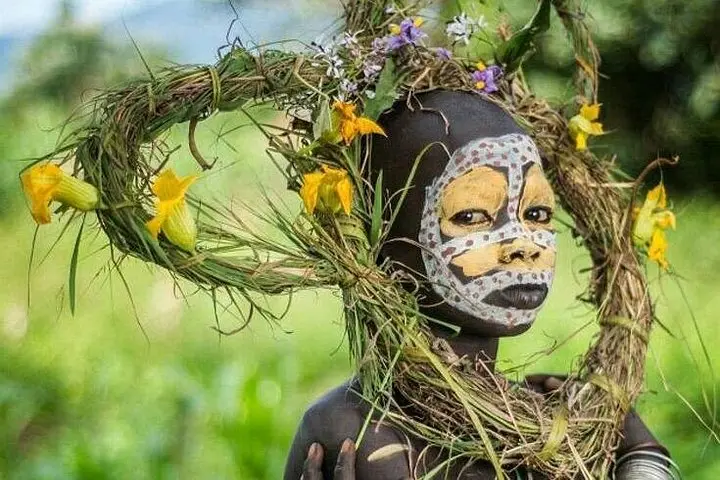
Dust from the red earth lifts as the minibus eases out of Jinka at dawn, and the Omo Valley opens like a changing gallery — dry riverbeds, thorn scrub, and villages where painted bodies move between shade and sun.
Verified experiences and guided adventures in the surrounding area.
Operated by Sun City Ethiopia Tour · Jinka, Southern Nations, Nationalities, and Peoples' Region
Dust from the red earth lifts as the minibus eases out of Jinka at dawn, and the Omo Valley opens like a changing gallery — dry riverbeds, thorn scrub, and villages where painted bodies move between shade and sun.
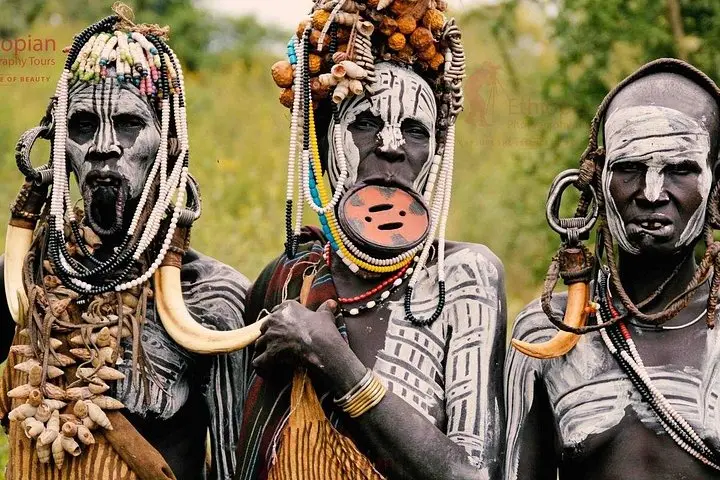
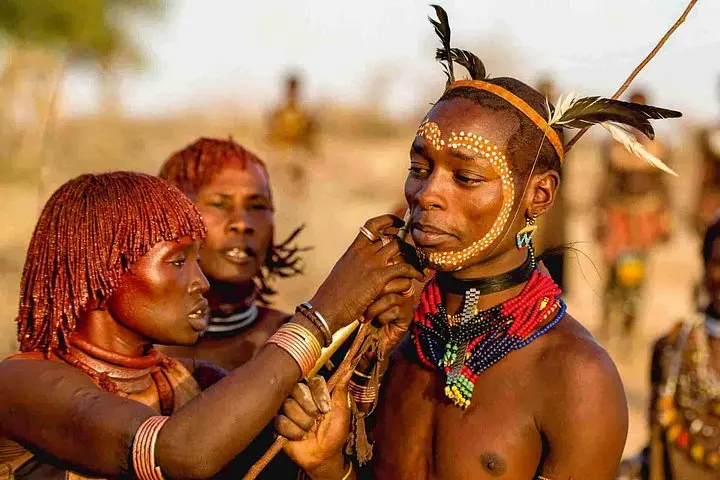
This three-day circuit threads Jinka, Turmi and Omorate, following the Omo River’s pull. Geologically the valley is a rift-margin landscape carved by the river and ancient tectonics; fertile riverbanks contrast with sun-baked plains where semi-nomadic groups graze cattle. Culturally the region is singular: the Hamer’s braided hair and beadwork, the Mursi’s lip plates and clay ornaments, and the Dasenech’s scarification tell stories of identity and rite.
Expect market bustle (Key Afer is the largest weekly market), short guided walks in village compounds, a dugout canoe crossing at Omorate, and evening dances such as Evangadi or, if timed right, the Hamer bull-jumping ceremony. Distances are modest but often on rough, unpaved roads — Turmi to Omorate is about 70 km over variable terrain; Jinka to Mursi is roughly 65–70 km.
Plan practically: bring local currency and small bills, carry water and sun protection, and keep camera etiquette in mind — always ask before photographing people. Accommodations are basic lodges; early flights connect Jinka to Addis Ababa. Health-wise, consult vaccinations and malaria advice before travel.
This tour is an immersive cultural field trip more than a wilderness trek: it rewards curiosity, respect, and flexibility, offering close-up encounters with some of Ethiopia’s most distinctive tribal traditions while moving through a landscape shaped by river, heat, and human resilience.
Yes—local guides and lodges are experienced with independent travelers, but standard precautions apply: travel in groups at night and follow your guide’s advice.
Ask permission first; many communities require consent and sometimes a small fee for photos—your guide will advise appropriate etiquette.
Routine vaccinations plus hepatitis A and typhoid are commonly advised; malaria prophylaxis is recommended for many travelers—check with a travel clinic.
No—villages and lodges have uneven ground and limited accessibility; the operator lists the trip as not wheelchair accessible.
Sun City Ethiopia Tour operates guided outdoor trips and adventures with an emphasis on safety, stewardship, and memorable experiences.

Dust from the red earth lifts as the minibus eases out of Jinka at dawn, and the Omo Valley opens like a changing gallery — dry riverbeds, thorn scrub, and villages where painted bodies move between shade and sun.
Dust from the red earth lifts as the minibus eases out of Jinka at dawn, and the Omo Valley opens like a changing gallery — dry riverbeds, thorn scrub, and villages where painted bodies move between shade and sun.
This three-day circuit threads Jinka, Turmi and Omorate, following the Omo River’s pull. Geologically the valley is a rift-margin landscape carved by the river and ancient tectonics; fertile riverbanks contrast with sun-baked plains where semi-nomadic groups graze cattle. Culturally the region is singular: the Hamer’s braided hair and beadwork, the Mursi’s lip plates and clay ornaments, and the Dasenech’s scarification tell stories of identity and rite.
Expect market bustle (Key Afer is the largest weekly market), short guided walks in village compounds, a dugout canoe crossing at Omorate, and evening dances such as Evangadi or, if timed right, the Hamer bull-jumping ceremony. Distances are modest but often on rough, unpaved roads — Turmi to Omorate is about 70 km over variable terrain; Jinka to Mursi is roughly 65–70 km.
Plan practically: bring local currency and small bills, carry water and sun protection, and keep camera etiquette in mind — always ask before photographing people. Accommodations are basic lodges; early flights connect Jinka to Addis Ababa. Health-wise, consult vaccinations and malaria advice before travel.
This tour is an immersive cultural field trip more than a wilderness trek: it rewards curiosity, respect, and flexibility, offering close-up encounters with some of Ethiopia’s most distinctive tribal traditions while moving through a landscape shaped by river, heat, and human resilience.