THE ADVENTURE COLLECTIVE® · Independent discovery and booking for outdoor travel

Three days driving through the Omo Valley deliver intimate encounters with Hamer, Mursi and Dassanech communities, vibrant market life and river crossings. Expect long drives, short village walks, and culturally guided experiences that prioritize respectful exchange.
Three days driving through the Omo Valley deliver intimate encounters with Hamer, Mursi and Dassanech communities, vibrant market life and river crossings. Expect long drives, short village walks, and culturally guided experiences that prioritize respectful exchange.
Dust rises as the minibus bends toward the low, red ridges of the Omo Valley and the river ahead begins to call—broad, slow, and insistent. On day one you arrive in Turmi, where painted faces and braided crowns move through heat and smoke; by day three you’ve crossed the Omo by boat and watched market life unfold in a cloud of color and barter.
Verified experiences and guided adventures in the surrounding area.
Operated by Sphere Tours · Jinka, Southern Nations, Nationalities, and Peoples' Region
Dust rises as the minibus bends toward the low, red ridges of the Omo Valley and the river ahead begins to call—broad, slow, and insistent. On day one you arrive in Turmi, where painted faces and braided crowns move through heat and smoke; by day three you’ve crossed the Omo by boat and watched market life unfold in a cloud of color and barter.
The Omo Valley is a living archive: a river-carved plain with floodplains that feed both people and wildlife. Geologically recent alluvium produces the fertile strips that support pastoral life; archaeologists have long prized the basin for early human finds nearby. The region’s cultural landscape is dominated by distinct ethnic groups—the Hamer, Karo, Mursi, Nyangatom and Dassanech—each with rituals, dress and market traditions shaped by cattle, river cycles and seasonal movements.
This three-day itinerary mixes road-time across remote tracks, short village walks, market visits (best on market days) and a Mago National Park approach to Mursi communities. Expect uneven dirt roads, heat by midday, and engagements framed by local norms—photography should be negotiated and guided.
Practicalities: travel light, bring water and sun protection, and plan for early starts to avoid the hottest hours. Respect local protocols and opt for guided interactions to ensure ethical, mutually respectful encounters. The trip suits travelers who want close cultural contact with manageable walking and several long vehicle transfers; it rewards curiosity, patience and a readiness to be present amid unfamiliar rhythms.
Consult your healthcare provider—vaccinations for routine travel and malaria prophylaxis are commonly recommended for southern Ethiopia.
Tours work with local communities and guides to arrange culturally appropriate visits; specific ceremonies (like bull-jumping) are seasonal and not guaranteed.
Most activities are short walks and market visits; however, expect long drives on dirt roads and some uneven terrain.
Often restricted; always ask your guide and the hosts before photographing rituals or close-up portraits.
Sphere Tours operates guided outdoor trips and adventures with an emphasis on safety, stewardship, and memorable experiences.


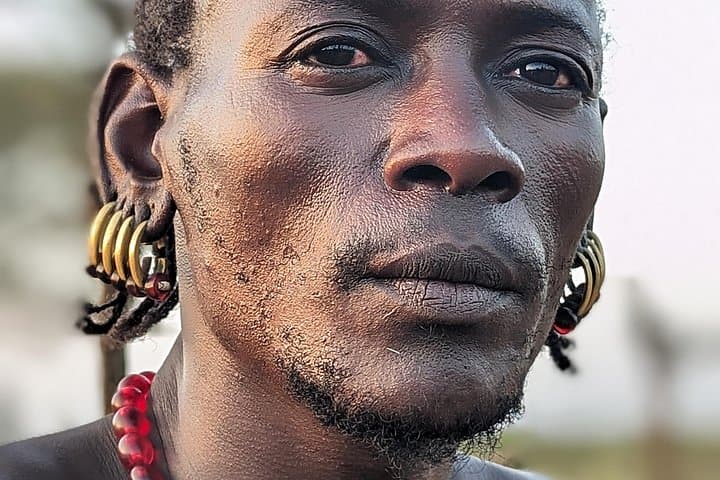
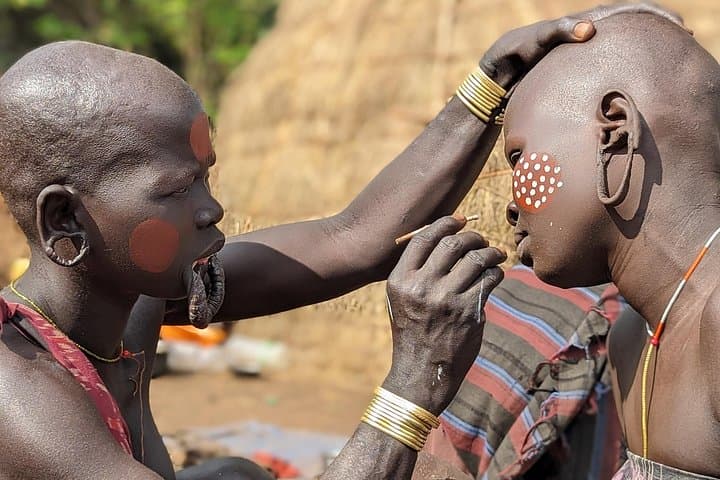
Dust rises as the minibus bends toward the low, red ridges of the Omo Valley and the river ahead begins to call—broad, slow, and insistent. On day one you arrive in Turmi, where painted faces and braided crowns move through heat and smoke; by day three you’ve crossed the Omo by boat and watched market life unfold in a cloud of color and barter.
Dust rises as the minibus bends toward the low, red ridges of the Omo Valley and the river ahead begins to call—broad, slow, and insistent. On day one you arrive in Turmi, where painted faces and braided crowns move through heat and smoke; by day three you’ve crossed the Omo by boat and watched market life unfold in a cloud of color and barter.
The Omo Valley is a living archive: a river-carved plain with floodplains that feed both people and wildlife. Geologically recent alluvium produces the fertile strips that support pastoral life; archaeologists have long prized the basin for early human finds nearby. The region’s cultural landscape is dominated by distinct ethnic groups—the Hamer, Karo, Mursi, Nyangatom and Dassanech—each with rituals, dress and market traditions shaped by cattle, river cycles and seasonal movements.
This three-day itinerary mixes road-time across remote tracks, short village walks, market visits (best on market days) and a Mago National Park approach to Mursi communities. Expect uneven dirt roads, heat by midday, and engagements framed by local norms—photography should be negotiated and guided.
Practicalities: travel light, bring water and sun protection, and plan for early starts to avoid the hottest hours. Respect local protocols and opt for guided interactions to ensure ethical, mutually respectful encounters. The trip suits travelers who want close cultural contact with manageable walking and several long vehicle transfers; it rewards curiosity, patience and a readiness to be present amid unfamiliar rhythms.