THE ADVENTURE COLLECTIVE® · Independent discovery and booking for outdoor travel

Two landscapes, three days: high escarpment viewpoints on the Panorama Route and sunrise-to-dusk game drives in Kruger National Park. Expect dramatic canyon views, guided Big Five searches, and practical advice to plan a safe, rewarding trip.
Two landscapes, three days: high escarpment viewpoints on the Panorama Route and sunrise-to-dusk game drives in Kruger National Park. Expect dramatic canyon views, guided Big Five searches, and practical advice to plan a safe, rewarding trip.
You step out of the minibus before dawn and the Lowveld breathes around you—cool air rising from the ravine, a flock of gbege birds stuttering through eucalyptus, and somewhere across the valley a distant elephant coughs. Day one moves from high, fern-draped escarpment to sun-swept canyon: the Panorama Route unfurls with God’s Window, the Three Rondavels and the Blyde River Canyon, each viewpoint forcing a different kind of quiet. By evening you’re at Nkambeni Game Lodge, where the hum of insects replaces highway noise and the horizon tastes of copper light.
Verified experiences and guided adventures in the surrounding area.
Operated by Zeb Tours and Transfers · Hazyview, Mpumalanga
You step out of the minibus before dawn and the Lowveld breathes around you—cool air rising from the ravine, a flock of gbege birds stuttering through eucalyptus, and somewhere across the valley a distant elephant coughs. Day one moves from high, fern-draped escarpment to sun-swept canyon: the Panorama Route unfurls with God’s Window, the Three Rondavels and the Blyde River Canyon, each viewpoint forcing a different kind of quiet. By evening you’re at Nkambeni Game Lodge, where the hum of insects replaces highway noise and the horizon tastes of copper light.
The Panorama Route sits on the Drakensberg escarpment—ancient quartzite and shale uplifted and carved by millennia of rain and river. Blyde River Canyon is among the world’s largest “green” canyons: not a barren gorge but a living wall of forests, cycads and waterfalls. The name Blyde, Dutch for “happy”, reflects the relief pioneers felt when reuniting during the Voortrekker years; the region later fed growth around Mpumalanga’s timber and gold booms.
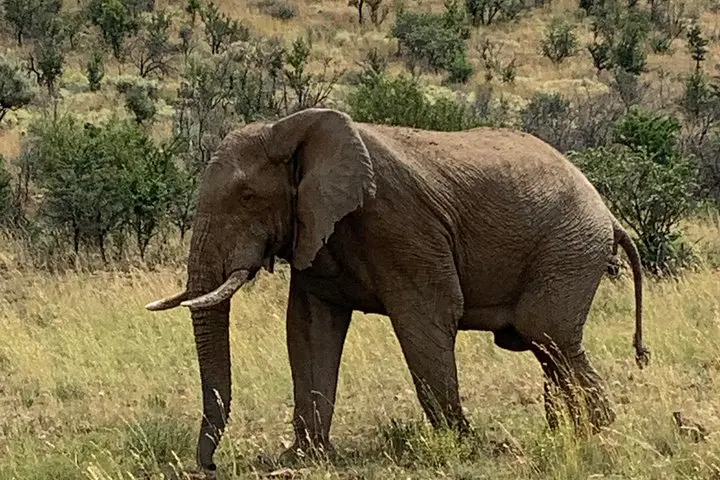
Kruger National Park’s history is pragmatic and stubborn: protectorates consolidated across the 20th century into South Africa’s flagship park, preserving the savanna ecology that supports the Big Five. Game drives here rely on patient observation—lions linger under fever trees, elephants test the weight of your vehicle’s presence, and shy wild dog packs operate at a different pace entirely.
Culturally, the route brushes local Shangaan communities; market stalls in towns like Hazyview sell grilled maize and hand-carved wooden animals, small reminders that conservation and livelihoods are braided across the landscape.
Practicalities: the itinerary runs three days with two lodge nights and multiple guided game drives—expect early starts at first and last light. Road time from the Panorama viewpoints to Kruger gate is roughly 2–3 hours depending on stops. Terrain varies from paved lookouts and short, uneven walking paths on the escarpment to gravel roads and flat savanna tracks inside Kruger. Malaria prophylaxis is recommended for most travelers visiting Kruger—consult your doctor well before travel. Pack layers for brisk mornings and hot afternoons, sun protection, a good pair of binoculars and a camera with a telephoto lens. Bring cash or card for local crafts and tipping; guides and lodge staff appreciate modest gratuities.
Wildlife is never guaranteed, but the park’s dry winter months concentrate animals around waterholes for reliable viewing. Respect park rules: stay in the vehicle except at designated areas, keep voices low, and never feed or approach wildlife. With a mix of escarpment geology and broad African plains, this three-day loop gives you two landscapes that demand different kinds of attention—and the practical prep to see them on your terms.
Visa requirements depend on your nationality—check South African immigration rules well before travel and ensure your passport has at least two blank pages and six months validity.
The supplier notes accessibility for strollers and wheelchairs in some areas—confirm specific needs during booking so the operator can accommodate you and arrange accessible transport where possible.
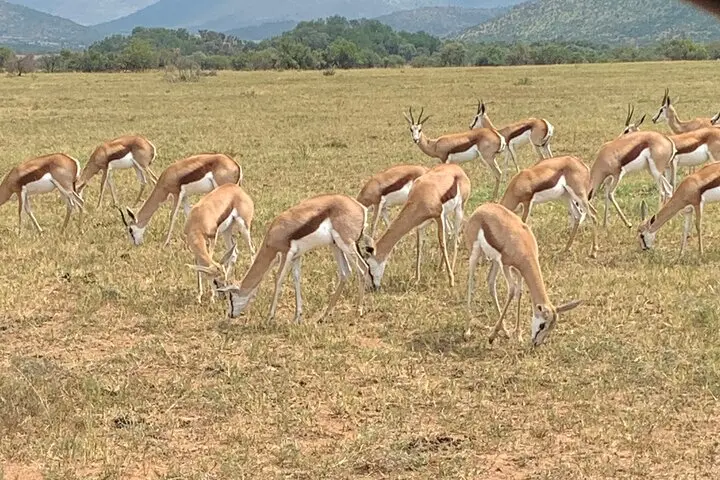
Guides aim for Big Five sightings (lion, elephant, buffalo, rhino, leopard) but sightings vary—also look for antelope, hippo, crocodile and abundant birdlife.
Confirm at booking—some private tours include Kruger entry fees in the price while others charge them separately; your voucher or supplier will specify.
Dry winter months (May–September) concentrate animals at water sources and offer clearer viewing; summer brings lush scenery but more heat and thunderstorms.
Space is limited on game vehicles—pack light and ask the operator about luggage size restrictions; most recommend one soft bag per person.
Zeb Tours and Transfers operates guided outdoor trips and adventures with an emphasis on safety, stewardship, and memorable experiences.
You step out of the minibus before dawn and the Lowveld breathes around you—cool air rising from the ravine, a flock of gbege birds stuttering through eucalyptus, and somewhere across the valley a distant elephant coughs. Day one moves from high, fern-draped escarpment to sun-swept canyon: the Panorama Route unfurls with God’s Window, the Three Rondavels and the Blyde River Canyon, each viewpoint forcing a different kind of quiet. By evening you’re at Nkambeni Game Lodge, where the hum of insects replaces highway noise and the horizon tastes of copper light.
You step out of the minibus before dawn and the Lowveld breathes around you—cool air rising from the ravine, a flock of gbege birds stuttering through eucalyptus, and somewhere across the valley a distant elephant coughs. Day one moves from high, fern-draped escarpment to sun-swept canyon: the Panorama Route unfurls with God’s Window, the Three Rondavels and the Blyde River Canyon, each viewpoint forcing a different kind of quiet. By evening you’re at Nkambeni Game Lodge, where the hum of insects replaces highway noise and the horizon tastes of copper light.
The Panorama Route sits on the Drakensberg escarpment—ancient quartzite and shale uplifted and carved by millennia of rain and river. Blyde River Canyon is among the world’s largest “green” canyons: not a barren gorge but a living wall of forests, cycads and waterfalls. The name Blyde, Dutch for “happy”, reflects the relief pioneers felt when reuniting during the Voortrekker years; the region later fed growth around Mpumalanga’s timber and gold booms.
Kruger National Park’s history is pragmatic and stubborn: protectorates consolidated across the 20th century into South Africa’s flagship park, preserving the savanna ecology that supports the Big Five. Game drives here rely on patient observation—lions linger under fever trees, elephants test the weight of your vehicle’s presence, and shy wild dog packs operate at a different pace entirely.
Culturally, the route brushes local Shangaan communities; market stalls in towns like Hazyview sell grilled maize and hand-carved wooden animals, small reminders that conservation and livelihoods are braided across the landscape.
Practicalities: the itinerary runs three days with two lodge nights and multiple guided game drives—expect early starts at first and last light. Road time from the Panorama viewpoints to Kruger gate is roughly 2–3 hours depending on stops. Terrain varies from paved lookouts and short, uneven walking paths on the escarpment to gravel roads and flat savanna tracks inside Kruger. Malaria prophylaxis is recommended for most travelers visiting Kruger—consult your doctor well before travel. Pack layers for brisk mornings and hot afternoons, sun protection, a good pair of binoculars and a camera with a telephoto lens. Bring cash or card for local crafts and tipping; guides and lodge staff appreciate modest gratuities.
Wildlife is never guaranteed, but the park’s dry winter months concentrate animals around waterholes for reliable viewing. Respect park rules: stay in the vehicle except at designated areas, keep voices low, and never feed or approach wildlife. With a mix of escarpment geology and broad African plains, this three-day loop gives you two landscapes that demand different kinds of attention—and the practical prep to see them on your terms.