THE ADVENTURE COLLECTIVE® · Independent discovery and booking for outdoor travel

Three days that compress Jordan’s high notes: Petra’s rock-cut ruins, a Bedouin night in Wadi Rum, and floating in the Dead Sea. Practical, guided, and transport included — ideal for travelers who want maximum payoff in minimal time.
Three days that compress Jordan’s high notes: Petra’s rock-cut ruins, a Bedouin night in Wadi Rum, and floating in the Dead Sea. Practical, guided, and transport included — ideal for travelers who want maximum payoff in minimal time.
A wind of hot sand and faint incense meets you as the minivan drops you at the edge of Petra’s Siq. The narrow gorge squeezes light until, suddenly, the Treasury appears — a carved face in rose stone that reads like a city frozen mid-breath. Over the next three days the landscape keeps shifting: ancient rock-cut façades that once mapped long-distance trade, wind-sculpted mountains that dare you to cross them in a 4x4, and a salt-stiff sea that refuses to let you sink.
Verified experiences and guided adventures in the surrounding area.
Operated by Amani Tours - Day Tours · Wadi Musa, Ma'an Governorate
A wind of hot sand and faint incense meets you as the minivan drops you at the edge of Petra’s Siq. The narrow gorge squeezes light until, suddenly, the Treasury appears — a carved face in rose stone that reads like a city frozen mid-breath. Over the next three days the landscape keeps shifting: ancient rock-cut façades that once mapped long-distance trade, wind-sculpted mountains that dare you to cross them in a 4x4, and a salt-stiff sea that refuses to let you sink.
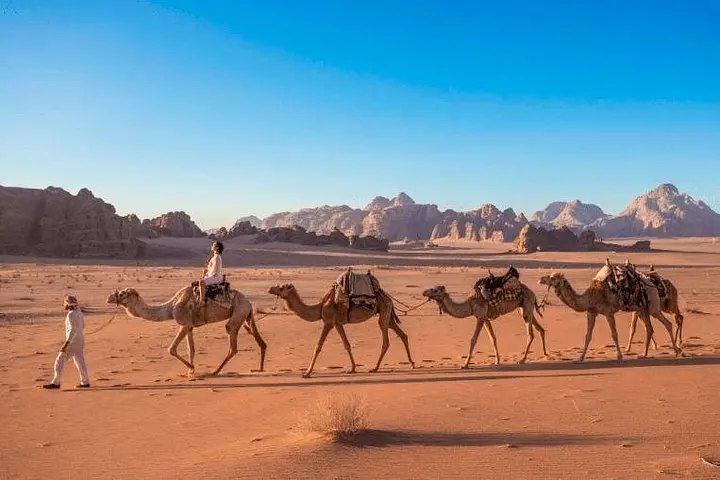
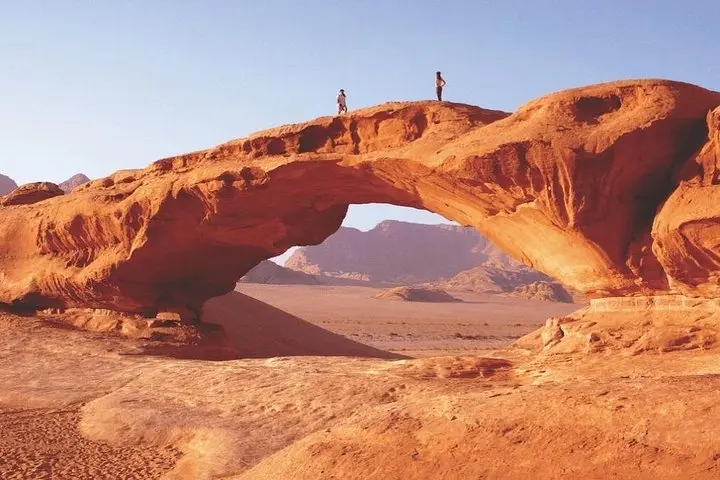
Petra was the Nabatean crossroads of caravan routes, carved into the sandstone to control water and commerce more than 2,000 years ago. Its engineering — channels, cisterns, and terraced farms — turned an arid basin into a functioning city, and the stone still records those clever interventions. Two hours south, Wadi Rum reads like geologic poetry: granite and sandstone towers stacked in rusty layers, wind and rare rain etching grooves and alcoves. The Bedouin have lived with this geology for generations; their camp life, stories and navigation by stars are part survival, part culture.
Daylight at the Dead Sea is a different kind of quiet. Sitting at roughly 400 meters below sea level, the basin amplifies sun and salt; the water is viscous with minerals and strange in its buoyancy. The Dead Sea’s shoreline is a living archive — biblical references, modern hotels, and a fragile hydrology that’s been receding for decades as water is diverted upstream.
Practical side: expect a lot of walking on uneven, often dusty surfaces in Petra (plan for 2–4 miles of on-foot exploration with moderate climbs to viewpoints like the Monastery). Wadi Rum’s jeep safari covers soft desert tracks and brief hikes — bring layers and closed shoes for scrambles. At the Dead Sea, wear water-friendly sandals and a rash guard if you intend to float; the salt can sting open cuts.
Timing makes a big difference: enter the Siq early to avoid heat and crowds, and schedule Wadi Rum for late afternoon to catch a long desert sunset. The overnight in a Bedouin camp offers basic comforts — a real chance to learn local music and food, and to sleep under a wide, starry sky.
Logistics: this tour includes private transport, accommodation (hotel and camp), meals, a 4x4 jeep safari and Dead Sea day pass — most practicalities are handled, but carry small change, photocopies of travel documents, and a refillable water bottle. Respect local customs: modest dress in towns and at religious sites, and ask before photographing people.
If you want one compact stretch of Jordan that mixes history, geology and a touch of otherworldly quiet, this three-day loop delivers — efficiently, accessibly, and with moments that linger long after you leave the sand behind.
This tour notes admission for the Dead Sea day pass and includes guided access to sites, but check the booking details for Petra ticket inclusion — some operators require separate Petra entry fees.
Camps typically offer shared or private tents with beds, blankets, basic en-suite or shared facilities, and solar lighting — comfortable but not luxury.
Yes — you’ll float rather than swim. Avoid splashing and don’t submerge your head; protect cuts and eyes from the high salt content.
The itinerary is rated easy to moderate; children and seniors can usually participate but should be able to walk short distances and tolerate vehicle transfers.
The included 4x4 safari is approximately two hours, with options for longer excursions if you coordinate with your provider.
Comfortable, modest clothing that covers shoulders and knees in towns; breathable layers in daytime and a warmer layer for desert nights.
Amani Tours - Day Tours operates guided outdoor trips and adventures with an emphasis on safety, stewardship, and memorable experiences.
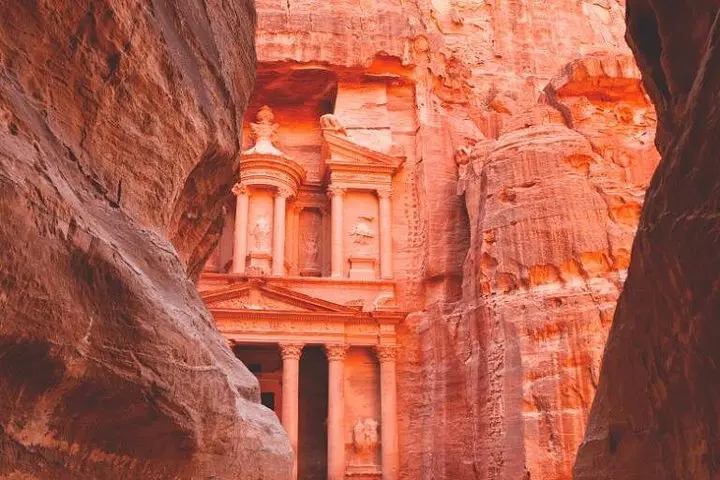
A wind of hot sand and faint incense meets you as the minivan drops you at the edge of Petra’s Siq. The narrow gorge squeezes light until, suddenly, the Treasury appears — a carved face in rose stone that reads like a city frozen mid-breath. Over the next three days the landscape keeps shifting: ancient rock-cut façades that once mapped long-distance trade, wind-sculpted mountains that dare you to cross them in a 4x4, and a salt-stiff sea that refuses to let you sink.
A wind of hot sand and faint incense meets you as the minivan drops you at the edge of Petra’s Siq. The narrow gorge squeezes light until, suddenly, the Treasury appears — a carved face in rose stone that reads like a city frozen mid-breath. Over the next three days the landscape keeps shifting: ancient rock-cut façades that once mapped long-distance trade, wind-sculpted mountains that dare you to cross them in a 4x4, and a salt-stiff sea that refuses to let you sink.
Petra was the Nabatean crossroads of caravan routes, carved into the sandstone to control water and commerce more than 2,000 years ago. Its engineering — channels, cisterns, and terraced farms — turned an arid basin into a functioning city, and the stone still records those clever interventions. Two hours south, Wadi Rum reads like geologic poetry: granite and sandstone towers stacked in rusty layers, wind and rare rain etching grooves and alcoves. The Bedouin have lived with this geology for generations; their camp life, stories and navigation by stars are part survival, part culture.
Daylight at the Dead Sea is a different kind of quiet. Sitting at roughly 400 meters below sea level, the basin amplifies sun and salt; the water is viscous with minerals and strange in its buoyancy. The Dead Sea’s shoreline is a living archive — biblical references, modern hotels, and a fragile hydrology that’s been receding for decades as water is diverted upstream.
Practical side: expect a lot of walking on uneven, often dusty surfaces in Petra (plan for 2–4 miles of on-foot exploration with moderate climbs to viewpoints like the Monastery). Wadi Rum’s jeep safari covers soft desert tracks and brief hikes — bring layers and closed shoes for scrambles. At the Dead Sea, wear water-friendly sandals and a rash guard if you intend to float; the salt can sting open cuts.
Timing makes a big difference: enter the Siq early to avoid heat and crowds, and schedule Wadi Rum for late afternoon to catch a long desert sunset. The overnight in a Bedouin camp offers basic comforts — a real chance to learn local music and food, and to sleep under a wide, starry sky.
Logistics: this tour includes private transport, accommodation (hotel and camp), meals, a 4x4 jeep safari and Dead Sea day pass — most practicalities are handled, but carry small change, photocopies of travel documents, and a refillable water bottle. Respect local customs: modest dress in towns and at religious sites, and ask before photographing people.
If you want one compact stretch of Jordan that mixes history, geology and a touch of otherworldly quiet, this three-day loop delivers — efficiently, accessibly, and with moments that linger long after you leave the sand behind.