THE ADVENTURE COLLECTIVE® · Independent discovery and booking for outdoor travel

Three days link Petra’s rose-red facades with the red sands and rock towers of Wadi Rum. This guided itinerary blends archaeological walks, a Bedouin campsite night, and a 4x4 desert safari — practical for travelers coming via the Eilat border.
Three days link Petra’s rose-red facades with the red sands and rock towers of Wadi Rum. This guided itinerary blends archaeological walks, a Bedouin campsite night, and a 4x4 desert safari — practical for travelers coming via the Eilat border.
A low, warm wind parts the red sand as a 4x4 eats a roadhole and the camp’s lanterns blink awake. At dawn the Siq yaws open: a narrow cleft that funnels visitors toward the Treasury’s carved façade, its rose tones changing with the sun. This three-day loop links Petra’s rock-hewn archaeology with the sweeping deserts of Wadi Rum — a short cross-border transfer from the Eilat/Taba checkpoint and two nights spent where history and Bedouin hospitality meet.
Verified experiences and guided adventures in the surrounding area.
Operated by Jordan Horizons Tours · Wadi Musa, Ma'an Governorate
A low, warm wind parts the red sand as a 4x4 eats a roadhole and the camp’s lanterns blink awake. At dawn the Siq yaws open: a narrow cleft that funnels visitors toward the Treasury’s carved façade, its rose tones changing with the sun. This three-day loop links Petra’s rock-hewn archaeology with the sweeping deserts of Wadi Rum — a short cross-border transfer from the Eilat/Taba checkpoint and two nights spent where history and Bedouin hospitality meet.
Petra’s stone city dates to the Nabataeans, an engineered oasis economy carved into sandstone cliffs. The Siq, Royal Tombs, and the climb to the Monastery reveal Nabataean masonry and Roman-era additions; later, the area appears in Ottoman and modern Jordanian narratives. Wadi Rum’s geology is younger in feeling: wind-polished sandstone and granite rising out of ochre sand, with petroglyphs that trace millennia of desert routes. Cultural context is central here — local guides explain Bedouin camp living, water conservation, and the echoes of T.E. Lawrence’s passages.
Practical guidance: expect long walks on uneven stone, stair sections in Petra (bring ankle-supporting shoes) and dusty jeep tracks in Wadi Rum. Hydrate regularly, carry sun protection, and allow time for altitude-neutral pacing — Petra sits around 1,000 m elevation. Nights in a Bedouin camp are basic but warm; book with passport details ready for the cross-border visa process. Morning light and late afternoon both offer cooler hours for exploration and the best photography.
Yes — the operator requests passport details to arrange a visa in advance; carry your passport and confirmation to the border.
Expect several hours of walking over uneven stone and stair climbs to key sites like the Monastery; guided segments last about 3 hours with free time to explore.
Camps offer basic but comfortable facilities, shared sleeping in insulated tents, a BBQ dinner and breakfast; facilities vary so check specifics if you need private rooms.
Yes — jeep tours and easy walks make Wadi Rum accessible, but assess mobility for Petra’s stairs and longer hikes; operators note this tour is suitable for most fitness levels.
Jordan Horizons Tours operates guided outdoor trips and adventures with an emphasis on safety, stewardship, and memorable experiences.
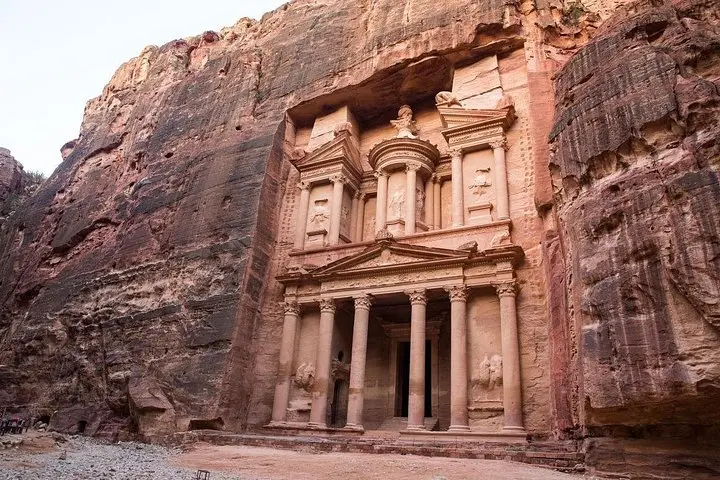
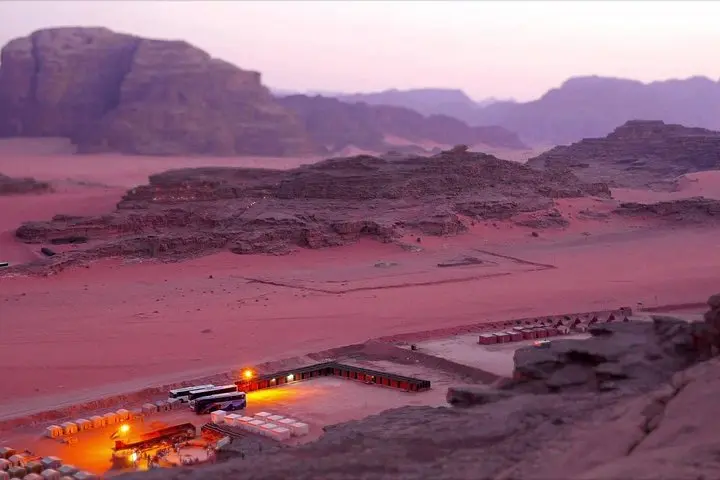
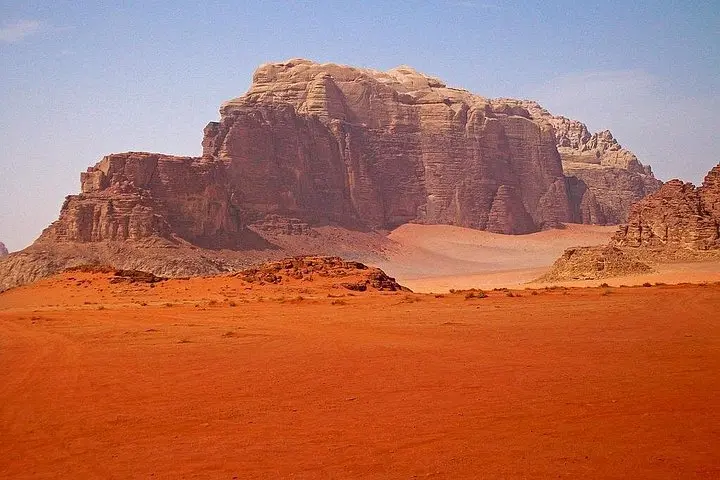
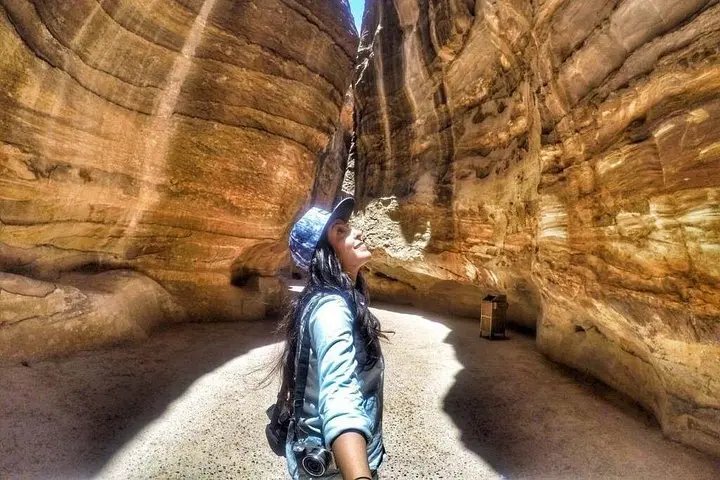
A low, warm wind parts the red sand as a 4x4 eats a roadhole and the camp’s lanterns blink awake. At dawn the Siq yaws open: a narrow cleft that funnels visitors toward the Treasury’s carved façade, its rose tones changing with the sun. This three-day loop links Petra’s rock-hewn archaeology with the sweeping deserts of Wadi Rum — a short cross-border transfer from the Eilat/Taba checkpoint and two nights spent where history and Bedouin hospitality meet.
A low, warm wind parts the red sand as a 4x4 eats a roadhole and the camp’s lanterns blink awake. At dawn the Siq yaws open: a narrow cleft that funnels visitors toward the Treasury’s carved façade, its rose tones changing with the sun. This three-day loop links Petra’s rock-hewn archaeology with the sweeping deserts of Wadi Rum — a short cross-border transfer from the Eilat/Taba checkpoint and two nights spent where history and Bedouin hospitality meet.
Petra’s stone city dates to the Nabataeans, an engineered oasis economy carved into sandstone cliffs. The Siq, Royal Tombs, and the climb to the Monastery reveal Nabataean masonry and Roman-era additions; later, the area appears in Ottoman and modern Jordanian narratives. Wadi Rum’s geology is younger in feeling: wind-polished sandstone and granite rising out of ochre sand, with petroglyphs that trace millennia of desert routes. Cultural context is central here — local guides explain Bedouin camp living, water conservation, and the echoes of T.E. Lawrence’s passages.
Practical guidance: expect long walks on uneven stone, stair sections in Petra (bring ankle-supporting shoes) and dusty jeep tracks in Wadi Rum. Hydrate regularly, carry sun protection, and allow time for altitude-neutral pacing — Petra sits around 1,000 m elevation. Nights in a Bedouin camp are basic but warm; book with passport details ready for the cross-border visa process. Morning light and late afternoon both offer cooler hours for exploration and the best photography.