THE ADVENTURE COLLECTIVE® · Independent discovery and booking for outdoor travel

A private, three-day deep dive through Angkor’s greatest temples—sunrise at Angkor Wat, Bayon’s carved faces, jungle-drama at Ta Prohm, and the remote Beng Mealea. This tour pairs historical context with practical logistics for long walking days and early starts.
A private, three-day deep dive through Angkor’s greatest temples—sunrise at Angkor Wat, Bayon’s carved faces, jungle-drama at Ta Prohm, and the remote Beng Mealea. This tour pairs historical context with practical logistics for long walking days and early starts.
Dawn arrives over the moat and reflection pools, and the silhouette of Angkor Wat sharpens against a sky cooling from night. Guests step from a private, air-conditioned vehicle and move through carved corridors where stone faces watch the light change; elsewhere the jungle edges closer, roots threading through lintels and sandstone like slow hands reclaiming what was once built.
Verified experiences and guided adventures in the surrounding area.
Operated by Sightseeing Cambodia · Siem Reap, Siem Reap Province
Dawn arrives over the moat and reflection pools, and the silhouette of Angkor Wat sharpens against a sky cooling from night. Guests step from a private, air-conditioned vehicle and move through carved corridors where stone faces watch the light change; elsewhere the jungle edges closer, roots threading through lintels and sandstone like slow hands reclaiming what was once built.
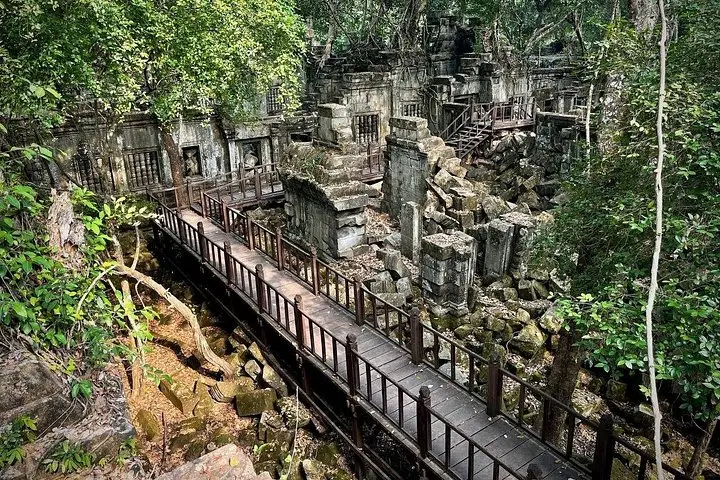
This three-day itinerary follows the arc of the Khmer empire: Angkor Thom's Bayon with its smiling towers, the Baphuon and Phimeanakas palace fragments, then Angkor Wat's vast bas-reliefs. On day two, red sandstone at Banteay Srei and the remote, jungle-swallowed Beng Mealea offer different textures—delicate carving versus rambling collapse—while visits to the Rolous Group show early temple-mountain engineering and the living culture of Kampong Phluk on Tonle Sap connects the ruins to modern riverine livelihoods.
Geology and engineering are on display: laterite foundations, sandstone lintels carved with myths, and ancient baray reservoirs that managed seasonal floods. Guides explain Jayavarman's hydraulic planning as easily as they point out local fishing techniques at Tonle Sap.
Practically, expect long walking days on uneven steps and soft soils; sunrise sessions are early but reward you with cooler light and thinner crowds. Lightweight closed shoes, sun protection and a refillable water bottle are essential. The tour includes hotel pickup, private guide, and transport—confirm your Angkor pass and wear modest clothing when entering temples. Timing your three days for cooler morning starts and an afternoon pause will make the history feel immediate rather than overwhelming.
The tour operator assists with pass purchase on day one but confirm whether the ticket cost is covered in your booking or paid separately.
Expect multiple hours of walking each day, often on uneven temple stones and short stair sections; pacing includes breaks and lunch stops.
Lunch is typically included on the itinerary; the tour provides free cold water and towels during the day, but bring a refillable bottle for convenience.
The tour is private and adaptable, but people with spinal, heart, or pregnancy restrictions are advised against strenuous temple climbs and long walks.
Sightseeing Cambodia operates guided outdoor trips and adventures with an emphasis on safety, stewardship, and memorable experiences.
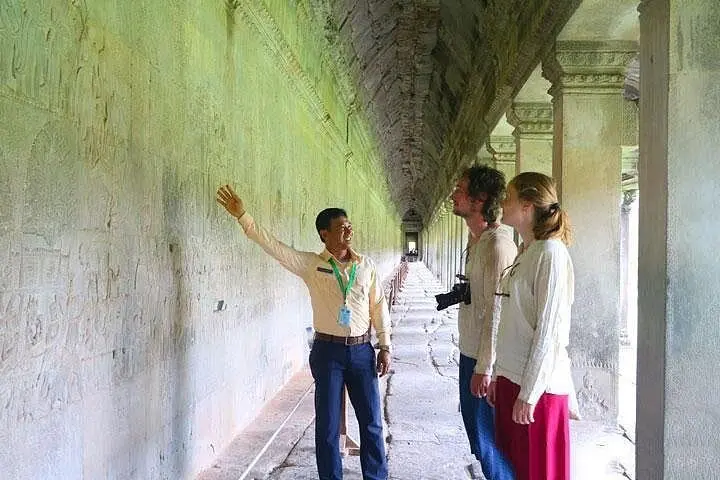
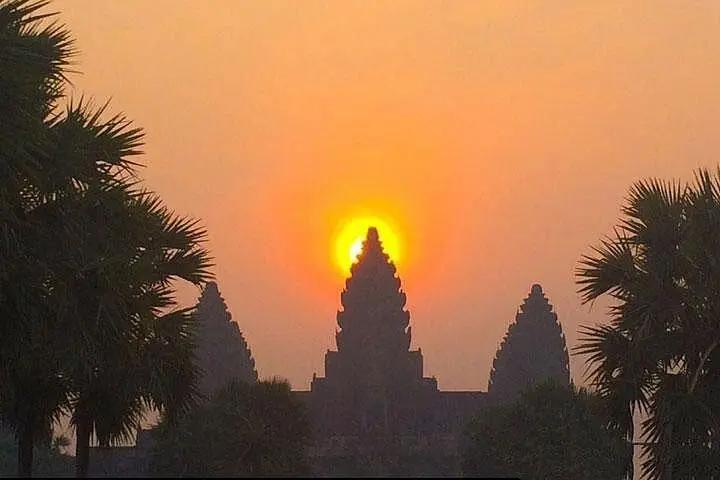
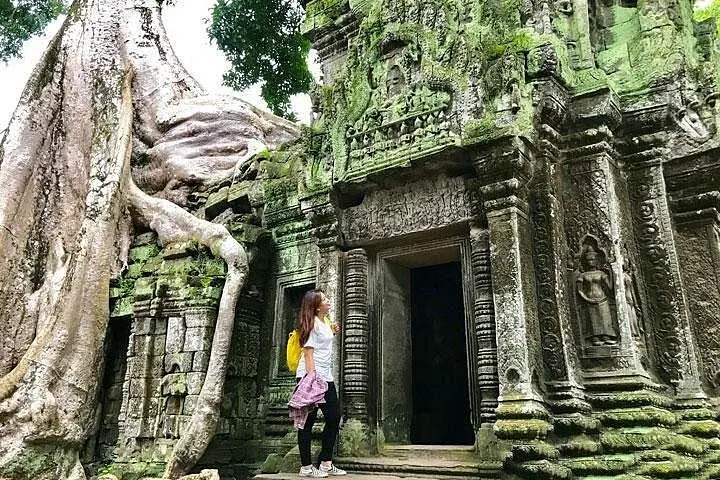
Dawn arrives over the moat and reflection pools, and the silhouette of Angkor Wat sharpens against a sky cooling from night. Guests step from a private, air-conditioned vehicle and move through carved corridors where stone faces watch the light change; elsewhere the jungle edges closer, roots threading through lintels and sandstone like slow hands reclaiming what was once built.
Dawn arrives over the moat and reflection pools, and the silhouette of Angkor Wat sharpens against a sky cooling from night. Guests step from a private, air-conditioned vehicle and move through carved corridors where stone faces watch the light change; elsewhere the jungle edges closer, roots threading through lintels and sandstone like slow hands reclaiming what was once built.
This three-day itinerary follows the arc of the Khmer empire: Angkor Thom's Bayon with its smiling towers, the Baphuon and Phimeanakas palace fragments, then Angkor Wat's vast bas-reliefs. On day two, red sandstone at Banteay Srei and the remote, jungle-swallowed Beng Mealea offer different textures—delicate carving versus rambling collapse—while visits to the Rolous Group show early temple-mountain engineering and the living culture of Kampong Phluk on Tonle Sap connects the ruins to modern riverine livelihoods.
Geology and engineering are on display: laterite foundations, sandstone lintels carved with myths, and ancient baray reservoirs that managed seasonal floods. Guides explain Jayavarman's hydraulic planning as easily as they point out local fishing techniques at Tonle Sap.
Practically, expect long walking days on uneven steps and soft soils; sunrise sessions are early but reward you with cooler light and thinner crowds. Lightweight closed shoes, sun protection and a refillable water bottle are essential. The tour includes hotel pickup, private guide, and transport—confirm your Angkor pass and wear modest clothing when entering temples. Timing your three days for cooler morning starts and an afternoon pause will make the history feel immediate rather than overwhelming.