THE ADVENTURE COLLECTIVE® · Independent discovery and booking for outdoor travel

Cross the Middle Atlas, ride camels across Erg Chebbi and explore Todra Gorge on this private three-day loop from Fez to Marrakech. Expect long drives, short hikes, dune camping and a route rich in geology and living culture.
Cross the Middle Atlas, ride camels across Erg Chebbi and explore Todra Gorge on this private three-day loop from Fez to Marrakech. Expect long drives, short hikes, dune camping and a route rich in geology and living culture.
A late-afternoon sun slants across orange ridges as your vehicle drops out of the Middle Atlas and the first dunes of Erg Chebbi appear on the horizon. The air sharpens; a camel caravan threads a ridge and the desert seems to breathe — wind shaping sand into fresh sculpture each hour.
Verified experiences and guided adventures in the surrounding area.
Operated by Cocastravel Morocco · Merzouga, Drâa-Tafilalet
A late-afternoon sun slants across orange ridges as your vehicle drops out of the Middle Atlas and the first dunes of Erg Chebbi appear on the horizon. The air sharpens; a camel caravan threads a ridge and the desert seems to breathe — wind shaping sand into fresh sculpture each hour.
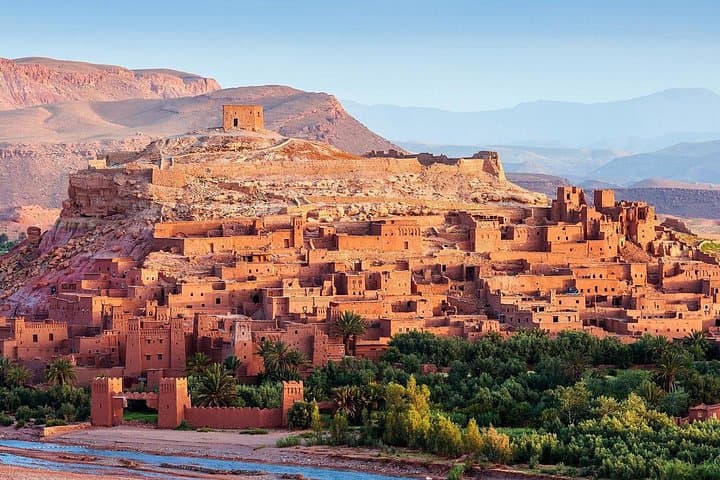
This three-day private circuit links Fez’s medina lanes with the Saharan edge at Merzouga, then winds through Todra Gorge, the Valley of Roses and the film-friendly flats of Ouarzazate before finishing at Aït Ben Haddou and Marrakech. Geology here is obvious: folded limestone and red sandstone carved by seasonal rivers, and wind-carved dunes that migrate slowly with each gust. Culturally, the route follows ancient caravan and trade corridors; mudbrick kasbahs and rose cooperatives still reflect long-standing local economies.
Expect long drives broken by short hikes and photo stops — the Fez to Merzouga leg can be seven to nine hours including breaks — followed by a 90-minute camel ride to a desert camp and an evening under an extremely dark sky. Terrain varies from paved mountain passes (Middle Atlas, up to roughly 1,500 m) to sandy tracks into the dunes and narrow fluted canyons at Todra.
Practical notes: pack layered clothing for hot days and cold desert nights, bring 2–3 liters of water per person for daytime outings, and wear closed shoes for walks in rocky gorges and loose sand. Start early to avoid midday heat, carry cash for small village purchases, and confirm mobility needs in advance — remote camps are rustic by design.
Yes — the itinerary includes approximately a 1.5-hour camel trek from Merzouga to the desert camp, timed to catch sunset.
Accommodations combine local hotels and overnight desert camps; hotels in towns are private rooms while desert camps are traditionally simple tents with dinner provided.
The operator notes accessibility for many travelers, but desert camps and dune walks are rustic; contact the provider ahead to arrange transfers or special assistance.
Spring and fall offer the most comfortable temperatures; winter evenings can be cold and summer daytime heat can be intense.
Cocastravel Morocco operates guided outdoor trips and adventures with an emphasis on safety, stewardship, and memorable experiences.


A late-afternoon sun slants across orange ridges as your vehicle drops out of the Middle Atlas and the first dunes of Erg Chebbi appear on the horizon. The air sharpens; a camel caravan threads a ridge and the desert seems to breathe — wind shaping sand into fresh sculpture each hour.
A late-afternoon sun slants across orange ridges as your vehicle drops out of the Middle Atlas and the first dunes of Erg Chebbi appear on the horizon. The air sharpens; a camel caravan threads a ridge and the desert seems to breathe — wind shaping sand into fresh sculpture each hour.
This three-day private circuit links Fez’s medina lanes with the Saharan edge at Merzouga, then winds through Todra Gorge, the Valley of Roses and the film-friendly flats of Ouarzazate before finishing at Aït Ben Haddou and Marrakech. Geology here is obvious: folded limestone and red sandstone carved by seasonal rivers, and wind-carved dunes that migrate slowly with each gust. Culturally, the route follows ancient caravan and trade corridors; mudbrick kasbahs and rose cooperatives still reflect long-standing local economies.
Expect long drives broken by short hikes and photo stops — the Fez to Merzouga leg can be seven to nine hours including breaks — followed by a 90-minute camel ride to a desert camp and an evening under an extremely dark sky. Terrain varies from paved mountain passes (Middle Atlas, up to roughly 1,500 m) to sandy tracks into the dunes and narrow fluted canyons at Todra.
Practical notes: pack layered clothing for hot days and cold desert nights, bring 2–3 liters of water per person for daytime outings, and wear closed shoes for walks in rocky gorges and loose sand. Start early to avoid midday heat, carry cash for small village purchases, and confirm mobility needs in advance — remote camps are rustic by design.