THE ADVENTURE COLLECTIVE® · Independent discovery and booking for outdoor travel

Cross the High Atlas, explore Ait Ben Haddou and sleep under the stars in Erg Chebbi on this private 3-day drive from Marrakech to Fes. Long drives and dramatic landscapes make it a compact, culture-rich desert introduction.
Cross the High Atlas, explore Ait Ben Haddou and sleep under the stars in Erg Chebbi on this private 3-day drive from Marrakech to Fes. Long drives and dramatic landscapes make it a compact, culture-rich desert introduction.
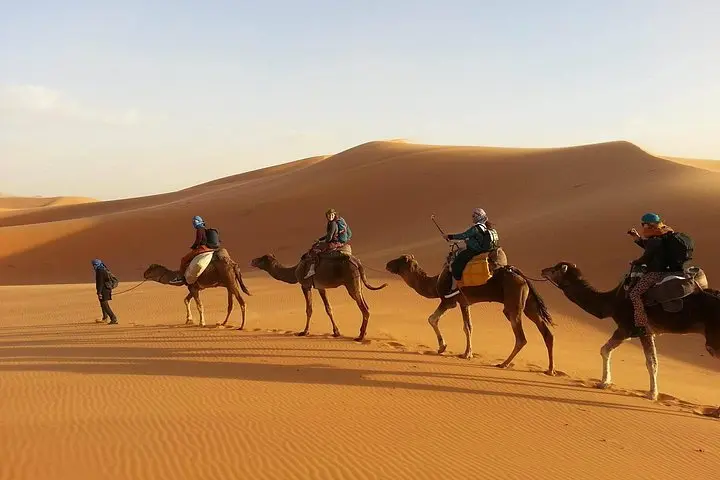
You arrive on the edge of the dunes as the sun melts into the sand—footprints steam, camels shift, and the air tastes faintly of tea and dust. Over three days you’ll cross the High Atlas by the Tizi n’Tichka pass, trace ochre kasbahs along the Valley of the Roses, stand in the vertical walls of Todra Gorge and sleep beneath the clear desert sky of Erg Chebbi.
Verified experiences and guided adventures in the surrounding area.
Operated by Morocco Sahara Desert Travel · Merzouga, Errachidia Province
You arrive on the edge of the dunes as the sun melts into the sand—footprints steam, camels shift, and the air tastes faintly of tea and dust. Over three days you’ll cross the High Atlas by the Tizi n’Tichka pass, trace ochre kasbahs along the Valley of the Roses, stand in the vertical walls of Todra Gorge and sleep beneath the clear desert sky of Erg Chebbi.
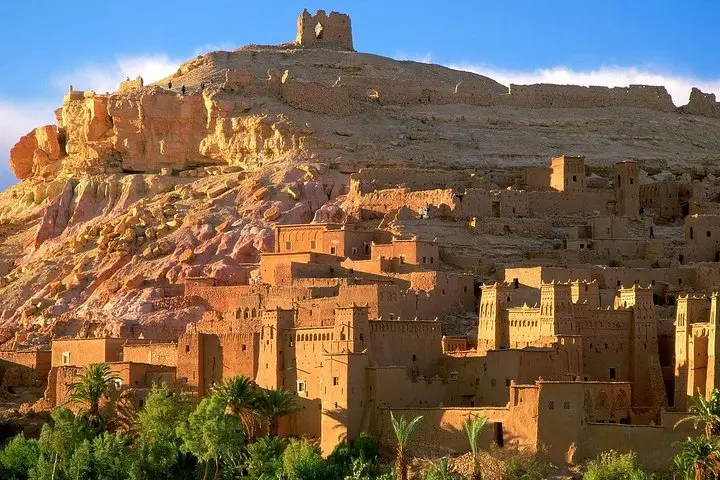
This route follows historic caravan corridors that connected Marrakech to Saharan outposts; many of the mud-brick kasbahs you pass once guarded trade in salt, saffron and livestock. Geologically the itinerary moves from folded metamorphic ranges of the High Atlas (pass elevation ~2,260 m) down through limestone gorges carved by seasonal rivers and finally into the wind-sculpted dunes of Erg Chebbi, where individual dunes rise as high as 100–150 m.
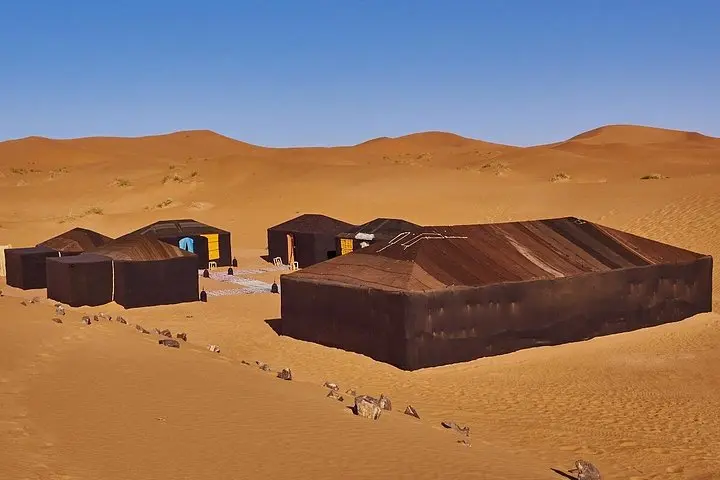
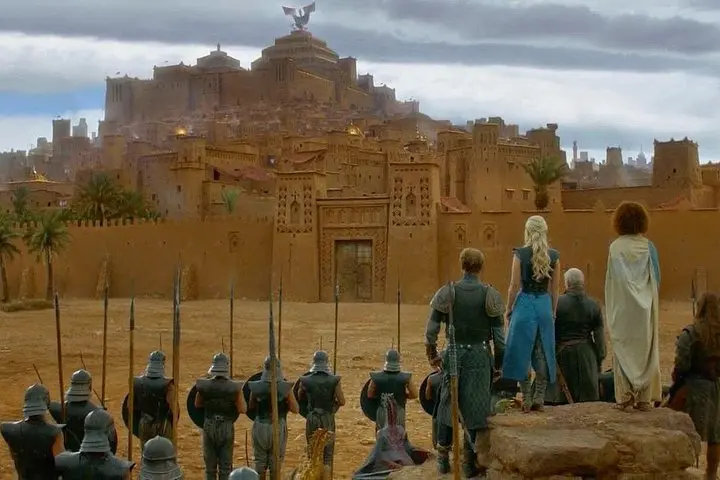
Culturally the trip mixes Berber hospitality—tea rituals, guesthouse Kasbahs and a night in a traditional tented bivouac—with cinematic Ouarzazate landscapes used frequently in film. Expect long road sections (several 4–6 hour drives between main stops), short guided walks in gorges and a settled camel transfer of roughly 1–1.5 hours into the camp.
Practical notes: pace yourself for altitude and long drives, carry layered clothing for hot days and cold desert nights, and bring sufficient water for hikes and transfers. Plan early starts to enjoy light on the Tizi n’Tichka and arrive at dunes in time for sunset and sunrise photography. The experience balances remote desert stillness with accessible infrastructure—accommodations range from standard hotels to staffed Berber camps.
The camel transfer to the Erg Chebbi camp is typically about 1 to 1.5 hours round-trip timing and paced for comfort rather than speed.
Most Berber camps provide blankets and some have basic heating; temperatures can fall sharply so a warm layer is advised.
Children can join but infants must sit on laps during transport; specialized infant seats are available—check with the operator before booking.
Walks in Todra and Dades are short to moderate, involving uneven terrain and some scrambling in places; good footwear and steady balance help.
Morocco Sahara Desert Travel operates guided outdoor trips and adventures with an emphasis on safety, stewardship, and memorable experiences.
You arrive on the edge of the dunes as the sun melts into the sand—footprints steam, camels shift, and the air tastes faintly of tea and dust. Over three days you’ll cross the High Atlas by the Tizi n’Tichka pass, trace ochre kasbahs along the Valley of the Roses, stand in the vertical walls of Todra Gorge and sleep beneath the clear desert sky of Erg Chebbi.
You arrive on the edge of the dunes as the sun melts into the sand—footprints steam, camels shift, and the air tastes faintly of tea and dust. Over three days you’ll cross the High Atlas by the Tizi n’Tichka pass, trace ochre kasbahs along the Valley of the Roses, stand in the vertical walls of Todra Gorge and sleep beneath the clear desert sky of Erg Chebbi.
This route follows historic caravan corridors that connected Marrakech to Saharan outposts; many of the mud-brick kasbahs you pass once guarded trade in salt, saffron and livestock. Geologically the itinerary moves from folded metamorphic ranges of the High Atlas (pass elevation ~2,260 m) down through limestone gorges carved by seasonal rivers and finally into the wind-sculpted dunes of Erg Chebbi, where individual dunes rise as high as 100–150 m.
Culturally the trip mixes Berber hospitality—tea rituals, guesthouse Kasbahs and a night in a traditional tented bivouac—with cinematic Ouarzazate landscapes used frequently in film. Expect long road sections (several 4–6 hour drives between main stops), short guided walks in gorges and a settled camel transfer of roughly 1–1.5 hours into the camp.
Practical notes: pace yourself for altitude and long drives, carry layered clothing for hot days and cold desert nights, and bring sufficient water for hikes and transfers. Plan early starts to enjoy light on the Tizi n’Tichka and arrive at dunes in time for sunset and sunrise photography. The experience balances remote desert stillness with accessible infrastructure—accommodations range from standard hotels to staffed Berber camps.