THE ADVENTURE COLLECTIVE® · Independent discovery and booking for outdoor travel

Travel from Marrakech over the High Atlas to the dunes of Erg Chebbi on this three-day private tour. Visit Aït Benhaddou, Todra Gorge, and spend a night in a Berber desert camp reached by camel at sunset.
Travel from Marrakech over the High Atlas to the dunes of Erg Chebbi on this three-day private tour. Visit Aït Benhaddou, Todra Gorge, and spend a night in a Berber desert camp reached by camel at sunset.
Dawn peels back the High Atlas as the minivan winds up Tizi-n-Tichka, metal and desert air humming together. On the first day the road opens to ochre kasbahs and the stacked clay of Aït Benhaddou, then unfurls toward palm oases at Skoura and the sculpted canyon of the Dades Valley. The landscape changes like chapters—river-cut gorges give way to stony plains and then to the saffron slopes of Erg Chebbi.
Verified experiences and guided adventures in the surrounding area.
Operated by Ok Traveling · Merzouga, Drâa-Tafilalet
Dawn peels back the High Atlas as the minivan winds up Tizi-n-Tichka, metal and desert air humming together. On the first day the road opens to ochre kasbahs and the stacked clay of Aït Benhaddou, then unfurls toward palm oases at Skoura and the sculpted canyon of the Dades Valley. The landscape changes like chapters—river-cut gorges give way to stony plains and then to the saffron slopes of Erg Chebbi.
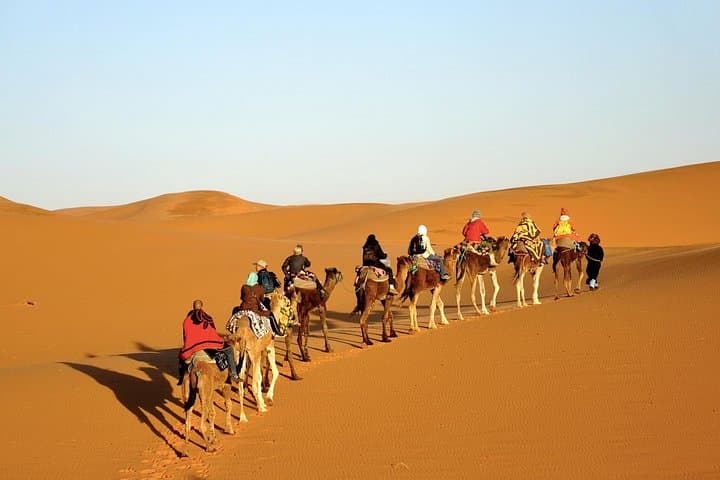
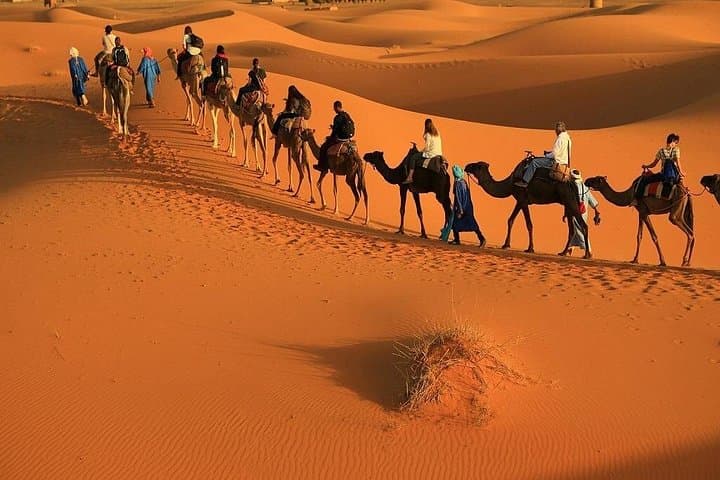
This route threads key cultural and geological highlights: Aït Benhaddou, a UNESCO ksar with centuries of adobe architecture; the Todra Gorges, where limestone walls rise several hundred meters; and Erg Chebbi, dunes that reach roughly 150 meters and shift with every wind. Local Berber hospitality shapes the trip—guide-led kasbah visits, shared meals, and a night in a family-run desert camp beneath clear, star-heavy skies. Camel caravans provide a traditional approach to the dunes—about 90 minutes at sunset to reach the camp—and a sunrise return offers wide light and cool air.
Practical notes: expect long driving days (single-day legs can cover 300–350 km); bring layers for hot daytime sun and cold desert nights; pack sunscreen, a brimmed hat, and a reusable water bottle. Footwear should be sturdy for short walks and loose sand. Timing a visit for spring or fall avoids extreme summer heat and winter chills.
The experience balances easy walking, cultural stops, and true desert immersion: a compact way to see southern Morocco’s geology, history, and living traditions without heavy trekking.
Yes—short, guided camel treks (about 90 minutes) are commonly suitable for children, but young kids should be accompanied by an adult and follow staff instructions.
The tour includes hotels as per the itinerary, some meals, and an overnight at a Berber desert camp; confirm specific meal counts with the operator before booking.
Expect long driving segments—single-day legs can be 4–8 hours depending on stops; the full roundtrip from Marrakech is several hundred kilometers each way.
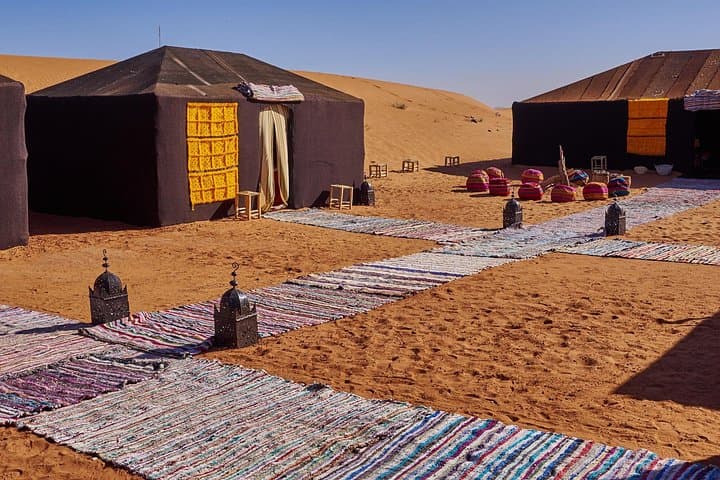
Desert camps vary from basic tents with shared facilities to private ensuite options; this private tour typically uses tents with mattresses and blankets and private rooms in hotels on other nights—check specifics when booking.
Ok Traveling operates guided outdoor trips and adventures with an emphasis on safety, stewardship, and memorable experiences.

Dawn peels back the High Atlas as the minivan winds up Tizi-n-Tichka, metal and desert air humming together. On the first day the road opens to ochre kasbahs and the stacked clay of Aït Benhaddou, then unfurls toward palm oases at Skoura and the sculpted canyon of the Dades Valley. The landscape changes like chapters—river-cut gorges give way to stony plains and then to the saffron slopes of Erg Chebbi.
Dawn peels back the High Atlas as the minivan winds up Tizi-n-Tichka, metal and desert air humming together. On the first day the road opens to ochre kasbahs and the stacked clay of Aït Benhaddou, then unfurls toward palm oases at Skoura and the sculpted canyon of the Dades Valley. The landscape changes like chapters—river-cut gorges give way to stony plains and then to the saffron slopes of Erg Chebbi.
This route threads key cultural and geological highlights: Aït Benhaddou, a UNESCO ksar with centuries of adobe architecture; the Todra Gorges, where limestone walls rise several hundred meters; and Erg Chebbi, dunes that reach roughly 150 meters and shift with every wind. Local Berber hospitality shapes the trip—guide-led kasbah visits, shared meals, and a night in a family-run desert camp beneath clear, star-heavy skies. Camel caravans provide a traditional approach to the dunes—about 90 minutes at sunset to reach the camp—and a sunrise return offers wide light and cool air.
Practical notes: expect long driving days (single-day legs can cover 300–350 km); bring layers for hot daytime sun and cold desert nights; pack sunscreen, a brimmed hat, and a reusable water bottle. Footwear should be sturdy for short walks and loose sand. Timing a visit for spring or fall avoids extreme summer heat and winter chills.
The experience balances easy walking, cultural stops, and true desert immersion: a compact way to see southern Morocco’s geology, history, and living traditions without heavy trekking.