THE ADVENTURE COLLECTIVE® · Independent discovery and booking for outdoor travel

Drive north from Windhoek into Etosha National Park on a private three-day safari focused on early-morning and dusk game drives, floodlit waterhole viewing, and guided wildlife interpretation. This trip pairs comfortable in-park lodging with expert tracking to maximize sightings of elephants, lions, rhinos and more.
Drive north from Windhoek into Etosha National Park on a private three-day safari focused on early-morning and dusk game drives, floodlit waterhole viewing, and guided wildlife interpretation. This trip pairs comfortable in-park lodging with expert tracking to maximize sightings of elephants, lions, rhinos and more.
You step out of the air-conditioned vehicle under a wide Namibian sky and the land opens: a blistering white pan to the north, thorny savanna and mopane woodland to the south, and a horizon that keeps the next sighting just out of frame.
Verified experiences and guided adventures in the surrounding area.
Operated by Lark Journeys Namibia · Windhoek, Khomas
You step out of the air-conditioned vehicle under a wide Namibian sky and the land opens: a blistering white pan to the north, thorny savanna and mopane woodland to the south, and a horizon that keeps the next sighting just out of frame.
This private three-day safari runs from Windhoek north to Etosha National Park—about a four-hour drive—putting you at the gates of one of Southern Africa’s premier wildlife reserves. Etosha’s salty pan is the park’s geological heart: a shallow basin left from an inland sea, sitting at roughly 1,100 m elevation, surrounded by grassy plains and scattered waterholes that concentrate animal life.
Human history here is brief beside geological time—Herero and Ovambo peoples long hunted the plains, while colonial-era exploration and later conservation established Etosha as a protected wildlife refuge. Cultural threads remain in nearby towns and markets where woodcarvings and local crafts are traded along the return route.
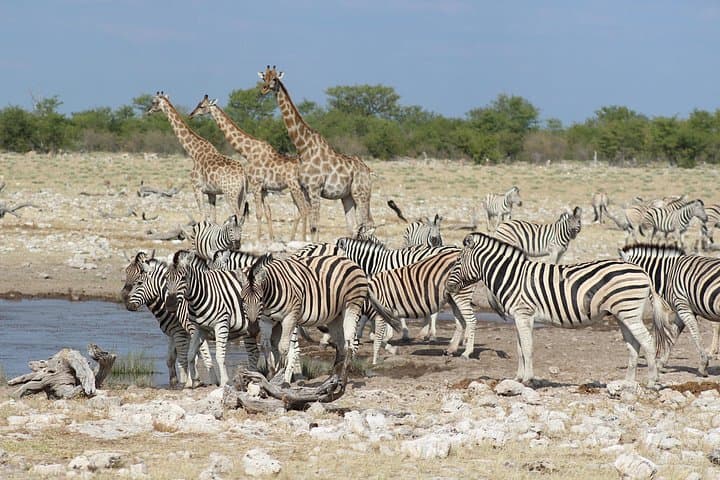
On game drives you’ll travel between floodlit camp waterholes and wide roads that predators sometimes use to lie in wait. Guides read spoor and behavior, timing drives for dawn and dusk when the light is best and the animals most active. Expect long stints in the vehicle with bursts of binocular-focused quiet as lions, elephants, rhinos and herds claim water.
Practical edge: bring sun protection and layered clothing for cool mornings, stay hydrated, and use a good telephoto lens or binoculars. Park fees and double-room accommodation inside Etosha are included; the private guide and vehicle make this trip accessible for most fitness levels but wildlife sightings are never guaranteed—patience is part of the experience.
Yes—national park fees and two nights’ accommodation inside Etosha are included in the tour price.
The trip is vehicle-based and described as suitable for all fitness levels; children and guests with limited mobility should check specifics with the operator about vehicle access and accommodation arrangements.
Dry months (May–October) concentrate animals at waterholes and are typically best for sightings; however, spring and summer bring newborns and migratory birds despite thicker vegetation and occasional rains.
Malaria risk in Etosha is lower than in northern Namibia but exists during certain seasons—check current health advisories and consult your doctor about prophylaxis and routine vaccinations before travel.
Lark Journeys Namibia operates guided outdoor trips and adventures with an emphasis on safety, stewardship, and memorable experiences.


You step out of the air-conditioned vehicle under a wide Namibian sky and the land opens: a blistering white pan to the north, thorny savanna and mopane woodland to the south, and a horizon that keeps the next sighting just out of frame.
You step out of the air-conditioned vehicle under a wide Namibian sky and the land opens: a blistering white pan to the north, thorny savanna and mopane woodland to the south, and a horizon that keeps the next sighting just out of frame.
This private three-day safari runs from Windhoek north to Etosha National Park—about a four-hour drive—putting you at the gates of one of Southern Africa’s premier wildlife reserves. Etosha’s salty pan is the park’s geological heart: a shallow basin left from an inland sea, sitting at roughly 1,100 m elevation, surrounded by grassy plains and scattered waterholes that concentrate animal life.
Human history here is brief beside geological time—Herero and Ovambo peoples long hunted the plains, while colonial-era exploration and later conservation established Etosha as a protected wildlife refuge. Cultural threads remain in nearby towns and markets where woodcarvings and local crafts are traded along the return route.
On game drives you’ll travel between floodlit camp waterholes and wide roads that predators sometimes use to lie in wait. Guides read spoor and behavior, timing drives for dawn and dusk when the light is best and the animals most active. Expect long stints in the vehicle with bursts of binocular-focused quiet as lions, elephants, rhinos and herds claim water.
Practical edge: bring sun protection and layered clothing for cool mornings, stay hydrated, and use a good telephoto lens or binoculars. Park fees and double-room accommodation inside Etosha are included; the private guide and vehicle make this trip accessible for most fitness levels but wildlife sightings are never guaranteed—patience is part of the experience.