THE ADVENTURE COLLECTIVE® · Independent discovery and booking for outdoor travel

Cross the Atlas, walk ancient kasbahs and ride a camel into Erg Chebbi on this private three-day trip from Marrakech. Experience sunrise over dunes, sleep in a Berber camp, and trace Morocco’s diverse landscapes efficiently and comfortably.
Cross the Atlas, walk ancient kasbahs and ride a camel into Erg Chebbi on this private three-day trip from Marrakech. Experience sunrise over dunes, sleep in a Berber camp, and trace Morocco’s diverse landscapes efficiently and comfortably.
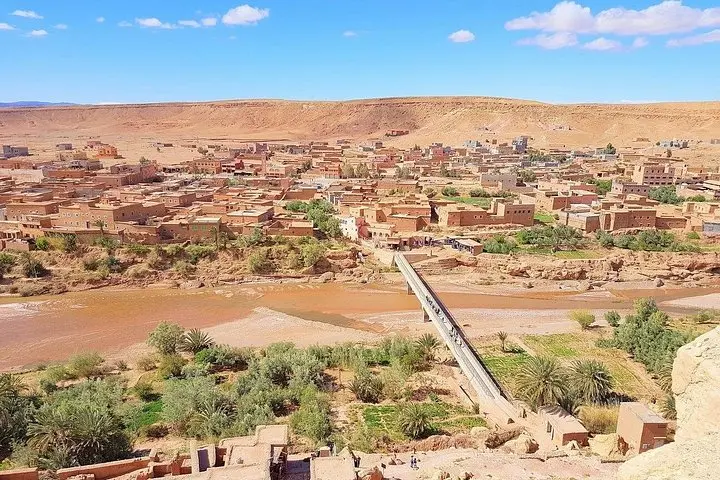
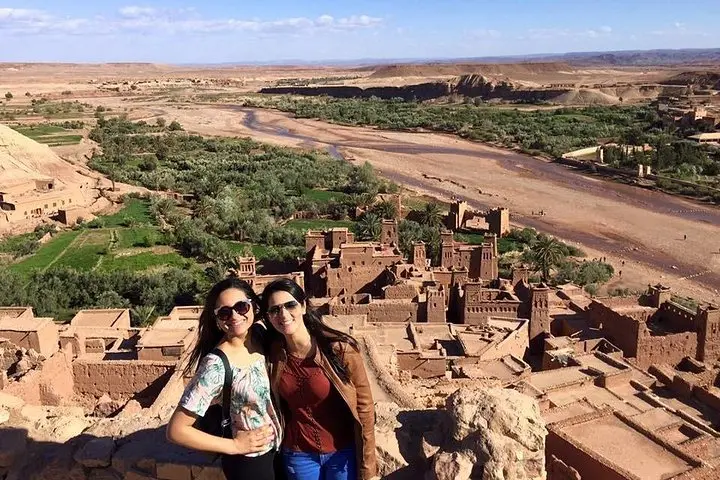
A wind-licked caravan of shadows moves across the last light as your jeep winds up from Marrakech and over the High Atlas. By the time you reach the ochre sprawl of Ait Ben Haddou, the stone kasbahs are cut sharp against the sky; by night two more days of travel will deliver you to the shifting slopes of Erg Chebbi.
Verified experiences and guided adventures in the surrounding area.
Operated by Tours Excursions Journeys · Merzouga, Drâa-Tafilalet
A wind-licked caravan of shadows moves across the last light as your jeep winds up from Marrakech and over the High Atlas. By the time you reach the ochre sprawl of Ait Ben Haddou, the stone kasbahs are cut sharp against the sky; by night two more days of travel will deliver you to the shifting slopes of Erg Chebbi.
This route threads geology and history: the Tizi n’Tichka pass (about 2,260 m) slices the Atlas, ancient clay ksars like Ait Ben Haddou show traditional rammed-earth architecture, and the Draa Valley offers palm-lined oases that supported trans-Saharan caravans for centuries. Todra and Dades gorges reveal limestone cliffs carved by seasonal rivers; Erg Chebbi’s dunes—hundreds of meters across—are wind-built and mobile.
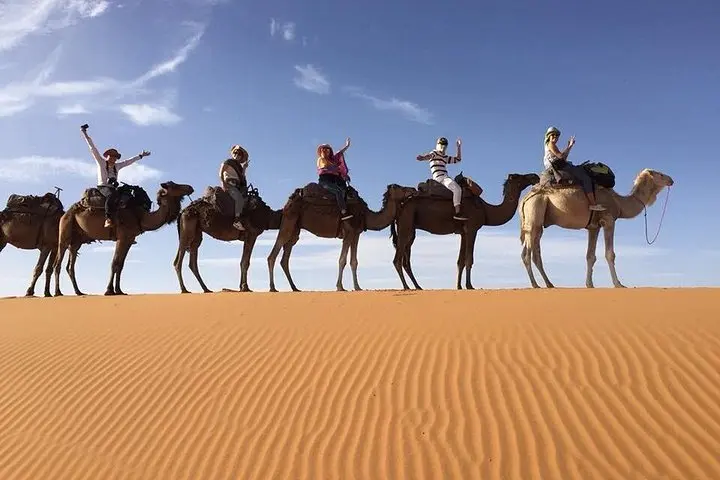
Culture is immediate: Berber guesthouses and desert camps, tagines cooked over coals, and evening music around the campfire. Expect a camel caravan of roughly 1–2 hours to reach a traditional Berber tent, sunset and sunrise that change the color of every grain, and comfortable nights where temperatures swing dramatically.
Practical notes: the trip covers long drives spread over three days—plan for several hours of travel each day and short walks at stops. Layered clothing, sun protection, and 2–3 liters of water per day are essential. Bring sturdy closed shoes for rocky gorges and light gaiters or sandals for dune walking. Aim to schedule the camel leg for late afternoon to catch sunset and early morning for sunrise; nights in the desert can be chilly, even after hot days.
The typical camel transfer to a desert camp is about 1–2 hours, depending on the camp location and pace of the caravan.
Yes — the itinerary is private and can accommodate various ages; camels and camps are accustomed to families, but discuss mobility needs with the operator.
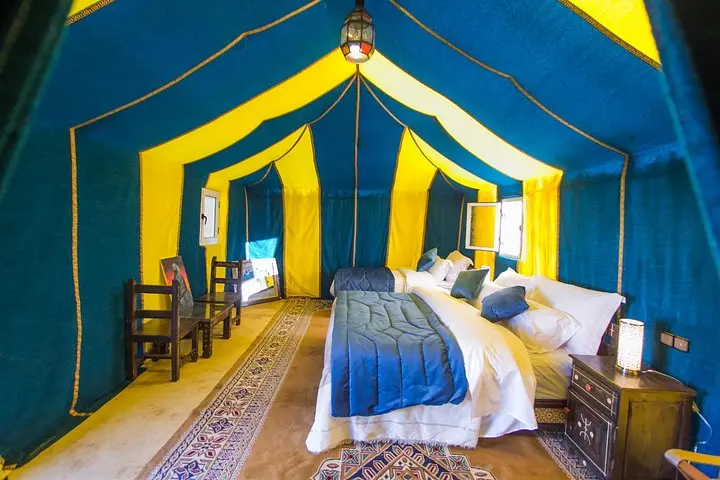
Expect traditional Berber tents with mattresses and blankets; many camps offer private tents and simple wash facilities, with meals included.
Visa and vaccination requirements depend on your nationality—check Moroccan entry rules and travel health advisories before departure.
Tours Excursions Journeys operates guided outdoor trips and adventures with an emphasis on safety, stewardship, and memorable experiences.
A wind-licked caravan of shadows moves across the last light as your jeep winds up from Marrakech and over the High Atlas. By the time you reach the ochre sprawl of Ait Ben Haddou, the stone kasbahs are cut sharp against the sky; by night two more days of travel will deliver you to the shifting slopes of Erg Chebbi.
A wind-licked caravan of shadows moves across the last light as your jeep winds up from Marrakech and over the High Atlas. By the time you reach the ochre sprawl of Ait Ben Haddou, the stone kasbahs are cut sharp against the sky; by night two more days of travel will deliver you to the shifting slopes of Erg Chebbi.
This route threads geology and history: the Tizi n’Tichka pass (about 2,260 m) slices the Atlas, ancient clay ksars like Ait Ben Haddou show traditional rammed-earth architecture, and the Draa Valley offers palm-lined oases that supported trans-Saharan caravans for centuries. Todra and Dades gorges reveal limestone cliffs carved by seasonal rivers; Erg Chebbi’s dunes—hundreds of meters across—are wind-built and mobile.
Culture is immediate: Berber guesthouses and desert camps, tagines cooked over coals, and evening music around the campfire. Expect a camel caravan of roughly 1–2 hours to reach a traditional Berber tent, sunset and sunrise that change the color of every grain, and comfortable nights where temperatures swing dramatically.
Practical notes: the trip covers long drives spread over three days—plan for several hours of travel each day and short walks at stops. Layered clothing, sun protection, and 2–3 liters of water per day are essential. Bring sturdy closed shoes for rocky gorges and light gaiters or sandals for dune walking. Aim to schedule the camel leg for late afternoon to catch sunset and early morning for sunrise; nights in the desert can be chilly, even after hot days.