THE ADVENTURE COLLECTIVE® · Independent discovery and booking for outdoor travel

Cross the High Atlas, explore Ait Ben Haddou and the Dades and Todra gorges, then sleep beneath the stars in a luxury camp at Erg Chebbi. This private 3‑day route blends history, geology, and easy desert adventure.
Cross the High Atlas, explore Ait Ben Haddou and the Dades and Todra gorges, then sleep beneath the stars in a luxury camp at Erg Chebbi. This private 3‑day route blends history, geology, and easy desert adventure.
The sun slides down behind a spine of dunes and the desert exhales: a hush broken by camel bells and distant drumming. On this private 3‑day circuit from Marrakech you cross the High Atlas via the Tizi n’Tichka (2,260 m), thread the ochre canyons of the Dades and Todra gorges, then meet the massive ripples of Erg Chebbi—dunes that rise toward 100–150 meters and push the horizon outward.
Verified experiences and guided adventures in the surrounding area.
Operated by Travel Tamegroute · Merzouga, Drâa-Tafilalet
The sun slides down behind a spine of dunes and the desert exhales: a hush broken by camel bells and distant drumming. On this private 3‑day circuit from Marrakech you cross the High Atlas via the Tizi n’Tichka (2,260 m), thread the ochre canyons of the Dades and Todra gorges, then meet the massive ripples of Erg Chebbi—dunes that rise toward 100–150 meters and push the horizon outward.
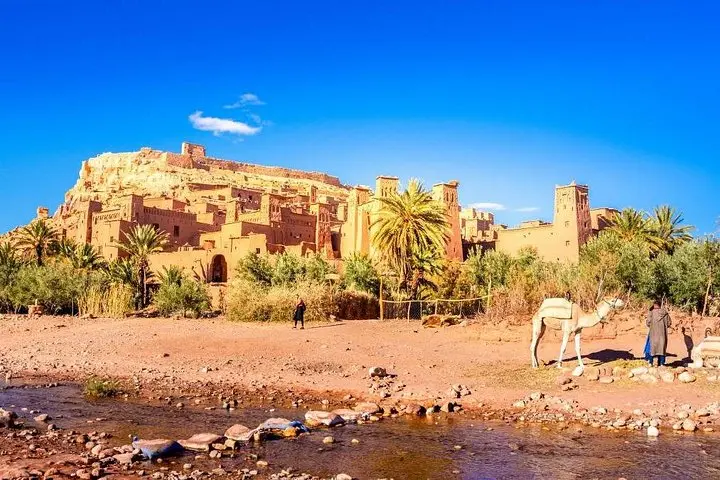
Ait Ben Haddou, a UNESCO ksar, anchors the route in tangible history: once a caravan stop on trans-Saharan trade corridors, today its mud-brick alleys illustrate regional construction and communal life. Geologically, the route moves from folded metamorphic rocks of the High Atlas into river-cut limestone gorges and finally to wind-shaped sand seas formed by Saharan winds. Local Berber culture is present at every stop—tea rituals, drumming around the campfire, and pottery in oasis towns.
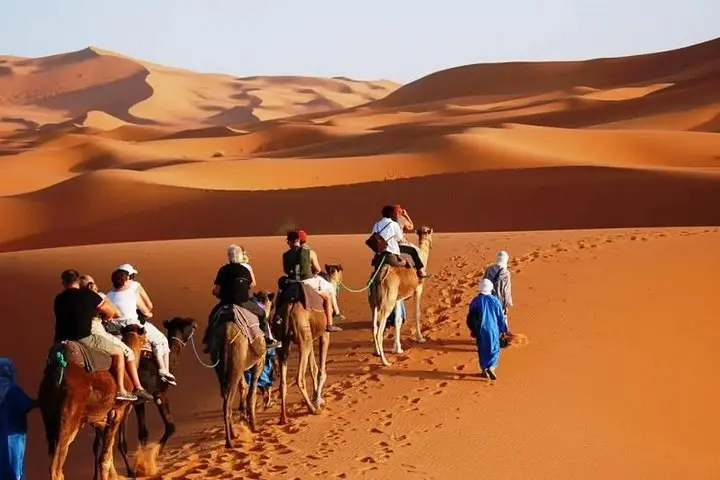
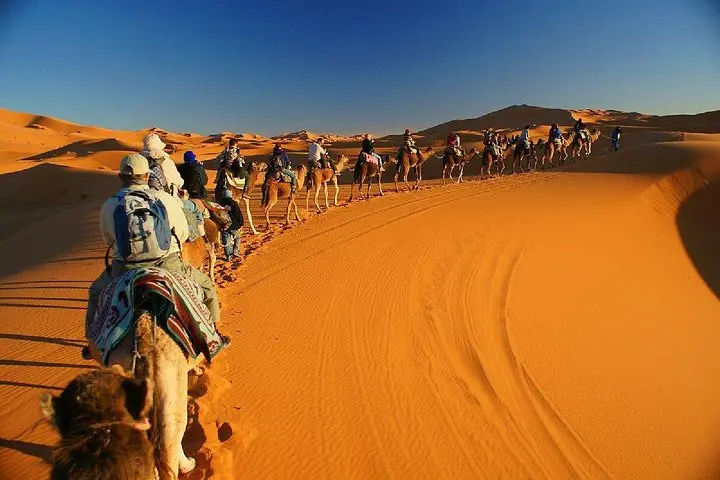
Practically, expect long stretches by air‑conditioned private vehicle punctuated by short walks (riverbanks at Todra, viewpoints above Dades). The camel trek to camp is low-impact but uneven; nights in the desert cool quickly so layers are essential. Sunrise and sunset are the photographic highlights and also the best times for sandboarding and walking the dune crest. Bring at least 2–3 liters of water per day, sun protection, and sturdy shoes for rocky gorges. Because road segments cross high passes and remote valleys, charge devices and carry some cash for small local purchases. This trip balances culture, geology, and a classic Sahara night under the stars—comfortably accessible yet unmistakably wild.
Expect several hours of driving each day between stops; the route includes high mountain passes and long valley stretches, balanced with breaks for walks and sightseeing.
Camel treks are low‑impact and suitable for most people, but mounting can be awkward; notify the operator if you have back issues or pregnancy.
Nights include a comfortable hotel or riad in the Dades valley and a luxury desert camp near Merzouga with private tents and meals included as listed.
The itinerary is family-friendly and listed as suitable for varied fitness levels, but long car transfers and uneven terrain may be tiring for very young children or guests with mobility limits.
Travel Tamegroute operates guided outdoor trips and adventures with an emphasis on safety, stewardship, and memorable experiences.
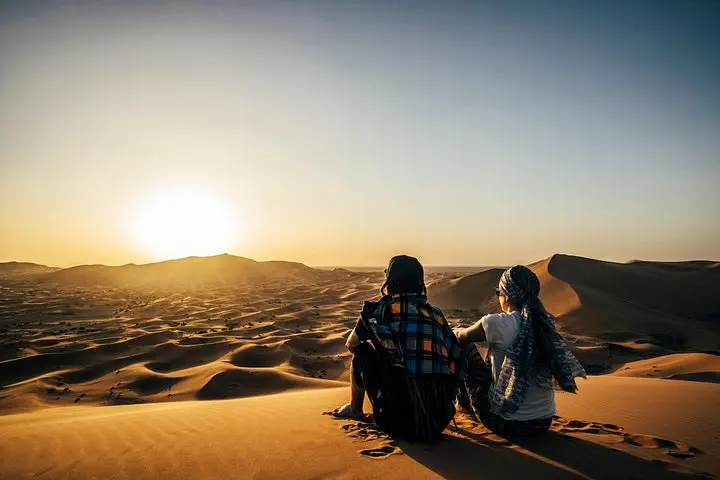
The sun slides down behind a spine of dunes and the desert exhales: a hush broken by camel bells and distant drumming. On this private 3‑day circuit from Marrakech you cross the High Atlas via the Tizi n’Tichka (2,260 m), thread the ochre canyons of the Dades and Todra gorges, then meet the massive ripples of Erg Chebbi—dunes that rise toward 100–150 meters and push the horizon outward.
The sun slides down behind a spine of dunes and the desert exhales: a hush broken by camel bells and distant drumming. On this private 3‑day circuit from Marrakech you cross the High Atlas via the Tizi n’Tichka (2,260 m), thread the ochre canyons of the Dades and Todra gorges, then meet the massive ripples of Erg Chebbi—dunes that rise toward 100–150 meters and push the horizon outward.
Ait Ben Haddou, a UNESCO ksar, anchors the route in tangible history: once a caravan stop on trans-Saharan trade corridors, today its mud-brick alleys illustrate regional construction and communal life. Geologically, the route moves from folded metamorphic rocks of the High Atlas into river-cut limestone gorges and finally to wind-shaped sand seas formed by Saharan winds. Local Berber culture is present at every stop—tea rituals, drumming around the campfire, and pottery in oasis towns.
Practically, expect long stretches by air‑conditioned private vehicle punctuated by short walks (riverbanks at Todra, viewpoints above Dades). The camel trek to camp is low-impact but uneven; nights in the desert cool quickly so layers are essential. Sunrise and sunset are the photographic highlights and also the best times for sandboarding and walking the dune crest. Bring at least 2–3 liters of water per day, sun protection, and sturdy shoes for rocky gorges. Because road segments cross high passes and remote valleys, charge devices and carry some cash for small local purchases. This trip balances culture, geology, and a classic Sahara night under the stars—comfortably accessible yet unmistakably wild.