THE ADVENTURE COLLECTIVE® · Independent discovery and booking for outdoor travel

Drive the High Atlas, walk Ait Ben Haddou’s ancient lanes and sleep under the stars on Erg Chebbi. This three-day private route blends dramatic geology, Berber culture and a classic camel-led night in a deluxe desert haima.
Drive the High Atlas, walk Ait Ben Haddou’s ancient lanes and sleep under the stars on Erg Chebbi. This three-day private route blends dramatic geology, Berber culture and a classic camel-led night in a deluxe desert haima.
You crest the Tichka Pass just as the light slants across ochre walls and the Atlas exhales cold air; the road peels away into kasbahs and palm groves, and by dusk the Erg Chebbi dunes rise like a living edge of the map. Over three days you cross landscapes: high mountain switchbacks, sculpted gorges, river valleys and the broad, red-sanded sea of Merzouga where camels trace slow signatures across the wind.
Verified experiences and guided adventures in the surrounding area.
Operated by Saha Tours · Merzouga, Drâa‑Tafilalet
You crest the Tichka Pass just as the light slants across ochre walls and the Atlas exhales cold air; the road peels away into kasbahs and palm groves, and by dusk the Erg Chebbi dunes rise like a living edge of the map. Over three days you cross landscapes: high mountain switchbacks, sculpted gorges, river valleys and the broad, red-sanded sea of Merzouga where camels trace slow signatures across the wind.
Ait Ben Haddou, a UNESCO ksar, anchors the route in history — its mud-brick towers were waypoints on the trans-Saharan caravan roads and later film sets. Geologically the corridor shifts from folded Atlas limestone to the alluvial fans and wind-sorted sands of the Sahara; Todra Gorge exposes 300m-high walls carved by river action. Culturally the trip is threaded with Amazigh (Berber) hospitality — valley markets, rose-harvesting traditions in Kelaa M'Gouna, and Berber drum evenings at the camp.
Practically: expect long drives broken into short hikes and photo stops, a guided camel ride onto the Erg Chebbi dunes, and one night in a deluxe haima with private facilities. Temperatures swing dramatically between day and night; bring layers, sun protection, and at least 2 liters of water per day. Footwear should handle sand and rocky trails; a small daypack keeps essentials during excursions.
Tips: schedule sunsets on the dunes, carry cash for small purchases, confirm pickup details the night before, and be prepared for basic Wi‑Fi in the camp. The desert rewards patient observation — its silence is energetic, and its stars are uncompromisingly bright.
Private tours typically include hotel pickup in Marrakech — confirm pickup time and location at booking and the night before departure.
Camel rides are gentle and guided; dune walking involves loose sand and short climbs and is manageable for most people with moderate mobility.
Deluxe haimas on this itinerary provide private bathrooms and basic hotel comforts, though amenities are simpler than city hotels.
While vehicles and some accommodation spaces may be accessible, dune areas, camels, and gorges are not wheelchair-friendly; discuss specific needs with the operator.
Saha Tours operates guided outdoor trips and adventures with an emphasis on safety, stewardship, and memorable experiences.
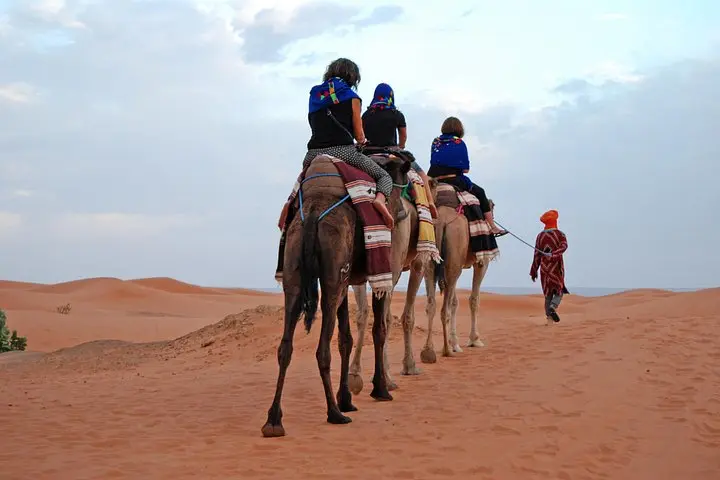
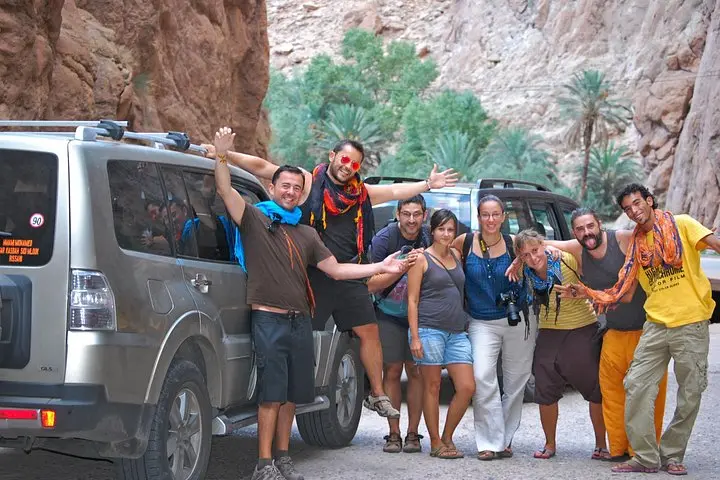
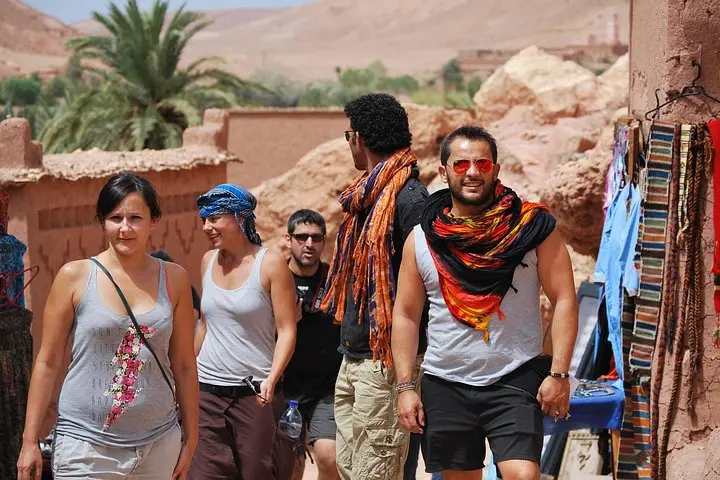
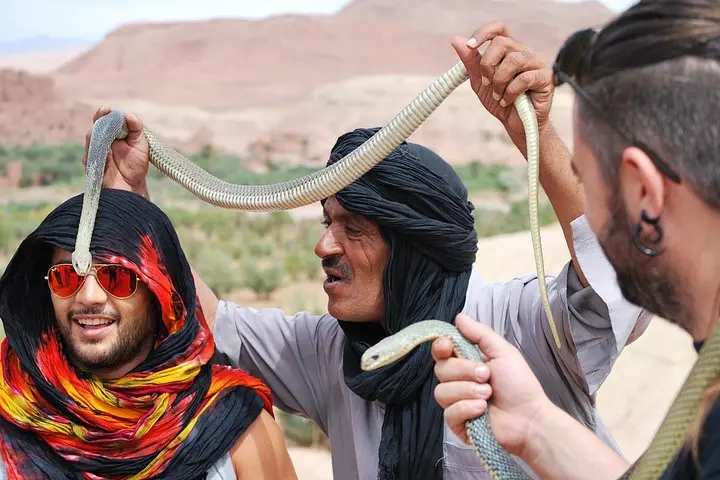
You crest the Tichka Pass just as the light slants across ochre walls and the Atlas exhales cold air; the road peels away into kasbahs and palm groves, and by dusk the Erg Chebbi dunes rise like a living edge of the map. Over three days you cross landscapes: high mountain switchbacks, sculpted gorges, river valleys and the broad, red-sanded sea of Merzouga where camels trace slow signatures across the wind.
You crest the Tichka Pass just as the light slants across ochre walls and the Atlas exhales cold air; the road peels away into kasbahs and palm groves, and by dusk the Erg Chebbi dunes rise like a living edge of the map. Over three days you cross landscapes: high mountain switchbacks, sculpted gorges, river valleys and the broad, red-sanded sea of Merzouga where camels trace slow signatures across the wind.
Ait Ben Haddou, a UNESCO ksar, anchors the route in history — its mud-brick towers were waypoints on the trans-Saharan caravan roads and later film sets. Geologically the corridor shifts from folded Atlas limestone to the alluvial fans and wind-sorted sands of the Sahara; Todra Gorge exposes 300m-high walls carved by river action. Culturally the trip is threaded with Amazigh (Berber) hospitality — valley markets, rose-harvesting traditions in Kelaa M'Gouna, and Berber drum evenings at the camp.
Practically: expect long drives broken into short hikes and photo stops, a guided camel ride onto the Erg Chebbi dunes, and one night in a deluxe haima with private facilities. Temperatures swing dramatically between day and night; bring layers, sun protection, and at least 2 liters of water per day. Footwear should handle sand and rocky trails; a small daypack keeps essentials during excursions.
Tips: schedule sunsets on the dunes, carry cash for small purchases, confirm pickup details the night before, and be prepared for basic Wi‑Fi in the camp. The desert rewards patient observation — its silence is energetic, and its stars are uncompromisingly bright.