THE ADVENTURE COLLECTIVE® · Independent discovery and booking for outdoor travel

Three days from Arusha take you through Seronera’s predator-rich plains and down into the Ngorongoro Caldera for dense, unforgettable wildlife viewing. Early mornings, open-roof game drives and a mix of tented camps and lodges make this a compact, high-impact safari.
Three days from Arusha take you through Seronera’s predator-rich plains and down into the Ngorongoro Caldera for dense, unforgettable wildlife viewing. Early mornings, open-roof game drives and a mix of tented camps and lodges make this a compact, high-impact safari.
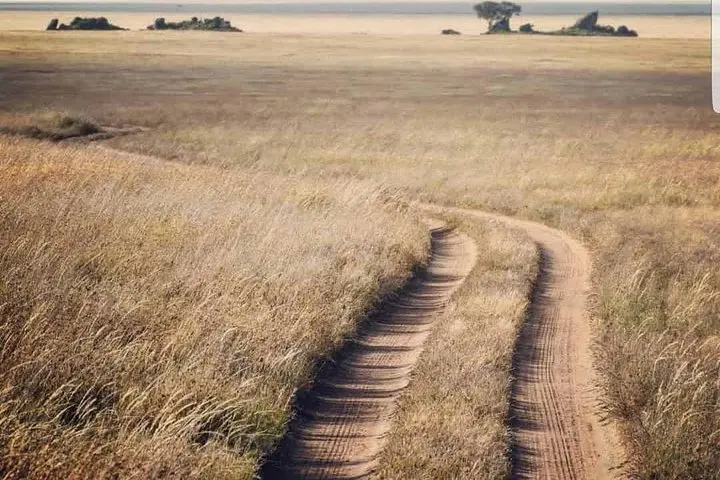
Before first light the Land Cruiser rumbles away from Arusha, headlights cutting a path through acacia silhouettes as the savannah holds its breath. By midmorning the plains open—endless grass interrupted by knobbly kopjes and the slow, deliberate shapes of grazing wildebeest. The vehicle’s pop-top lifts and the wind becomes a guide, pushing your view from one pride of lions to the next horizon.
Verified experiences and guided adventures in the surrounding area.
Operated by Africa Outland Tours · Arusha, Arusha Region
Before first light the Land Cruiser rumbles away from Arusha, headlights cutting a path through acacia silhouettes as the savannah holds its breath. By midmorning the plains open—endless grass interrupted by knobbly kopjes and the slow, deliberate shapes of grazing wildebeest. The vehicle’s pop-top lifts and the wind becomes a guide, pushing your view from one pride of lions to the next horizon.
This route threads two of Tanzania’s most storied landscapes. “Serengeti,” from the Maasai Siringitu, means endless plains; geology here is shaped by granite kopjes and broad, fire-prone grasslands. The Ngorongoro Crater is a collapsed volcanic caldera—one of the largest intact calderas on Earth—with a distinct ecology and denser game concentrations. Maasai communities still live on the rim, their pastoral rhythms visible against the crater’s rim at sunset.
Expect early starts, game drives through Seronera’s predator-rich pockets, a night on the crater edge and a descent into the caldera at dawn. Wildlife viewing is the focus: migrating herds, stalking cats, and water-dependent species in the crater basin. Camping or tented lodges punctuate long drive sections; vehicles are rugged and designed for observation rather than comfort.
Practical edge: travel light but bring layers—the mornings are cold and afternoons scorch. Carry a 2–3 liter water solution, binoculars, a good camera with a mid-telephoto lens, and photocopies of passport pages. Roads are bumpy; motion-sickness remedies help. Confirm park fees, vehicle roof access and pickup logistics with your operator in advance. With basic preparation this three-day loop delivers some of East Africa’s best, high-density wildlife viewing in compact, unforgettable doses.
Many packaged safaris include park and crater fees, but inclusion varies by operator—confirm at booking and on your voucher.
Yellow fever vaccination may be required depending on travel history; malaria prophylaxis is strongly recommended—check with a travel clinic before departure.
Calving in the southern Serengeti peaks December–March; river crossings and northern concentrations are most likely June–September—timing depends on the migration’s movement that year.
The itinerary is labeled suitable for all fitness levels; however, long drives and unpaved roads can be tiring—check vehicle accessibility and child policies with the operator.
Africa Outland Tours operates guided outdoor trips and adventures with an emphasis on safety, stewardship, and memorable experiences.
Before first light the Land Cruiser rumbles away from Arusha, headlights cutting a path through acacia silhouettes as the savannah holds its breath. By midmorning the plains open—endless grass interrupted by knobbly kopjes and the slow, deliberate shapes of grazing wildebeest. The vehicle’s pop-top lifts and the wind becomes a guide, pushing your view from one pride of lions to the next horizon.
Before first light the Land Cruiser rumbles away from Arusha, headlights cutting a path through acacia silhouettes as the savannah holds its breath. By midmorning the plains open—endless grass interrupted by knobbly kopjes and the slow, deliberate shapes of grazing wildebeest. The vehicle’s pop-top lifts and the wind becomes a guide, pushing your view from one pride of lions to the next horizon.
This route threads two of Tanzania’s most storied landscapes. “Serengeti,” from the Maasai Siringitu, means endless plains; geology here is shaped by granite kopjes and broad, fire-prone grasslands. The Ngorongoro Crater is a collapsed volcanic caldera—one of the largest intact calderas on Earth—with a distinct ecology and denser game concentrations. Maasai communities still live on the rim, their pastoral rhythms visible against the crater’s rim at sunset.
Expect early starts, game drives through Seronera’s predator-rich pockets, a night on the crater edge and a descent into the caldera at dawn. Wildlife viewing is the focus: migrating herds, stalking cats, and water-dependent species in the crater basin. Camping or tented lodges punctuate long drive sections; vehicles are rugged and designed for observation rather than comfort.
Practical edge: travel light but bring layers—the mornings are cold and afternoons scorch. Carry a 2–3 liter water solution, binoculars, a good camera with a mid-telephoto lens, and photocopies of passport pages. Roads are bumpy; motion-sickness remedies help. Confirm park fees, vehicle roof access and pickup logistics with your operator in advance. With basic preparation this three-day loop delivers some of East Africa’s best, high-density wildlife viewing in compact, unforgettable doses.