THE ADVENTURE COLLECTIVE® · Independent discovery and booking for outdoor travel

Witness sunrise from Penanjakan and hike into Kawah Ijen to see the rare blue fire on a private 3-day tour. Early starts, long drives and steep volcanic paths reward travelers with two of East Java’s most visceral volcanic experiences.
Witness sunrise from Penanjakan and hike into Kawah Ijen to see the rare blue fire on a private 3-day tour. Early starts, long drives and steep volcanic paths reward travelers with two of East Java’s most visceral volcanic experiences.
Dawn arrives over Java like a slow unrolling of light — Penanjakan’s ridge silhouettes against a cold, pale sky while the Sea of Sand below holds the night’s chill. Travelers gather on the wooden observation platform, breath visible, waiting as the sun slices across Bromo’s steaming crater. Two days later, the sulfur smoke of Kawah Ijen parts to reveal the crater lake and the small, electric blue flames that appear at the bottom.
Verified experiences and guided adventures in the surrounding area.
Operated by Hua Li Ying · Probolinggo, East Java
Dawn arrives over Java like a slow unrolling of light — Penanjakan’s ridge silhouettes against a cold, pale sky while the Sea of Sand below holds the night’s chill. Travelers gather on the wooden observation platform, breath visible, waiting as the sun slices across Bromo’s steaming crater. Two days later, the sulfur smoke of Kawah Ijen parts to reveal the crater lake and the small, electric blue flames that appear at the bottom.
Geology here is immediate: a volcanic complex carved by repeated eruptions, ash plains and acidic crater lakes. Mount Bromo sits inside the Tengger caldera, shaped by centuries of eruptions and local Tenggerese Hindu culture; Ijen’s acidic lake and sulfur deposits reflect ongoing fumarolic activity and a long history of small-scale sulfur mining. Expect encounters with local miners ascending with woven baskets and the occasional incense and prayer offering when passing Tenggerese shrines.
Practically, this private itinerary packs two early mornings and long drives: 3–4 hours by jeep to Penanjakan, then an overnight road transfer to Ijen with a midnight start to hike 3 km to the crater rim and descend for the blue fire. Wear stiff-soled hiking boots for steps and volcanic scree, a warm wind shell for pre-dawn hours, and plan for 1.5–2 hours of uphill hiking on Ijen. Guides provide gas masks for sulfur exposure but bring a well-fitting respirator if you have sensitivity. Hydrate, pace the climbs, and leave enough time in Surabaya for flight connections—the final transfer to the airport can take five hours. This tour balances spectacle with physical work: long drives, short steep hikes, and unforgettable volcanic light.
Blue fire is visible during very low-light conditions—typically between 02:00 and 04:00 on clear nights; guides time hikes for this window but sightings can vary with volcanic activity and weather.
Horse rides to the base of Bromo are available locally but not included in the tour price; expect to pay the jockey directly if you choose to ride.
The Ijen ascent is about 3 km and takes 1.5–2 hours uphill on a steep, sometimes slippery trail; good fitness and steady pacing make it manageable for most active travelers.
Yes—sulfur fumes can be hazardous near vents; the operator supplies non-disposable masks, but bringing a personal N95/FFP2 respirator is recommended for comfort and fit.
Hua Li Ying operates guided outdoor trips and adventures with an emphasis on safety, stewardship, and memorable experiences.
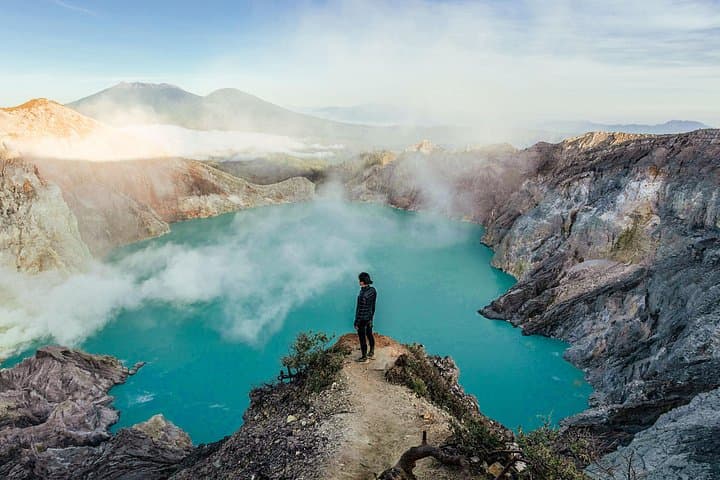
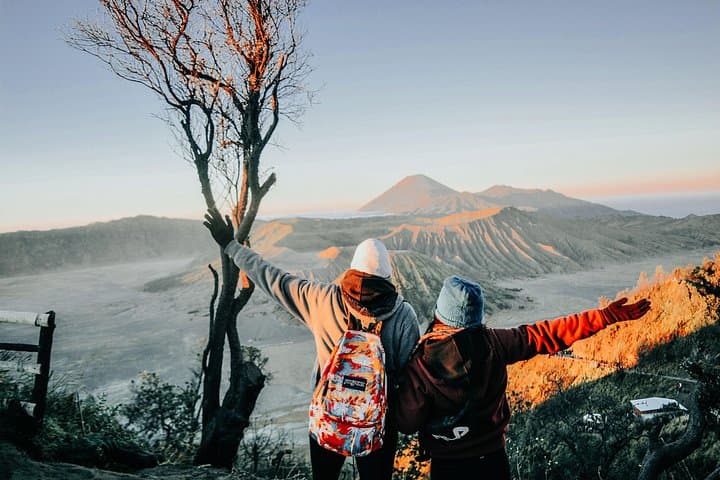

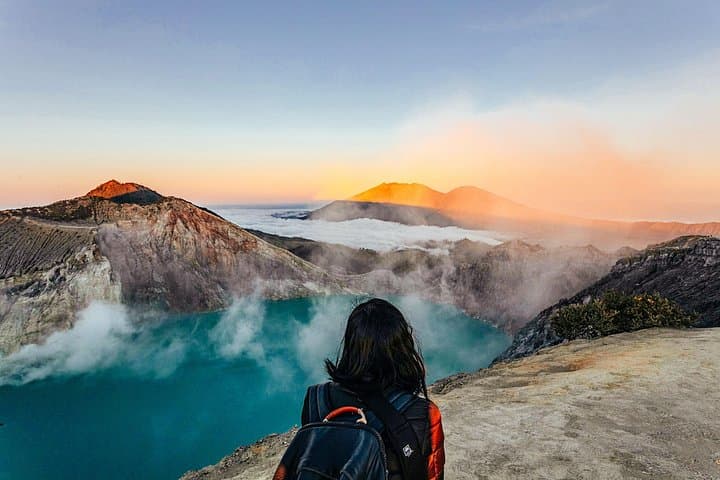
Dawn arrives over Java like a slow unrolling of light — Penanjakan’s ridge silhouettes against a cold, pale sky while the Sea of Sand below holds the night’s chill. Travelers gather on the wooden observation platform, breath visible, waiting as the sun slices across Bromo’s steaming crater. Two days later, the sulfur smoke of Kawah Ijen parts to reveal the crater lake and the small, electric blue flames that appear at the bottom.
Dawn arrives over Java like a slow unrolling of light — Penanjakan’s ridge silhouettes against a cold, pale sky while the Sea of Sand below holds the night’s chill. Travelers gather on the wooden observation platform, breath visible, waiting as the sun slices across Bromo’s steaming crater. Two days later, the sulfur smoke of Kawah Ijen parts to reveal the crater lake and the small, electric blue flames that appear at the bottom.
Geology here is immediate: a volcanic complex carved by repeated eruptions, ash plains and acidic crater lakes. Mount Bromo sits inside the Tengger caldera, shaped by centuries of eruptions and local Tenggerese Hindu culture; Ijen’s acidic lake and sulfur deposits reflect ongoing fumarolic activity and a long history of small-scale sulfur mining. Expect encounters with local miners ascending with woven baskets and the occasional incense and prayer offering when passing Tenggerese shrines.
Practically, this private itinerary packs two early mornings and long drives: 3–4 hours by jeep to Penanjakan, then an overnight road transfer to Ijen with a midnight start to hike 3 km to the crater rim and descend for the blue fire. Wear stiff-soled hiking boots for steps and volcanic scree, a warm wind shell for pre-dawn hours, and plan for 1.5–2 hours of uphill hiking on Ijen. Guides provide gas masks for sulfur exposure but bring a well-fitting respirator if you have sensitivity. Hydrate, pace the climbs, and leave enough time in Surabaya for flight connections—the final transfer to the airport can take five hours. This tour balances spectacle with physical work: long drives, short steep hikes, and unforgettable volcanic light.