THE ADVENTURE COLLECTIVE® · Independent discovery and booking for outdoor travel

Spend three days traveling from Bangkok to the River Kwai: floathouse nights, a Mon village trek, bamboo rafting and the historic Death Railway. This guided tour pairs natural river scenery with sobering wartime history and hands‑on local culture.
Spend three days traveling from Bangkok to the River Kwai: floathouse nights, a Mon village trek, bamboo rafting and the historic Death Railway. This guided tour pairs natural river scenery with sobering wartime history and hands‑on local culture.
Before first light the River Kwai looks like ink on glass—long‑tailed boats slip across it, their wakes folding into the current as the jungle exhales. This three‑day itinerary moves between that quiet river surface, wartime landmarks and lowland forest: a night at the rustic Home Phutoey, a night at the FloatHouse, bamboo rafting, a Mon village trek and the historic Death Railway ride back toward Bangkok.
Verified experiences and guided adventures in the surrounding area.
Operated by Way to Bangkok · Kanchanaburi, Kanchanaburi Province
Before first light the River Kwai looks like ink on glass—long‑tailed boats slip across it, their wakes folding into the current as the jungle exhales. This three‑day itinerary moves between that quiet river surface, wartime landmarks and lowland forest: a night at the rustic Home Phutoey, a night at the FloatHouse, bamboo rafting, a Mon village trek and the historic Death Railway ride back toward Bangkok.
Kanchanaburi’s limestone ridges and alluvial plains shaped human routes for centuries; the wartime railway cut through karst and teak, leaving stations and cemeteries that are both memorial and landscape feature. Local Mon and Thai cultures still maintain riverine livelihoods—fishing, bamboo craft and hospitality—so meals and homestays are as much cultural exchange as convenience.
Expect mixed terrain: river boardwalks, short jungle trails with uneven roots, and flat stretches around village clearings. Weather cycles quickly; the dry season brings clearer views, the monsoon fills side streams and lifts the jungle canopy into near‑tropical density.
Practical guidance: bring lightweight, quick‑dry layers, good ankle‑support shoes for village and jungle paths, and a small dry bag for electronics on boat transfers. Carry insect repellent and a reusable water bottle—local stops refillable but sunscreen and shade are limited at midday. The tour pace is gentle, with guided history at museums and the cemetery, plus active sections—rafter or short trek—that reward moderate mobility. Travel time from Bangkok is about 2.5–3 hours by vehicle; the Death Railway ride is a memorable three‑hour stretch of wooden viaduct and river views.
This trip balances reflective history with hands‑on river travel, best for travelers who want quiet nature, local culture and a clear link to the region’s past.
The transfer is typically 2.5–3 hours each way, depending on traffic; early morning departures avoid Bangkok congestion.
Yes—most breakfasts, lunches and dinners listed in the itinerary are included; the guide will note any optional or pay‑on‑site meals.
The operator rates the trip as physically easy; however, small boats, boardwalks and short jungle sections require basic mobility—check with the operator about infant lap rules and specific needs.
Light luggage is recommended; the itinerary includes boat transfers and short treks—travel bags that are easy to carry or shoulder are ideal.
Way to Bangkok operates guided outdoor trips and adventures with an emphasis on safety, stewardship, and memorable experiences.
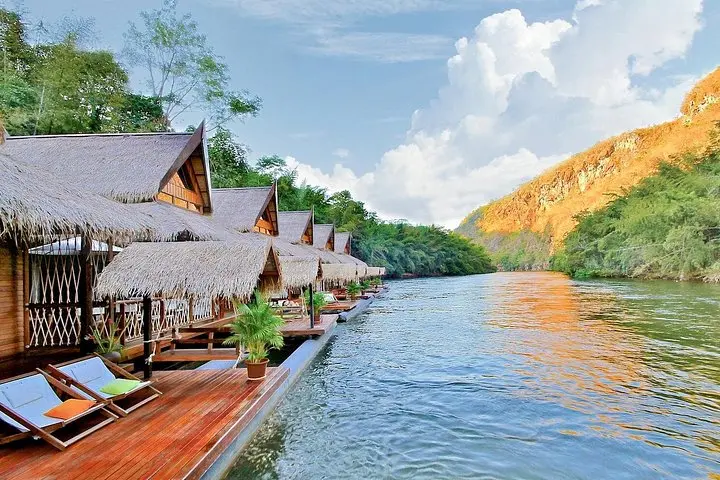
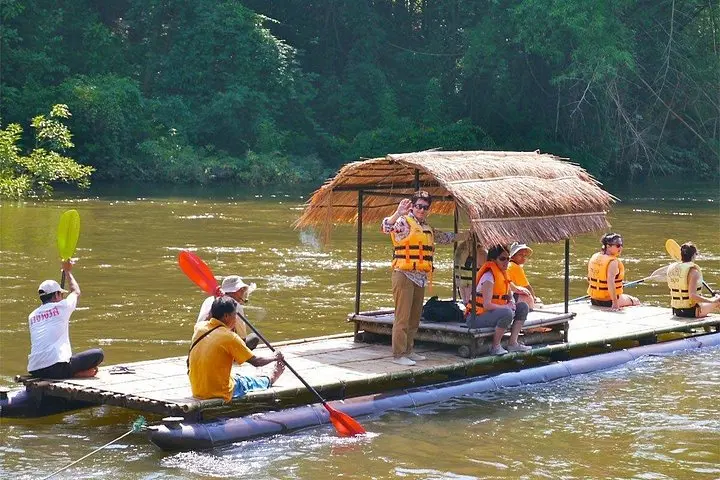
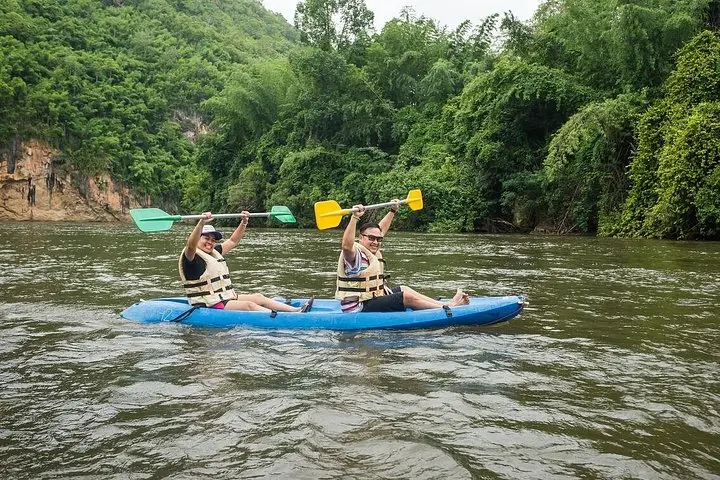
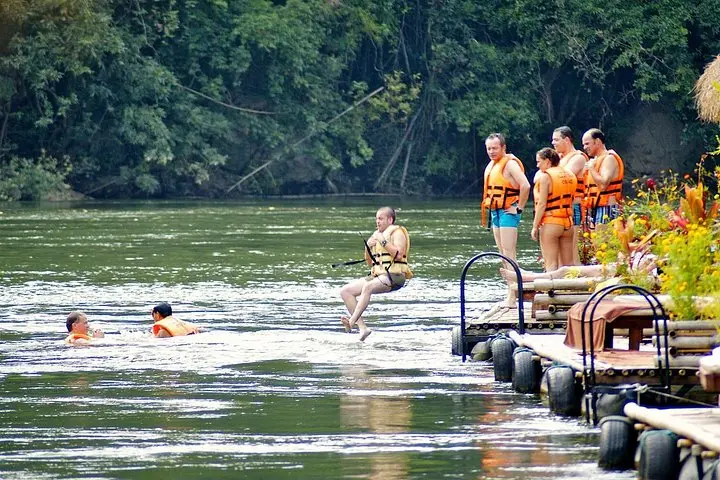
Before first light the River Kwai looks like ink on glass—long‑tailed boats slip across it, their wakes folding into the current as the jungle exhales. This three‑day itinerary moves between that quiet river surface, wartime landmarks and lowland forest: a night at the rustic Home Phutoey, a night at the FloatHouse, bamboo rafting, a Mon village trek and the historic Death Railway ride back toward Bangkok.
Before first light the River Kwai looks like ink on glass—long‑tailed boats slip across it, their wakes folding into the current as the jungle exhales. This three‑day itinerary moves between that quiet river surface, wartime landmarks and lowland forest: a night at the rustic Home Phutoey, a night at the FloatHouse, bamboo rafting, a Mon village trek and the historic Death Railway ride back toward Bangkok.
Kanchanaburi’s limestone ridges and alluvial plains shaped human routes for centuries; the wartime railway cut through karst and teak, leaving stations and cemeteries that are both memorial and landscape feature. Local Mon and Thai cultures still maintain riverine livelihoods—fishing, bamboo craft and hospitality—so meals and homestays are as much cultural exchange as convenience.
Expect mixed terrain: river boardwalks, short jungle trails with uneven roots, and flat stretches around village clearings. Weather cycles quickly; the dry season brings clearer views, the monsoon fills side streams and lifts the jungle canopy into near‑tropical density.
Practical guidance: bring lightweight, quick‑dry layers, good ankle‑support shoes for village and jungle paths, and a small dry bag for electronics on boat transfers. Carry insect repellent and a reusable water bottle—local stops refillable but sunscreen and shade are limited at midday. The tour pace is gentle, with guided history at museums and the cemetery, plus active sections—rafter or short trek—that reward moderate mobility. Travel time from Bangkok is about 2.5–3 hours by vehicle; the Death Railway ride is a memorable three‑hour stretch of wooden viaduct and river views.
This trip balances reflective history with hands‑on river travel, best for travelers who want quiet nature, local culture and a clear link to the region’s past.