THE ADVENTURE COLLECTIVE® · Independent discovery and booking for outdoor travel

Cross the High Atlas, walk narrow gorges and ride camels into Erg Chebbi on this focused 3-day loop from Marrakech. Expect long drives, short walks, and a night beneath the desert stars.
Cross the High Atlas, walk narrow gorges and ride camels into Erg Chebbi on this focused 3-day loop from Marrakech. Expect long drives, short walks, and a night beneath the desert stars.
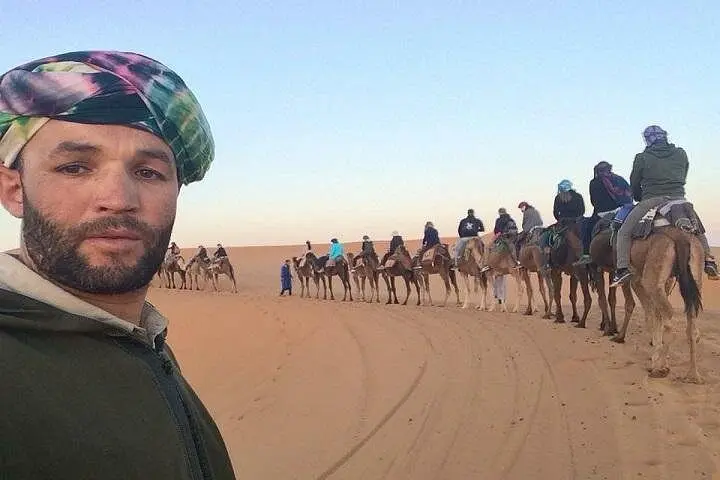
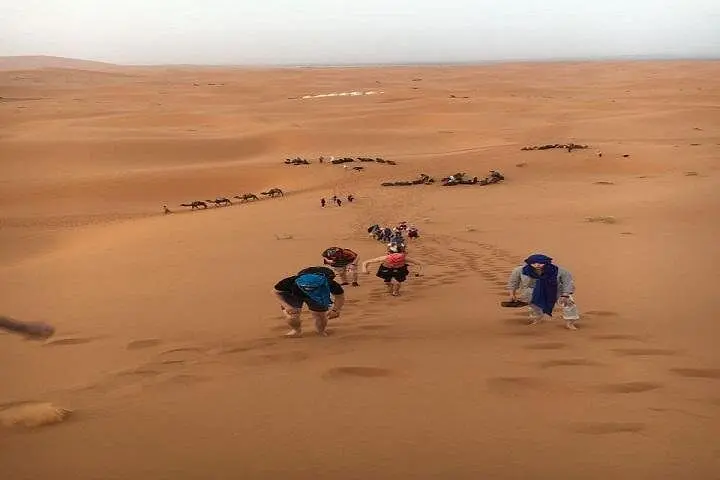
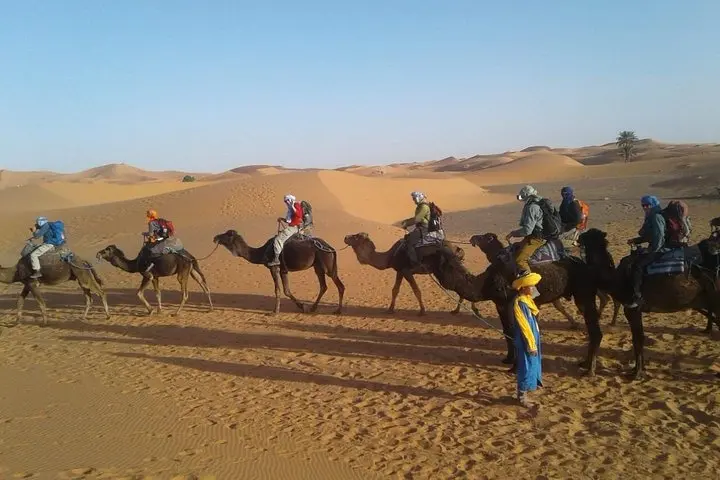
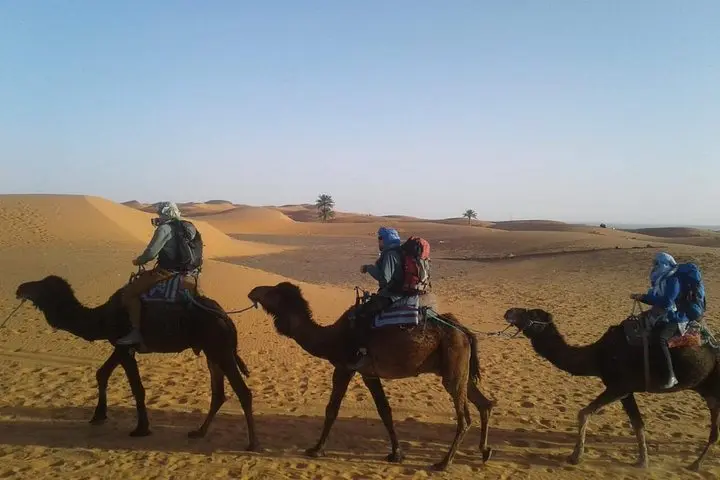
You step out of the minibus at dawn and the Atlas Mountains are already peeling back — ochre ridges giving way to the flat, rippling plane of Erg Chebbi. Camels sniff the air; sand slopes rise like living waves that dare you to climb them. Over three days this route moves from Marrakech’s red clay city through high passes into a sequence of gorges, oases and finally the Sahara’s tallest dunes.
Verified experiences and guided adventures in the surrounding area.
Operated by Trekking in Morocco · Merzouga, Drâa-Tafilalet
You step out of the minibus at dawn and the Atlas Mountains are already peeling back — ochre ridges giving way to the flat, rippling plane of Erg Chebbi. Camels sniff the air; sand slopes rise like living waves that dare you to climb them. Over three days this route moves from Marrakech’s red clay city through high passes into a sequence of gorges, oases and finally the Sahara’s tallest dunes.
History and geology are visible on the route: the fortified ksar of Ait Benhaddou marks ancient caravan routes and a UNESCO-listed reminder of trans-Saharan trade, while Todra and Dades gorges reveal river-cut canyons and layered limestone folded by the Atlas uplift. Culture is equally present — roadside berber villages, rose fields in the Valley of Roses and nights around small campfires where local guides share stories under a wide, cold sky.
Practical guidance: expect long driving days broken by short hikes and village visits. Camel treks to the camp are roughly 1–2 hours each way, over soft sand that tests ankles and balance. Sunrise and sunset are cold; daytime can be hot and dry. Bring layered clothing, sun protection, a small headlamp, and at least 2–3 liters of water per day. Footwear should be sturdy trainers or light hiking boots; sticks help on steep sand slopes. Phones often lose signal outside towns — use offline maps and coordinate pickup points with your driver. Respect camp rules: leave no waste, ask before photographing people, and conserve water. With moderate fitness and sensible gear, this compact loop delivers dramatic geology, hands-on culture and the simple, expansive thrill of a true desert night.
The camel trek into Erg Chebbi is typically 1–1.5 hours to the camp for sunset and a similar duration after sunrise, depending on pace and chosen camp location.
Desert camps range from basic traditional tents to semi-permanent berber tents; most provide mattresses, blankets and optional toilets — bring a sleeping liner if you prefer extra cleanliness.
Short walks are easy but camel riding and long vehicle transfers may be tiring; children should be supervised on camels and anyone with mobility concerns should consult the operator before booking.
A moderate level of fitness is recommended — mounting camels, walking short distances in sand, and enduring several hours of driving over mountain passes.
Trekking in Morocco operates guided outdoor trips and adventures with an emphasis on safety, stewardship, and memorable experiences.
You step out of the minibus at dawn and the Atlas Mountains are already peeling back — ochre ridges giving way to the flat, rippling plane of Erg Chebbi. Camels sniff the air; sand slopes rise like living waves that dare you to climb them. Over three days this route moves from Marrakech’s red clay city through high passes into a sequence of gorges, oases and finally the Sahara’s tallest dunes.
You step out of the minibus at dawn and the Atlas Mountains are already peeling back — ochre ridges giving way to the flat, rippling plane of Erg Chebbi. Camels sniff the air; sand slopes rise like living waves that dare you to climb them. Over three days this route moves from Marrakech’s red clay city through high passes into a sequence of gorges, oases and finally the Sahara’s tallest dunes.
History and geology are visible on the route: the fortified ksar of Ait Benhaddou marks ancient caravan routes and a UNESCO-listed reminder of trans-Saharan trade, while Todra and Dades gorges reveal river-cut canyons and layered limestone folded by the Atlas uplift. Culture is equally present — roadside berber villages, rose fields in the Valley of Roses and nights around small campfires where local guides share stories under a wide, cold sky.
Practical guidance: expect long driving days broken by short hikes and village visits. Camel treks to the camp are roughly 1–2 hours each way, over soft sand that tests ankles and balance. Sunrise and sunset are cold; daytime can be hot and dry. Bring layered clothing, sun protection, a small headlamp, and at least 2–3 liters of water per day. Footwear should be sturdy trainers or light hiking boots; sticks help on steep sand slopes. Phones often lose signal outside towns — use offline maps and coordinate pickup points with your driver. Respect camp rules: leave no waste, ask before photographing people, and conserve water. With moderate fitness and sensible gear, this compact loop delivers dramatic geology, hands-on culture and the simple, expansive thrill of a true desert night.