THE ADVENTURE COLLECTIVE® · Independent discovery and booking for outdoor travel

Cross the High Atlas to stand atop Erg Chebbi’s dunes on this private 3‑day journey from Marrakech to Fes. Expect kasbahs, gorges, camel treks and a star-filled desert night with local Berber culture woven through the route.
Cross the High Atlas to stand atop Erg Chebbi’s dunes on this private 3‑day journey from Marrakech to Fes. Expect kasbahs, gorges, camel treks and a star-filled desert night with local Berber culture woven through the route.
The first light breaks over the High Atlas as the minibus climbs Tizi n’Tichka; the road tightens, stone walls lean in, and the peaks throw long, cool shadows across the valley. By afternoon the landscape opens—ochre kasbahs, palm groves, and the sun-baked facades of Ait Ben Haddou—before the sand of Erg Chebbi draws the group toward an enormous horizon.
Verified experiences and guided adventures in the surrounding area.
Operated by Morocco Excursions · Marrakech, Marrakech-Safi
The first light breaks over the High Atlas as the minibus climbs Tizi n’Tichka; the road tightens, stone walls lean in, and the peaks throw long, cool shadows across the valley. By afternoon the landscape opens—ochre kasbahs, palm groves, and the sun-baked facades of Ait Ben Haddou—before the sand of Erg Chebbi draws the group toward an enormous horizon.
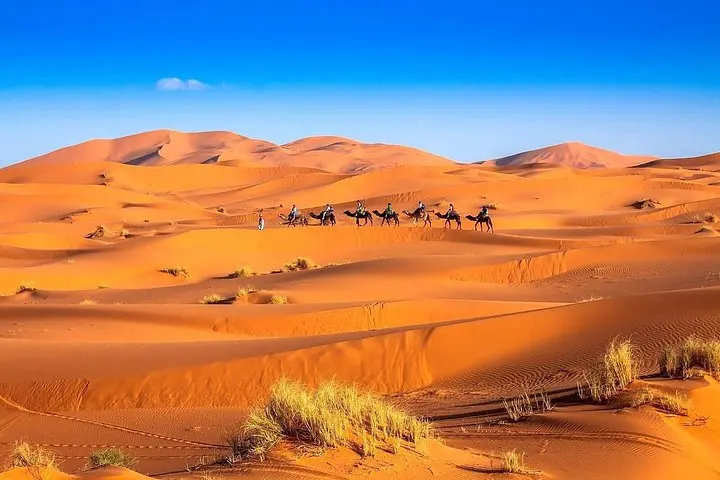
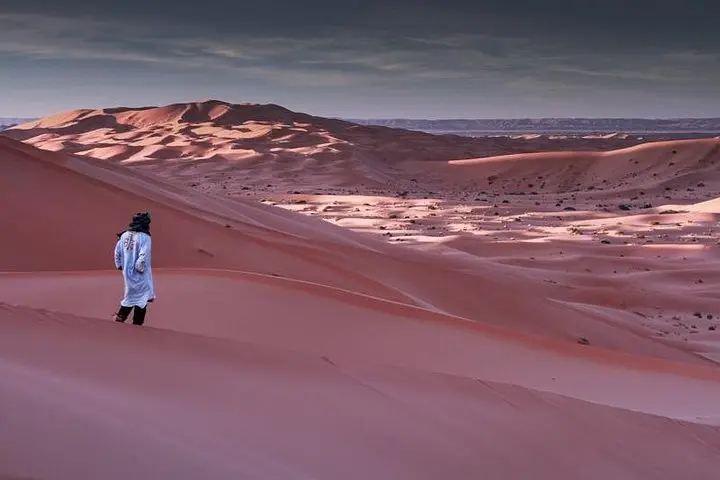
This three-day route follows historic caravan corridors between Marrakech and Fes, threading Berber villages, the film-ready kasbahs of Ouarzazate, and deep river-cut gorges like Todra and Dades. Geologically the trip moves from the folded metamorphic rocks of the High Atlas down to the alluvial plains and wind-sculpted dunes of the Sahara; Erg Chebbi’s dunes can reach 100–150 meters and shift perceptibly with seasonal winds.
Culturally, travelers encounter living Berber communities, palm-oasis agriculture in Skoura and Ziz Valley, and roadside markets where mint tea punctuates the day. Expect a night under canvas in a standard desert camp after a sunset camel trek; the sky will feel immediate and vast.
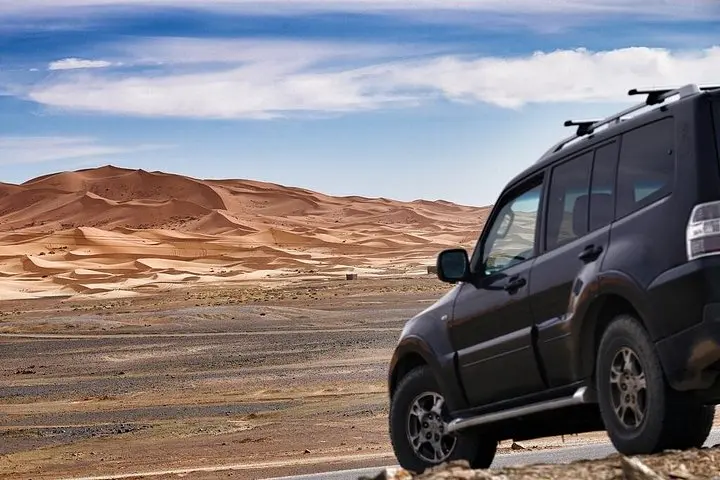
Practical notes: total driving covers roughly 500–600 km over three days with long stretches on rural roads—pack for temperature swings, carry at least 2–3 liters of water per day, and use closed shoes for rocky stops. Sunrise and sunset are the best times on the dunes for photos and cooler conditions; desert nights can be surprisingly cold, so bring warm layers. Modest packing, a small daypack for hikes, and patience for flexible schedules make this classic Sahara crossing comfortable and rewarding.
Yes—short guided camel treks are standard; staff provide basic instructions and lead animals, making it accessible to beginners.
Accommodations include 3-star hotels or riads on night one, a standard desert camp on night two, and arrival into Fes with varied options; confirm specifics when booking.
Two dinners and two breakfasts are included according to the itinerary—inform the operator of dietary needs in advance for vegetarian options.
The itinerary generally operates year-round; adverse weather in the High Atlas can affect timing but cancellations follow the operator’s 24-hour refund policy.
Morocco Excursions operates guided outdoor trips and adventures with an emphasis on safety, stewardship, and memorable experiences.
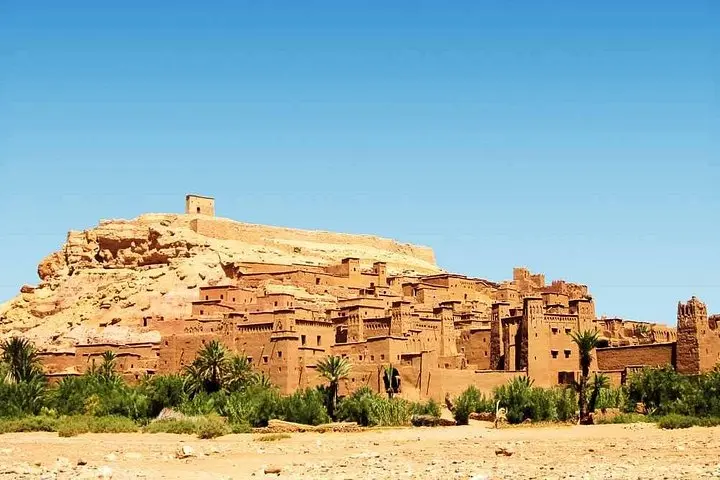
The first light breaks over the High Atlas as the minibus climbs Tizi n’Tichka; the road tightens, stone walls lean in, and the peaks throw long, cool shadows across the valley. By afternoon the landscape opens—ochre kasbahs, palm groves, and the sun-baked facades of Ait Ben Haddou—before the sand of Erg Chebbi draws the group toward an enormous horizon.
The first light breaks over the High Atlas as the minibus climbs Tizi n’Tichka; the road tightens, stone walls lean in, and the peaks throw long, cool shadows across the valley. By afternoon the landscape opens—ochre kasbahs, palm groves, and the sun-baked facades of Ait Ben Haddou—before the sand of Erg Chebbi draws the group toward an enormous horizon.
This three-day route follows historic caravan corridors between Marrakech and Fes, threading Berber villages, the film-ready kasbahs of Ouarzazate, and deep river-cut gorges like Todra and Dades. Geologically the trip moves from the folded metamorphic rocks of the High Atlas down to the alluvial plains and wind-sculpted dunes of the Sahara; Erg Chebbi’s dunes can reach 100–150 meters and shift perceptibly with seasonal winds.
Culturally, travelers encounter living Berber communities, palm-oasis agriculture in Skoura and Ziz Valley, and roadside markets where mint tea punctuates the day. Expect a night under canvas in a standard desert camp after a sunset camel trek; the sky will feel immediate and vast.
Practical notes: total driving covers roughly 500–600 km over three days with long stretches on rural roads—pack for temperature swings, carry at least 2–3 liters of water per day, and use closed shoes for rocky stops. Sunrise and sunset are the best times on the dunes for photos and cooler conditions; desert nights can be surprisingly cold, so bring warm layers. Modest packing, a small daypack for hikes, and patience for flexible schedules make this classic Sahara crossing comfortable and rewarding.