THE ADVENTURE COLLECTIVE® · Independent discovery and booking for outdoor travel
Cross the High Atlas, explore Todra and Dades gorges, and spend a night under Berber tents at Erg Chebbi. This three-day loop from Marrakech combines accessible drives, short walks, camel rides and cultural stops for a compact desert experience.
Cross the High Atlas, explore Todra and Dades gorges, and spend a night under Berber tents at Erg Chebbi. This three-day loop from Marrakech combines accessible drives, short walks, camel rides and cultural stops for a compact desert experience.
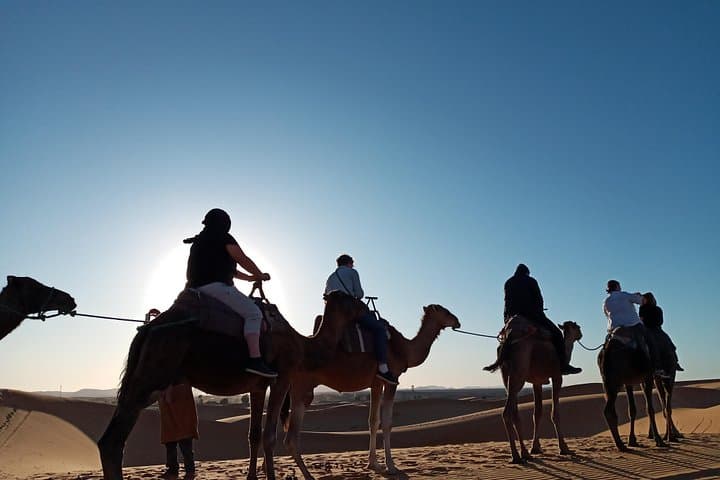
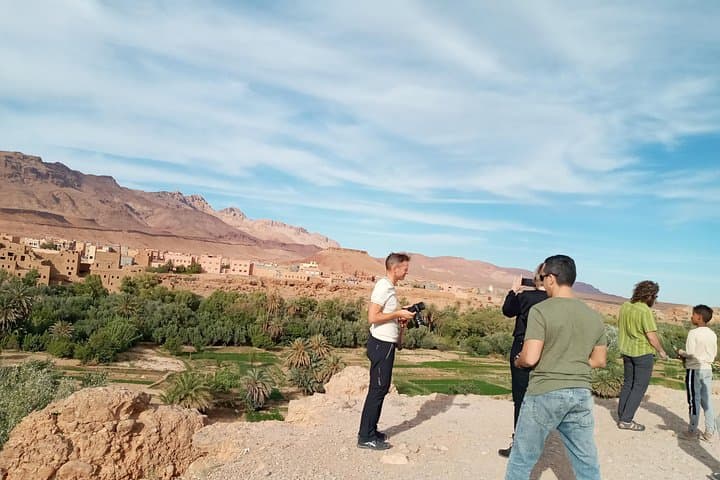
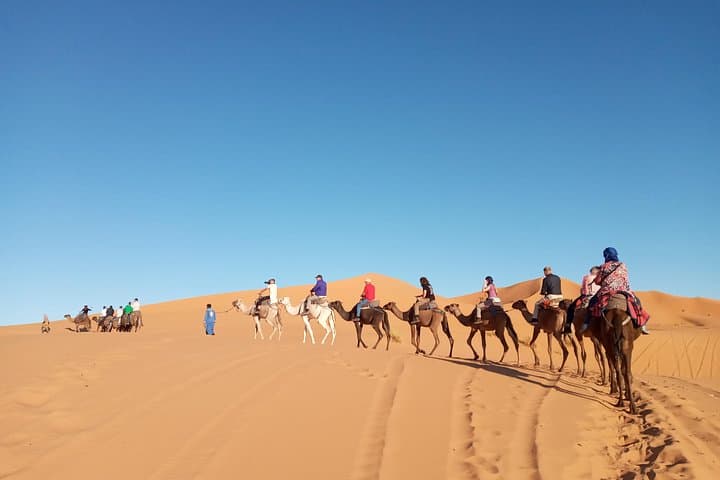
Dawn in the High Atlas is immediate and tactile: the road breathes cool air through the Tichka Pass as the minibus climbs toward 2,200 m, and the serrated ridge gives way to ochre valleys that seem to push travelers forward. Over three days you cross cinematic Ouarzazate, the thousand-kasbah road, the sculpted cliffs of Todra and Dades gorges, and finally the vast rippling slopes of Erg Chebbi, where camels trace slow arcs across sand that drinks the sun.
Verified experiences and guided adventures in the surrounding area.
Operated by Amazing Toubkal Trek · Marrakech, Marrakech-Safi
Dawn in the High Atlas is immediate and tactile: the road breathes cool air through the Tichka Pass as the minibus climbs toward 2,200 m, and the serrated ridge gives way to ochre valleys that seem to push travelers forward. Over three days you cross cinematic Ouarzazate, the thousand-kasbah road, the sculpted cliffs of Todra and Dades gorges, and finally the vast rippling slopes of Erg Chebbi, where camels trace slow arcs across sand that drinks the sun.
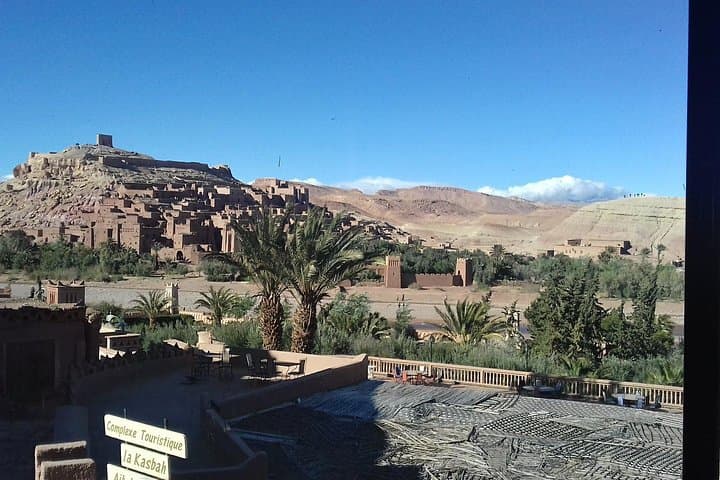
This route stitches together geology and human history—karst and sandstone carved by rivers and wind, fortified ksour like Ait Benhaddou standing as mute witnesses to caravan routes and film crews, and palm oases marking long-lived irrigation traditions. Local Berber culture remains visible in village life, markets in Rissani, and the music and storytelling that punctuate a night at the desert camp.
Practically: expect long road transfers with short hikes and photo stops, a camel ride into camp, and two nights’ lodging (one valley hotel, one desert tent). Nights are cold even after hot days; water and sun protection are essential. The itinerary is accessible to most people in reasonable health but involves uneven terrain and sandy walking.
Timing matters—sunset and sunrise on the highest dune ridges are the emotional center of the trip. Carry a small daypack, keep valuables on you, and allow phone batteries and memory cards enough charge: the landscape rewards patience and a steady shutter.
Yes—camels used on these tours are trained for tourism; handlers assist mounting and dismounting. Inform the operator about mobility concerns and infants so arrangements can be made.
You’ll stay in Berber-style nomad tents on prepared campgrounds—beds or mattresses are provided, and meals are communal; basic but comfortable facilities are standard.
Yes, the itinerary includes leaving larger luggage at the hotel before the camel ride; bring a small overnight bag for essentials used at camp.
There are no mandatory vaccinations for most travelers, but standard travel vaccinations and travel insurance are recommended; bring any personal medications and a basic first-aid kit.
Amazing Toubkal Trek operates guided outdoor trips and adventures with an emphasis on safety, stewardship, and memorable experiences.
Dawn in the High Atlas is immediate and tactile: the road breathes cool air through the Tichka Pass as the minibus climbs toward 2,200 m, and the serrated ridge gives way to ochre valleys that seem to push travelers forward. Over three days you cross cinematic Ouarzazate, the thousand-kasbah road, the sculpted cliffs of Todra and Dades gorges, and finally the vast rippling slopes of Erg Chebbi, where camels trace slow arcs across sand that drinks the sun.
Dawn in the High Atlas is immediate and tactile: the road breathes cool air through the Tichka Pass as the minibus climbs toward 2,200 m, and the serrated ridge gives way to ochre valleys that seem to push travelers forward. Over three days you cross cinematic Ouarzazate, the thousand-kasbah road, the sculpted cliffs of Todra and Dades gorges, and finally the vast rippling slopes of Erg Chebbi, where camels trace slow arcs across sand that drinks the sun.
This route stitches together geology and human history—karst and sandstone carved by rivers and wind, fortified ksour like Ait Benhaddou standing as mute witnesses to caravan routes and film crews, and palm oases marking long-lived irrigation traditions. Local Berber culture remains visible in village life, markets in Rissani, and the music and storytelling that punctuate a night at the desert camp.
Practically: expect long road transfers with short hikes and photo stops, a camel ride into camp, and two nights’ lodging (one valley hotel, one desert tent). Nights are cold even after hot days; water and sun protection are essential. The itinerary is accessible to most people in reasonable health but involves uneven terrain and sandy walking.
Timing matters—sunset and sunrise on the highest dune ridges are the emotional center of the trip. Carry a small daypack, keep valuables on you, and allow phone batteries and memory cards enough charge: the landscape rewards patience and a steady shutter.
