THE ADVENTURE COLLECTIVE® · Independent discovery and booking for outdoor travel

Swap Marrakech’s medina bustle for three days across the High Atlas, Dades and Todra gorges, and the orange ramps of Erg Chebbi. Expect long drives, a sunset camel trek to a desert camp, and sunrise over dunes that change color by the minute.
Swap Marrakech’s medina bustle for three days across the High Atlas, Dades and Todra gorges, and the orange ramps of Erg Chebbi. Expect long drives, a sunset camel trek to a desert camp, and sunrise over dunes that change color by the minute.
The sun drops behind a serrated skyline of sand, and the Erg Chebbi dunes push and ripple like a living thing beneath your feet. On a three-day loop from Marrakech, you trade the city's ochre alleys for high mountain passes, red gorges and nights under canvas where wind and starlight keep time.
Verified experiences and guided adventures in the surrounding area.
Operated by GawaTor · Merzouga, Drâa-Tafilalet
The sun drops behind a serrated skyline of sand, and the Erg Chebbi dunes push and ripple like a living thing beneath your feet. On a three-day loop from Marrakech, you trade the city's ochre alleys for high mountain passes, red gorges and nights under canvas where wind and starlight keep time.
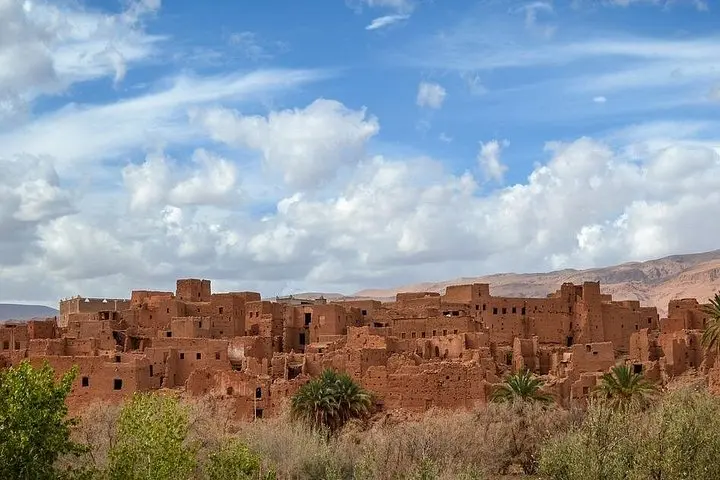
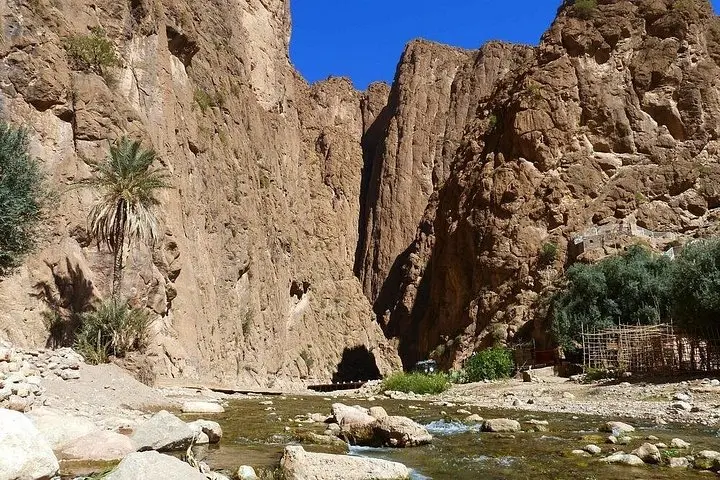
The route follows the High Atlas through the Tizi n’Tichka pass, crosses the cinematic kasbahs of Ouarzazate and Aït Ben Haddou, threads the palm-lined Dades and Todra valleys, and finishes at Merzouga’s towering dunes. Geology here is dramatic: folded Atlas strata give way to fluvial canyons, then to wind-sculpted aeolian ridges in the Sahara. Aït Ben Haddou preserves earthen architecture from the caravan era and reads like a living map of historic trans-Saharan trade.
Culturally, the trip is anchored by Berber villages and desert nomadic traditions — expect communal drum circles in camp and simple home-cooked tagines in valley towns. The desert is deceptively alive: mornings bring cool clarity, afternoons push heat, and nights demand warm layers.
Practical guidance: prepare for long drives (several 4–6 hour legs), early wakeups for sunrise atop the dunes, and a 45–60 minute sunset camel transfer to camp. Pack layered clothing, sun protection, at least 2–3 liters of water per day, and sturdy closed-toe shoes for rocky gorges and soft sand. If you have limited mobility or cardiovascular issues, consult your provider — camel transfers and uneven terrain are involved. Book transfers that include air-conditioned vehicles and bivouac accommodation; cancellations typically require 24-hour notice.
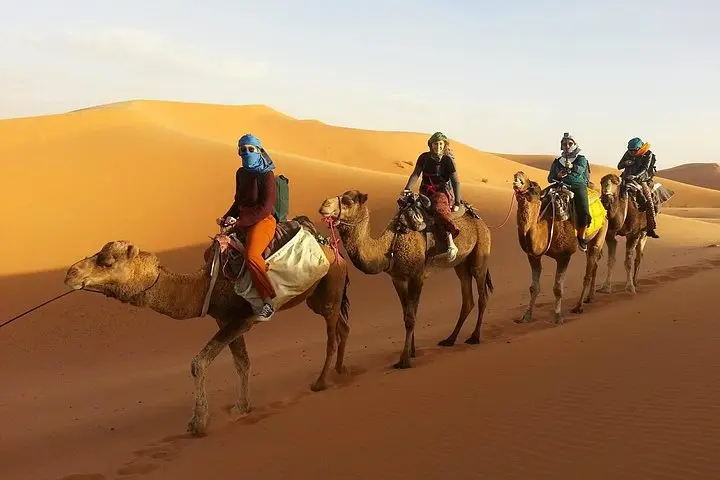
Sunset camel transfers to the bivouac are typically 30–60 minutes depending on dune approach; you can opt for a short or longer ride when booking.
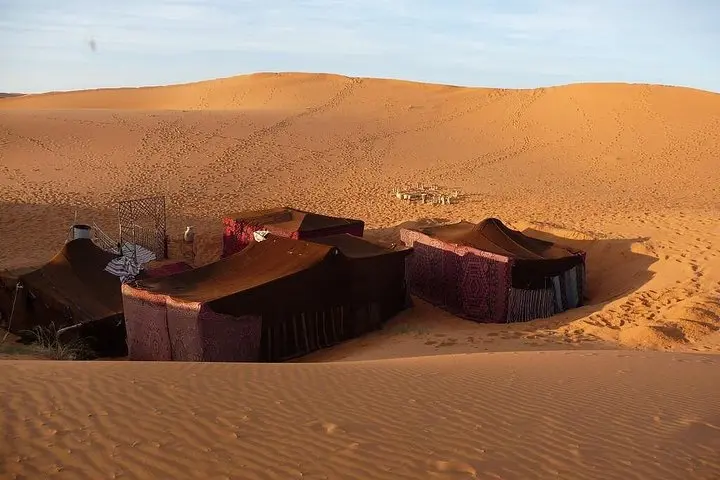
Camps range from traditional nomadic tents with mattresses and shared facilities to upgraded private tents; this tour includes a standard bivouac with meals and mattresses.
Children may join but parents should consider long drives and sand travel; the provider advises travelers with cardiovascular issues to avoid strenuous elements like camel riding and early desert activity.
Arrive at the dune crest before dawn—plan for a 5:00–7:00 a.m. start depending on season—to watch rapid color shifts as light hits the sand.
GawaTor operates guided outdoor trips and adventures with an emphasis on safety, stewardship, and memorable experiences.
The sun drops behind a serrated skyline of sand, and the Erg Chebbi dunes push and ripple like a living thing beneath your feet. On a three-day loop from Marrakech, you trade the city's ochre alleys for high mountain passes, red gorges and nights under canvas where wind and starlight keep time.
The sun drops behind a serrated skyline of sand, and the Erg Chebbi dunes push and ripple like a living thing beneath your feet. On a three-day loop from Marrakech, you trade the city's ochre alleys for high mountain passes, red gorges and nights under canvas where wind and starlight keep time.
The route follows the High Atlas through the Tizi n’Tichka pass, crosses the cinematic kasbahs of Ouarzazate and Aït Ben Haddou, threads the palm-lined Dades and Todra valleys, and finishes at Merzouga’s towering dunes. Geology here is dramatic: folded Atlas strata give way to fluvial canyons, then to wind-sculpted aeolian ridges in the Sahara. Aït Ben Haddou preserves earthen architecture from the caravan era and reads like a living map of historic trans-Saharan trade.
Culturally, the trip is anchored by Berber villages and desert nomadic traditions — expect communal drum circles in camp and simple home-cooked tagines in valley towns. The desert is deceptively alive: mornings bring cool clarity, afternoons push heat, and nights demand warm layers.
Practical guidance: prepare for long drives (several 4–6 hour legs), early wakeups for sunrise atop the dunes, and a 45–60 minute sunset camel transfer to camp. Pack layered clothing, sun protection, at least 2–3 liters of water per day, and sturdy closed-toe shoes for rocky gorges and soft sand. If you have limited mobility or cardiovascular issues, consult your provider — camel transfers and uneven terrain are involved. Book transfers that include air-conditioned vehicles and bivouac accommodation; cancellations typically require 24-hour notice.