THE ADVENTURE COLLECTIVE® · Independent discovery and booking for outdoor travel

A compact three-day circuit from Marrakech through the High Atlas to the dunes of Erg Chebbi, combining UNESCO earthen architecture, canyon walks and an overnight in a desert camp. Read on for what to expect and how to pack smart.
A compact three-day circuit from Marrakech through the High Atlas to the dunes of Erg Chebbi, combining UNESCO earthen architecture, canyon walks and an overnight in a desert camp. Read on for what to expect and how to pack smart.
You slide out of Marrakech before sunrise and the road opens into a changing map: rolling foothills, fortified kasbahs, then the Atlas Mountains standing like a line of sentries. By midday the light strips the ochre of Aït Benhaddou into hard planes; by the second day the dunes of Erg Chebbi rise and shift, the sand daring you to climb.
Verified experiences and guided adventures in the surrounding area.
Operated by Moroccan Nature Trail · Marrakech, Marrakech-Safi
You slide out of Marrakech before sunrise and the road opens into a changing map: rolling foothills, fortified kasbahs, then the Atlas Mountains standing like a line of sentries. By midday the light strips the ochre of Aït Benhaddou into hard planes; by the second day the dunes of Erg Chebbi rise and shift, the sand daring you to climb.
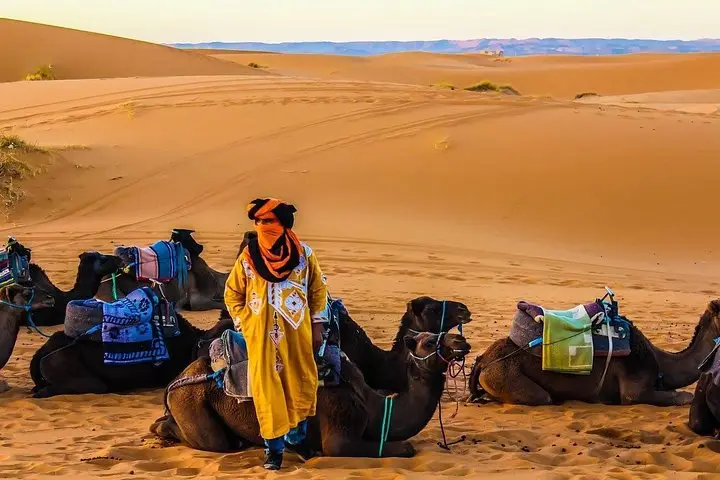
This three-day route threads history and geology. Aït Benhaddou, a UNESCO ksar, marks old caravan routes and earthen architecture; Ouarzazate’s kasbahs recall 20th-century colonial outposts and film studios. The High Atlas—a folded, uplifted range with peaks over 4,000 m—feeds the wadis that carved the Todgha and Dadès gorges. Local Berber communities keep traditional mountain and desert crafts alive; in Merzouga, nomad-guides maintain camel-handling and sand navigation skills.
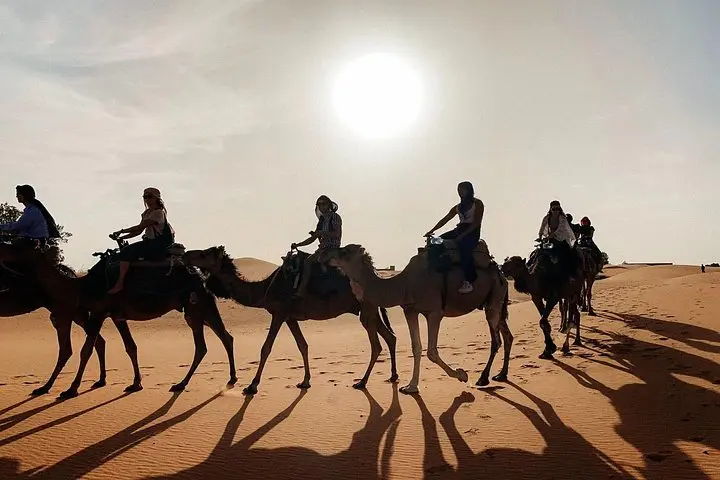
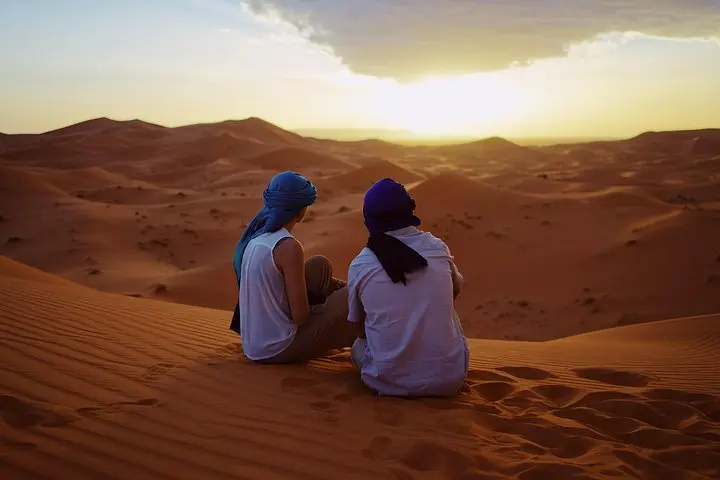
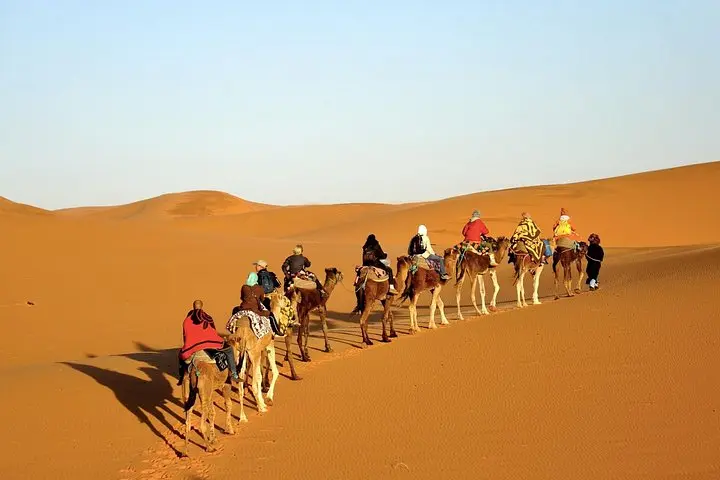
Expect long but scenic transfers (several 4–6 hour driving segments across roughly 500–600 km round-trip), short canyon walks, a camel trek to a desert camp, and a sunrise or sunset climb on dunes up to 100–150 m. Terrain varies from paved roads and river gorges to loose sand; temperatures swing widely between day and night.
Practicalities: bring layered clothing for cold desert nights, at least 2–3 liters of water per day, sun protection, and sturdy closed-toe shoes for dune climbs and rocky gorges. Opt for early starts to avoid peak heat and keep valuables secure in vehicles during stops. The experience balances long drives with concentrated moments of walking and stargazing—efficient planning makes it memorable rather than exhausting.
The tour involves long vehicle transfers with short walks, camel rides and dune climbs; it’s suitable for most people in reasonable health but requires mobility for uneven sand and stairs in ksar sites.
Accommodation includes a night at a luxury-style desert camp in traditional tents with bedding; expect basic but comfortable facilities and communal dining.
Signal can be intermittent in gorges and across the desert; camps and hotels usually have charging facilities but bring a power bank for long days.
Children can participate but must be accompanied by an adult; camel rides and desert terrain can be tiring for very young kids.
Moroccan Nature Trail operates guided outdoor trips and adventures with an emphasis on safety, stewardship, and memorable experiences.
You slide out of Marrakech before sunrise and the road opens into a changing map: rolling foothills, fortified kasbahs, then the Atlas Mountains standing like a line of sentries. By midday the light strips the ochre of Aït Benhaddou into hard planes; by the second day the dunes of Erg Chebbi rise and shift, the sand daring you to climb.
You slide out of Marrakech before sunrise and the road opens into a changing map: rolling foothills, fortified kasbahs, then the Atlas Mountains standing like a line of sentries. By midday the light strips the ochre of Aït Benhaddou into hard planes; by the second day the dunes of Erg Chebbi rise and shift, the sand daring you to climb.
This three-day route threads history and geology. Aït Benhaddou, a UNESCO ksar, marks old caravan routes and earthen architecture; Ouarzazate’s kasbahs recall 20th-century colonial outposts and film studios. The High Atlas—a folded, uplifted range with peaks over 4,000 m—feeds the wadis that carved the Todgha and Dadès gorges. Local Berber communities keep traditional mountain and desert crafts alive; in Merzouga, nomad-guides maintain camel-handling and sand navigation skills.
Expect long but scenic transfers (several 4–6 hour driving segments across roughly 500–600 km round-trip), short canyon walks, a camel trek to a desert camp, and a sunrise or sunset climb on dunes up to 100–150 m. Terrain varies from paved roads and river gorges to loose sand; temperatures swing widely between day and night.
Practicalities: bring layered clothing for cold desert nights, at least 2–3 liters of water per day, sun protection, and sturdy closed-toe shoes for dune climbs and rocky gorges. Opt for early starts to avoid peak heat and keep valuables secure in vehicles during stops. The experience balances long drives with concentrated moments of walking and stargazing—efficient planning makes it memorable rather than exhausting.