THE ADVENTURE COLLECTIVE® · Independent discovery and booking for outdoor travel

Cross the High Atlas, explore Ait Ben Haddou and Todra Gorge, then ride camels into the orange sweep of Erg Chebbi for a night in a Berber desert camp. Practical, scenic, and rich in cultural stops, this 3-day itinerary pairs cinematic landscapes with hands-on desert experiences.
Cross the High Atlas, explore Ait Ben Haddou and Todra Gorge, then ride camels into the orange sweep of Erg Chebbi for a night in a Berber desert camp. Practical, scenic, and rich in cultural stops, this 3-day itinerary pairs cinematic landscapes with hands-on desert experiences.
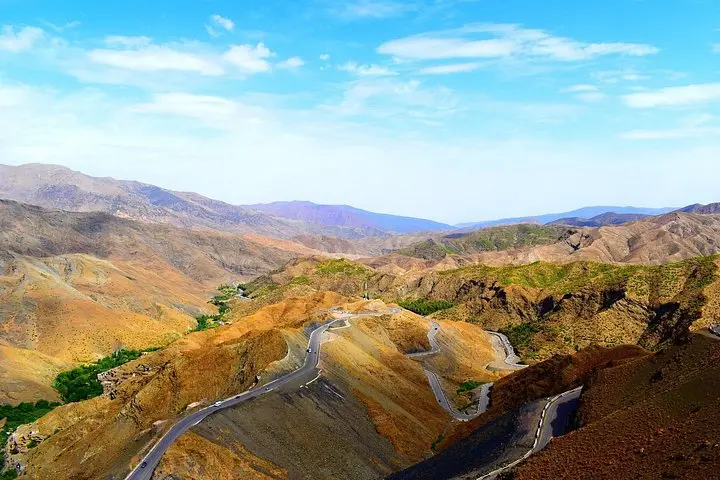
On the road out of Marrakech the air thins and the landscape sharpens: red-roofed houses give way to stubbled farmland, then the High Atlas climbs into a sweep of switchbacks. By midafternoon you crest Tizi n’Tichka (2,260 m) and the mountains fall away toward ochre kasbahs and, eventually, the rolling silhouette of Erg Chebbi.
Verified experiences and guided adventures in the surrounding area.
Operated by Sahara Serenity Tours · Merzouga, Drâa-Tafilalet
On the road out of Marrakech the air thins and the landscape sharpens: red-roofed houses give way to stubbled farmland, then the High Atlas climbs into a sweep of switchbacks. By midafternoon you crest Tizi n’Tichka (2,260 m) and the mountains fall away toward ochre kasbahs and, eventually, the rolling silhouette of Erg Chebbi.
This three-day loop threads history and geology — Ait Ben Haddou's earthen ksar preserves medieval caravan architecture, while the Todra Gorge cuts a 300 m cleft through limestone, evidence of tectonic stress and ancient rivers. Berber villages punctuate the route; local hospitality and tea rituals ground the trip in living culture.
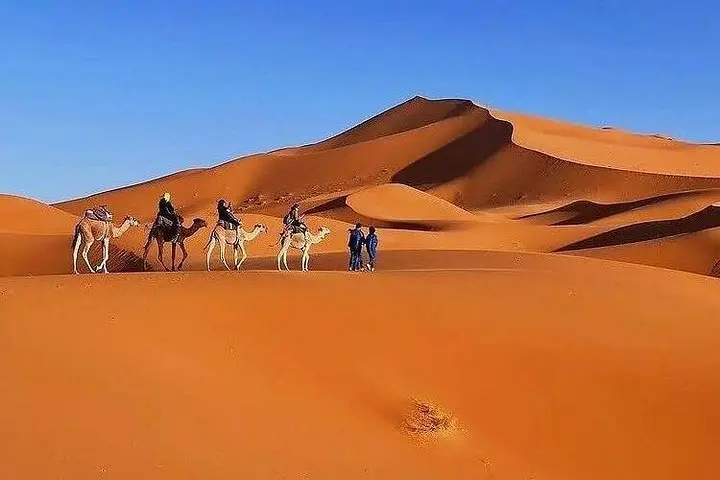
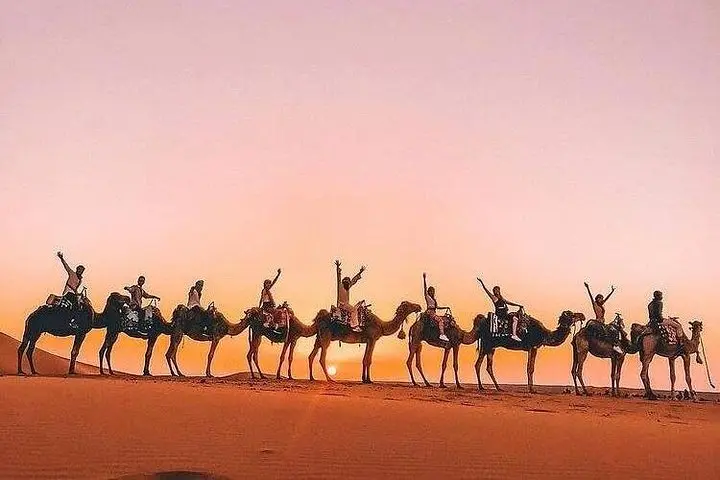
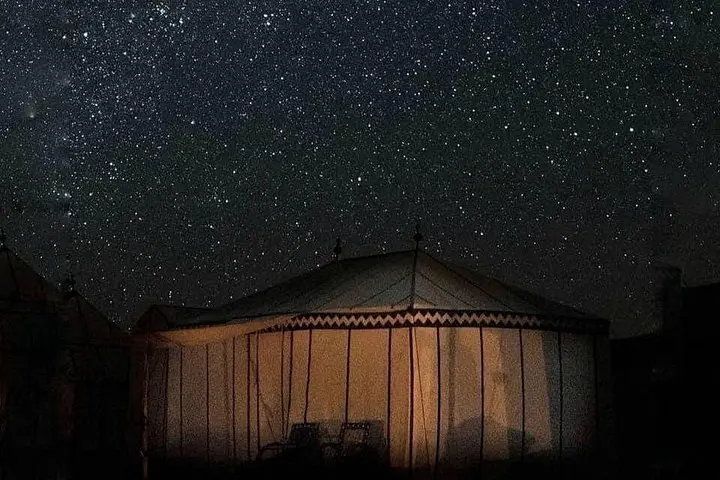
Expect two full days of driving interlaced with immersive stops: guided walks in Ait Ben Haddou, a canyon stroll in Todra, and a late-afternoon camel trek across Merzouga’s dunes to a Berber camp. Nights under the nomadic tent reveal a cold clarity — desert temperatures swing sharply after sunset — and sandboarding and small fossil workshops near Erfoud add variety.
Practicalities: total driving each day ranges from ~200–320 km, travel is in an air-conditioned vehicle, and the itinerary includes two breakfasts, two dinners, and one desert-camp night. Bring layered clothing for hot days and cold nights, sun protection, and a refillable water bottle. Time your movements for sunrise and sunset when the dunes change color and temperatures ease.
Respect local customs—dress modestly—and the fragile desert environment: minimize plastic, follow camp rules, and leave dune crests undisturbed. The Sahara dares you to slow down; preparation lets you enjoy it fully.
Camel rides are gentle and guided; typical dune treks last 45–90 minutes and are suitable for most fitness levels, with handlers assisting mounting and dismounting.
The itinerary includes a traditional Berber-style camp with basic but comfortable sleeping tents, shared facilities, dinner, and a breakfast; some camps offer private tents on request.
Mobile coverage is intermittent in remote stretches; larger towns like Ouarzazate and Erfoud have ATMs — carry sufficient cash for markets and tips.
Yes; the operator lists the trek as physically easy and suitable for families, but consider long drives and nighttime cold when traveling with young children.
Sahara Serenity Tours operates guided outdoor trips and adventures with an emphasis on safety, stewardship, and memorable experiences.
On the road out of Marrakech the air thins and the landscape sharpens: red-roofed houses give way to stubbled farmland, then the High Atlas climbs into a sweep of switchbacks. By midafternoon you crest Tizi n’Tichka (2,260 m) and the mountains fall away toward ochre kasbahs and, eventually, the rolling silhouette of Erg Chebbi.
On the road out of Marrakech the air thins and the landscape sharpens: red-roofed houses give way to stubbled farmland, then the High Atlas climbs into a sweep of switchbacks. By midafternoon you crest Tizi n’Tichka (2,260 m) and the mountains fall away toward ochre kasbahs and, eventually, the rolling silhouette of Erg Chebbi.
This three-day loop threads history and geology — Ait Ben Haddou's earthen ksar preserves medieval caravan architecture, while the Todra Gorge cuts a 300 m cleft through limestone, evidence of tectonic stress and ancient rivers. Berber villages punctuate the route; local hospitality and tea rituals ground the trip in living culture.
Expect two full days of driving interlaced with immersive stops: guided walks in Ait Ben Haddou, a canyon stroll in Todra, and a late-afternoon camel trek across Merzouga’s dunes to a Berber camp. Nights under the nomadic tent reveal a cold clarity — desert temperatures swing sharply after sunset — and sandboarding and small fossil workshops near Erfoud add variety.
Practicalities: total driving each day ranges from ~200–320 km, travel is in an air-conditioned vehicle, and the itinerary includes two breakfasts, two dinners, and one desert-camp night. Bring layered clothing for hot days and cold nights, sun protection, and a refillable water bottle. Time your movements for sunrise and sunset when the dunes change color and temperatures ease.
Respect local customs—dress modestly—and the fragile desert environment: minimize plastic, follow camp rules, and leave dune crests undisturbed. The Sahara dares you to slow down; preparation lets you enjoy it fully.