THE ADVENTURE COLLECTIVE® · Independent discovery and booking for outdoor travel

Travel from Marrakech across the High Atlas to the shifting dunes of Erg Chebbi on this three-day tour. Visit Ait Ben Haddou, Todra Gorge and ride camels at sunset before spending a night in a Berber desert camp under starlight.
Travel from Marrakech across the High Atlas to the shifting dunes of Erg Chebbi on this three-day tour. Visit Ait Ben Haddou, Todra Gorge and ride camels at sunset before spending a night in a Berber desert camp under starlight.
The first light on the High Atlas cuts a silver line across the tarmac as the minibus climbs Tizi n’Tichka and drops toward the ochre of southern Morocco. By afternoon the road opens into kasbahs and river-cut gorges; by evening the Erg Chebbi dunes take over, a sea of sand that seems to breathe with the wind.
Verified experiences and guided adventures in the surrounding area.
Operated by Trips From Marrakech · Merzouga, Drâa-Tafilalet
The first light on the High Atlas cuts a silver line across the tarmac as the minibus climbs Tizi n’Tichka and drops toward the ochre of southern Morocco. By afternoon the road opens into kasbahs and river-cut gorges; by evening the Erg Chebbi dunes take over, a sea of sand that seems to breathe with the wind.
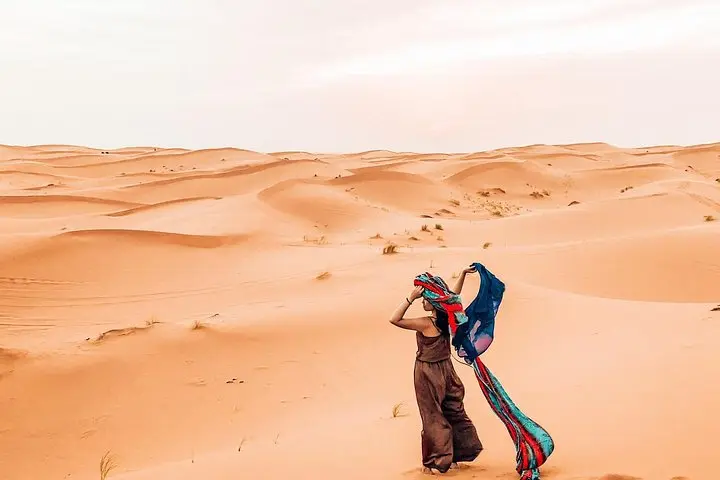
This three-day loop moves from Marrakech through UNESCO-listed Ait Ben Haddou and the Dades and Todra valleys before reaching Merzouga and the Erg Chebbi—the highest dune field in Morocco’s eastern Sahara. Geologically the dunes are a late-Holocene accumulation of wind-blown sand trapped against an eroded plateau. Culturally the route traces historic caravan corridors; Rissani still hosts markets that recall trans-Saharan trade in dates and salt.
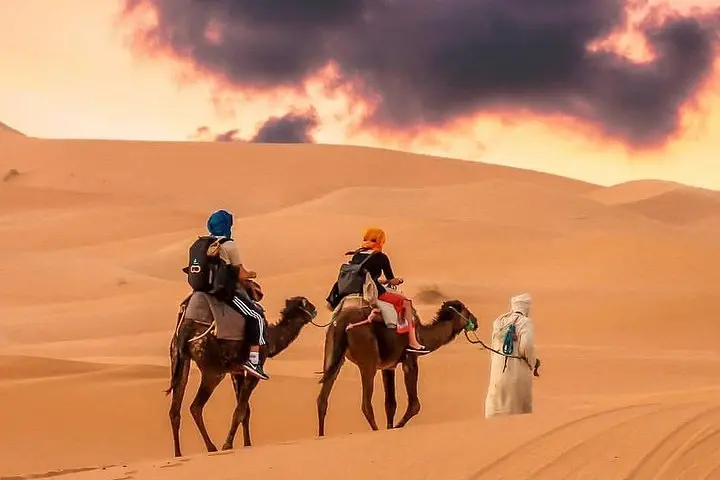
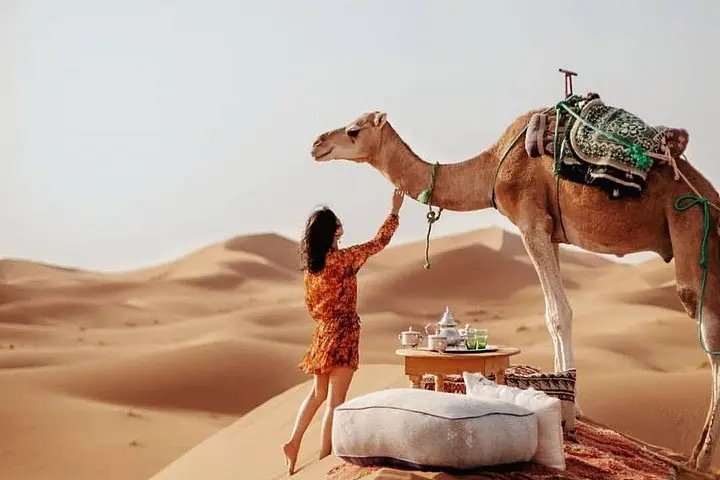
Expect short village stops, kasbah ruins, and a slow camel caravan into the dunes at sunset. Nights at a Berber camp include communal dinners and, depending on the season, sharp overnight drops in temperature where stars dominate the horizon.
Practical guidance: depart early from Marrakech to avoid mid-day mountain heat, carry at least 2 liters of water for the desert segment, and pack layers—lightweight sun protection by day, a warm insulating layer after dusk. Comfortable closed-toe shoes are better than sandals for walking near dunes; sunhat and high-SPF sunscreen are essential. Motion-sensitive travelers should take simple remedies for long minibus transfers. Photography is best at golden hour when dunes throw long, sculpted shadows.
The tour is suitable for travelers with average fitness; camel treks are horizontal travel rather than technical hiking, and most stops are brief but rewarding.
The camel trek to the camp typically lasts 45–60 minutes each way at a walking pace, timed to reach the dunes for sunset or sunrise.
Dinner and breakfast at the desert camp and meals in Dades are included as stated; lunches during transfers are usually at local cafés and may be at your own expense.
The tour is family-friendly but involves long minibus transfers and camel mounting; travelers with serious mobility limitations should check accessibility and discuss options with the operator.
No special fitness is required—most activity is seated travel and easy walks; however, participants should manage getting on and off camels and brief dune walking.
Trips From Marrakech operates guided outdoor trips and adventures with an emphasis on safety, stewardship, and memorable experiences.
The first light on the High Atlas cuts a silver line across the tarmac as the minibus climbs Tizi n’Tichka and drops toward the ochre of southern Morocco. By afternoon the road opens into kasbahs and river-cut gorges; by evening the Erg Chebbi dunes take over, a sea of sand that seems to breathe with the wind.
The first light on the High Atlas cuts a silver line across the tarmac as the minibus climbs Tizi n’Tichka and drops toward the ochre of southern Morocco. By afternoon the road opens into kasbahs and river-cut gorges; by evening the Erg Chebbi dunes take over, a sea of sand that seems to breathe with the wind.
This three-day loop moves from Marrakech through UNESCO-listed Ait Ben Haddou and the Dades and Todra valleys before reaching Merzouga and the Erg Chebbi—the highest dune field in Morocco’s eastern Sahara. Geologically the dunes are a late-Holocene accumulation of wind-blown sand trapped against an eroded plateau. Culturally the route traces historic caravan corridors; Rissani still hosts markets that recall trans-Saharan trade in dates and salt.
Expect short village stops, kasbah ruins, and a slow camel caravan into the dunes at sunset. Nights at a Berber camp include communal dinners and, depending on the season, sharp overnight drops in temperature where stars dominate the horizon.
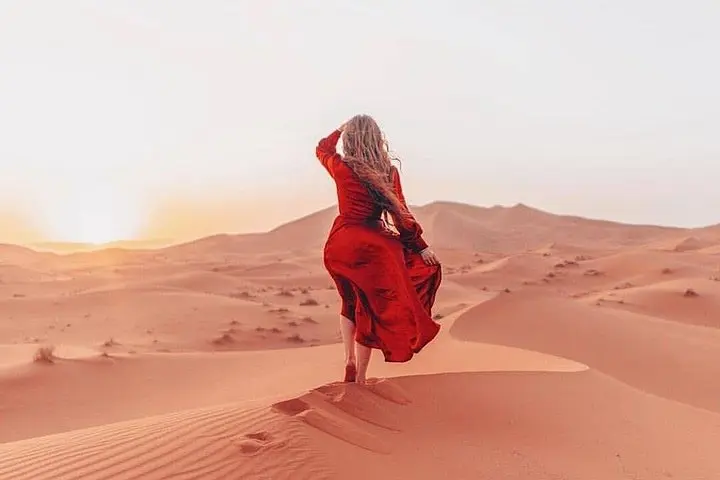
Practical guidance: depart early from Marrakech to avoid mid-day mountain heat, carry at least 2 liters of water for the desert segment, and pack layers—lightweight sun protection by day, a warm insulating layer after dusk. Comfortable closed-toe shoes are better than sandals for walking near dunes; sunhat and high-SPF sunscreen are essential. Motion-sensitive travelers should take simple remedies for long minibus transfers. Photography is best at golden hour when dunes throw long, sculpted shadows.
The tour is suitable for travelers with average fitness; camel treks are horizontal travel rather than technical hiking, and most stops are brief but rewarding.