THE ADVENTURE COLLECTIVE® · Independent discovery and booking for outdoor travel

Cross the High Atlas, explore Aït Ben Haddou and Ouarzazate, then ride camels into Erg Chebbi on a three-day loop from Marrakech. Expect long scenic drives, dramatic gorges, and an overnight bivouac beneath desert stars.
Cross the High Atlas, explore Aït Ben Haddou and Ouarzazate, then ride camels into Erg Chebbi on a three-day loop from Marrakech. Expect long scenic drives, dramatic gorges, and an overnight bivouac beneath desert stars.
You leave Marrakech before dawn, the city lights shrinking as the road climbs the Tizi n’Tichka pass. Granite slopes sharpen into wind-swept scree around 2,260 meters, then the landscape opens into ochre valleys and kasbah-lined villages. By late afternoon the first silhouette of Erg Chebbi rises—golden dunes that reshape with every gust, daring you to climb for the sunset.
Verified experiences and guided adventures in the surrounding area.
Operated by Tours Around Morocco · Merzouga, Drâa-Tafilalet
You leave Marrakech before dawn, the city lights shrinking as the road climbs the Tizi n’Tichka pass. Granite slopes sharpen into wind-swept scree around 2,260 meters, then the landscape opens into ochre valleys and kasbah-lined villages. By late afternoon the first silhouette of Erg Chebbi rises—golden dunes that reshape with every gust, daring you to climb for the sunset.
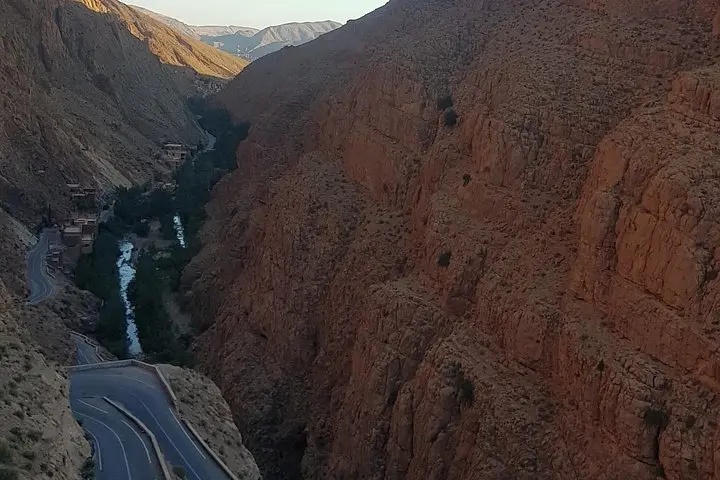
This route follows ancient trade and film routes: Aït Ben Haddou’s earthen kasbahs recall caravans and the Glaoui dynasty, while Ouarzazate’s Atlas Studios points to modern storytelling on the same ground. Geologically the journey moves from High Atlas metamorphic rock across folded sedimentary foothills down to the wind-scoured sands of the Sahara; Todra Gorge cuts dramatic limestone walls up to 300 meters high, offering an abrupt, vertical contrast to the soft dunes.
Culturally, villages along the way are predominantly Amazigh (Berber) with tea-first hospitality—expect mint tea ceremonies and simple, locally produced meals. The bivouac night under Erg Chebbi’s stars is basic but striking: canvas or tented camps, shared drums and the quiet of a landscape with minimal light pollution.
Practical guidance: be ready for long driving stretches (daily transfers can be 4–7 hours), bring layered clothing for hot days and cold nights, high-SPF sun protection, and sturdy shoes for sand and short rocky hikes. Hydrate often—water is limited—and carry cash for small purchases and tips. For sunrise and sunset climbs pick lighter daypacks; for the camel transfer, wear trousers and closed shoes. This three-day loop balances road time with hands-on desert time—ideal for travelers seeking dramatic landscapes with manageable logistics.
Expect several hours of driving each day—typically 4–7 hours depending on stops; the trip balances road time with canyon walks and the desert night.
Camel rides are short (30–90 minutes) and gentle; they can be awkward mounting/unmounting for some—ask guides for assistance if needed.
No prior experience required; camps are staffed and meals provided, though accommodations are rustic and vary by provider.
The tour usually includes breakfasts, some dinners, transport, and Marrakech pickup—confirm specifics with the operator before booking.
Tours Around Morocco operates guided outdoor trips and adventures with an emphasis on safety, stewardship, and memorable experiences.
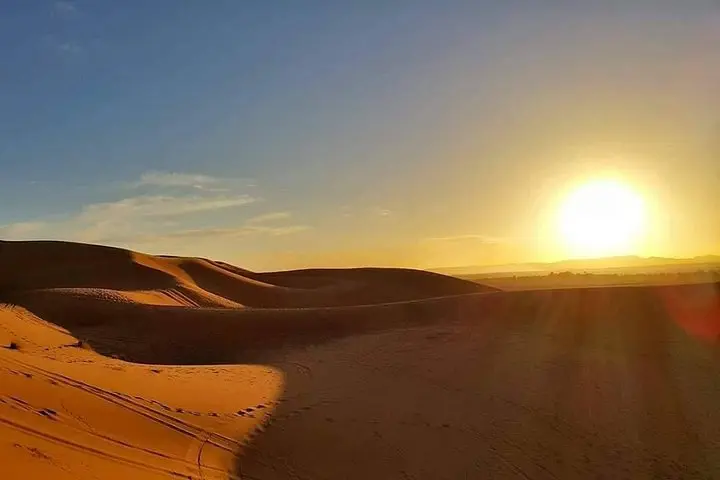
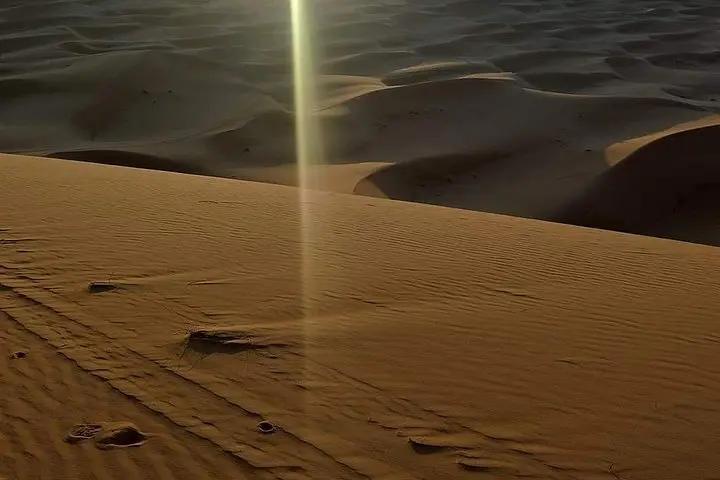
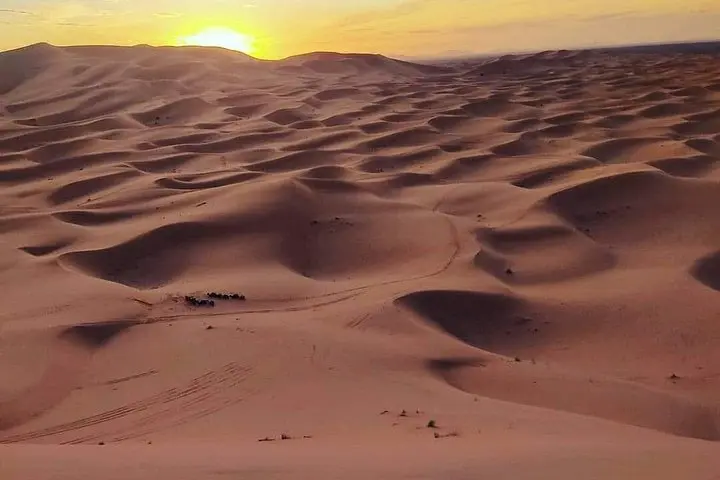
You leave Marrakech before dawn, the city lights shrinking as the road climbs the Tizi n’Tichka pass. Granite slopes sharpen into wind-swept scree around 2,260 meters, then the landscape opens into ochre valleys and kasbah-lined villages. By late afternoon the first silhouette of Erg Chebbi rises—golden dunes that reshape with every gust, daring you to climb for the sunset.
You leave Marrakech before dawn, the city lights shrinking as the road climbs the Tizi n’Tichka pass. Granite slopes sharpen into wind-swept scree around 2,260 meters, then the landscape opens into ochre valleys and kasbah-lined villages. By late afternoon the first silhouette of Erg Chebbi rises—golden dunes that reshape with every gust, daring you to climb for the sunset.
This route follows ancient trade and film routes: Aït Ben Haddou’s earthen kasbahs recall caravans and the Glaoui dynasty, while Ouarzazate’s Atlas Studios points to modern storytelling on the same ground. Geologically the journey moves from High Atlas metamorphic rock across folded sedimentary foothills down to the wind-scoured sands of the Sahara; Todra Gorge cuts dramatic limestone walls up to 300 meters high, offering an abrupt, vertical contrast to the soft dunes.
Culturally, villages along the way are predominantly Amazigh (Berber) with tea-first hospitality—expect mint tea ceremonies and simple, locally produced meals. The bivouac night under Erg Chebbi’s stars is basic but striking: canvas or tented camps, shared drums and the quiet of a landscape with minimal light pollution.
Practical guidance: be ready for long driving stretches (daily transfers can be 4–7 hours), bring layered clothing for hot days and cold nights, high-SPF sun protection, and sturdy shoes for sand and short rocky hikes. Hydrate often—water is limited—and carry cash for small purchases and tips. For sunrise and sunset climbs pick lighter daypacks; for the camel transfer, wear trousers and closed shoes. This three-day loop balances road time with hands-on desert time—ideal for travelers seeking dramatic landscapes with manageable logistics.