THE ADVENTURE COLLECTIVE® · Independent discovery and booking for outdoor travel

Three days from Marrakech take you across the High Atlas to Ait Ben Haddou, through Todra Gorge, and into Erg Chebbi for camel rides, sandboarding and an overnight desert camp. Expect long drives, dramatic scenery shifts and an intimate taste of Saharan life.
Three days from Marrakech take you across the High Atlas to Ait Ben Haddou, through Todra Gorge, and into Erg Chebbi for camel rides, sandboarding and an overnight desert camp. Expect long drives, dramatic scenery shifts and an intimate taste of Saharan life.
You crest Tizi n’Tichka and the air changes—Atlas stone gives way to ochre plains and the road unwraps toward Ait Ben Haddou’s honeyed kasbahs. By the second day the landscape has a new grammar: palm oases, cliff gorges, and at last the wide, ribbed slopes of Erg Chebbi where camels pick their way across wind-sculpted sand.
Verified experiences and guided adventures in the surrounding area.
Operated by Go Discover Morocco · Merzouga, Drâa-Tafilalet
You crest Tizi n’Tichka and the air changes—Atlas stone gives way to ochre plains and the road unwraps toward Ait Ben Haddou’s honeyed kasbahs. By the second day the landscape has a new grammar: palm oases, cliff gorges, and at last the wide, ribbed slopes of Erg Chebbi where camels pick their way across wind-sculpted sand.
This route stitches together Moroccan history and geology. The Tizi n’Tichka pass (≈2,260 m) has long been the high corridor between Marrakech and the Sahara. Ait Ben Haddou is a fortified ksar on old caravan lines and a UNESCO site; Todra Gorge is a limestone cleft favored by climbers. Erg Chebbi’s dunes are not ancient bedrock but living deposits — sand blown north from the Sahara and piled into dunes that can reach well over 100 meters.
Culture is present in small details: Berber village homes, tajine simmering over coals, and the slow economy of palm groves irrigated by ancient khettaras. Nights in a desert camp strip travel down to essentials: bread, tea, storytelling, and a sky that feels close enough to touch.
Practically, expect long drives interspersed with short walks, a sunrise and sunset camel ride of about an hour each, and one night in a desert bivouac. Temperatures swing wildly between day and night; shade, water and layered clothing are non-negotiable. Footwear should manage sand and rocky paths. If you value scenery, culture and simple nights under the stars more than hotel luxuries, this three-day loop delivers a compact, tactile Sahara experience.
Sunset and sunrise camel rides are typically about one hour each and are led by experienced local guides.
You’ll spend nights in a hotel on the first and last nights and one night in a traditional desert camp near the Erg Chebbi dunes.
Sandboarding is offered at Erg Chebbi and suitable for beginners; instructors will show basic technique and safety tips.
The itinerary includes several long drives over winding mountain roads; consider motion-sickness precautions and discuss comfort needs with the operator before booking.
Go Discover Morocco operates guided outdoor trips and adventures with an emphasis on safety, stewardship, and memorable experiences.
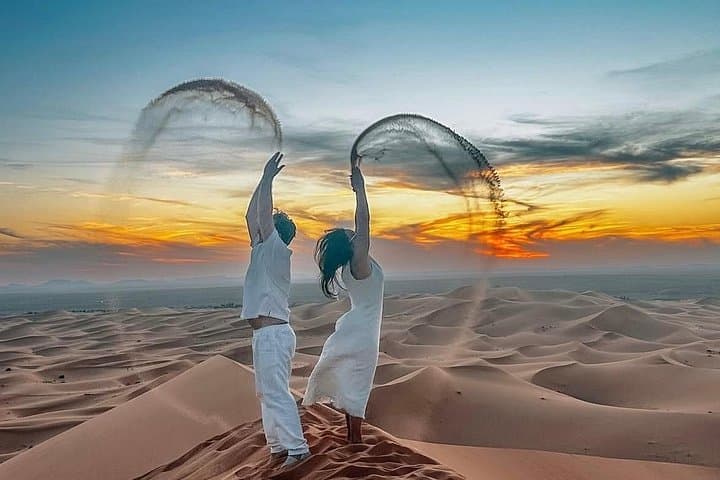


You crest Tizi n’Tichka and the air changes—Atlas stone gives way to ochre plains and the road unwraps toward Ait Ben Haddou’s honeyed kasbahs. By the second day the landscape has a new grammar: palm oases, cliff gorges, and at last the wide, ribbed slopes of Erg Chebbi where camels pick their way across wind-sculpted sand.
You crest Tizi n’Tichka and the air changes—Atlas stone gives way to ochre plains and the road unwraps toward Ait Ben Haddou’s honeyed kasbahs. By the second day the landscape has a new grammar: palm oases, cliff gorges, and at last the wide, ribbed slopes of Erg Chebbi where camels pick their way across wind-sculpted sand.
This route stitches together Moroccan history and geology. The Tizi n’Tichka pass (≈2,260 m) has long been the high corridor between Marrakech and the Sahara. Ait Ben Haddou is a fortified ksar on old caravan lines and a UNESCO site; Todra Gorge is a limestone cleft favored by climbers. Erg Chebbi’s dunes are not ancient bedrock but living deposits — sand blown north from the Sahara and piled into dunes that can reach well over 100 meters.
Culture is present in small details: Berber village homes, tajine simmering over coals, and the slow economy of palm groves irrigated by ancient khettaras. Nights in a desert camp strip travel down to essentials: bread, tea, storytelling, and a sky that feels close enough to touch.
Practically, expect long drives interspersed with short walks, a sunrise and sunset camel ride of about an hour each, and one night in a desert bivouac. Temperatures swing wildly between day and night; shade, water and layered clothing are non-negotiable. Footwear should manage sand and rocky paths. If you value scenery, culture and simple nights under the stars more than hotel luxuries, this three-day loop delivers a compact, tactile Sahara experience.