THE ADVENTURE COLLECTIVE® · Independent discovery and booking for outdoor travel

Travel from Marrakech across High Atlas passes to the Todra Gorges and the towering dunes of Erg Chebbi in Merzouga. Three days of cultural stops, camel treks at dusk and dawn, and an overnight Berber camp under the stars.
Travel from Marrakech across High Atlas passes to the Todra Gorges and the towering dunes of Erg Chebbi in Merzouga. Three days of cultural stops, camel treks at dusk and dawn, and an overnight Berber camp under the stars.
You crest a ridge of wind-sculpted sand as the sun drops—orange edges sharpen, shadows stretch into blue. The caravan moves at camel pace; the desert breathes around you. This three-day loop carries you from the red ochre alleys of Marrakech across High Atlas passes, down into the palm-lined canyons of Tinghir and the vertiginous Todra Gorges, finishing at the great dunes of Erg Chebbi where a Berber camp waits under an open sky.
Verified experiences and guided adventures in the surrounding area.
Operated by Marrakesh Travel Services · Merzouga, Drâa-Tafilalet
You crest a ridge of wind-sculpted sand as the sun drops—orange edges sharpen, shadows stretch into blue. The caravan moves at camel pace; the desert breathes around you. This three-day loop carries you from the red ochre alleys of Marrakech across High Atlas passes, down into the palm-lined canyons of Tinghir and the vertiginous Todra Gorges, finishing at the great dunes of Erg Chebbi where a Berber camp waits under an open sky.
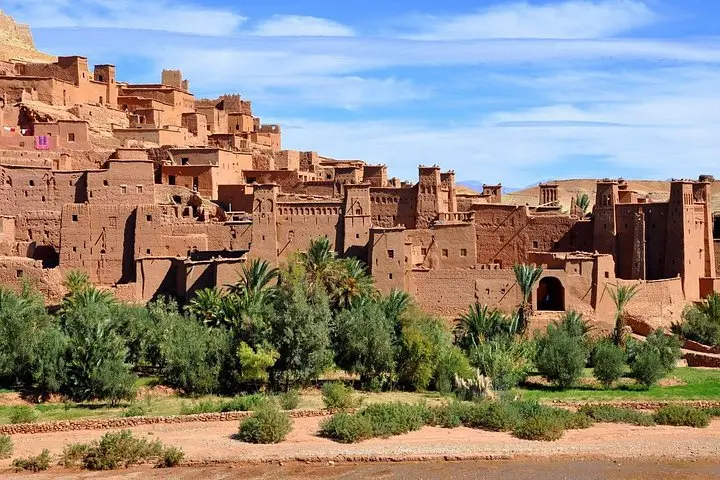
The route follows old caravan tracks and modern tarmac in equal measure. Ait Ben Haddou and Ouarzazate echo the region’s layered history of trans-Saharan trade, film sets and Amazigh (Berber) life. Geologically the landscape shifts quickly—folded volcanic and sedimentary ranges give way to river-cut oases and finally to quartz-sand seas that migrate with the wind.
Culturally the trip centers on hospitality: tagine meals, mint tea, and evening music around the campfire. Practicalities matter—expect long minivan transfers, short guided walks in canyons, and two camel treks timed for sunset and sunrise. Temperatures swing widely from daytime heat to chilly nights in the dunes, and the desert’s fine sand finds gear and seams.
Plan for sun protection, steady footwear for oasis and gorge walks, and layers for night. Bring a refillable water bottle, and allow time to sit into the silence—watch how dunes shift as the stars rotate overhead. For most travelers this itinerary is accessible and richly rewarding, an immersive introduction to Morocco’s southern landscapes and living desert traditions.
Camel rides are gentle and paced for comfort; rides last roughly 1–2 hours at a steady, rocking pace—no riding experience required.
Shared Berber tents in desert camps are simple but comfortable, with sleeping pads and blankets; public wash facilities vary by camp.
Vegetarian options are available if requested at booking; notify the operator in advance for other dietary needs.
Expect several hours of minivan travel each day, including mountain passes and stops—plan for seated transfers and scenic breaks.
Marrakesh Travel Services operates guided outdoor trips and adventures with an emphasis on safety, stewardship, and memorable experiences.
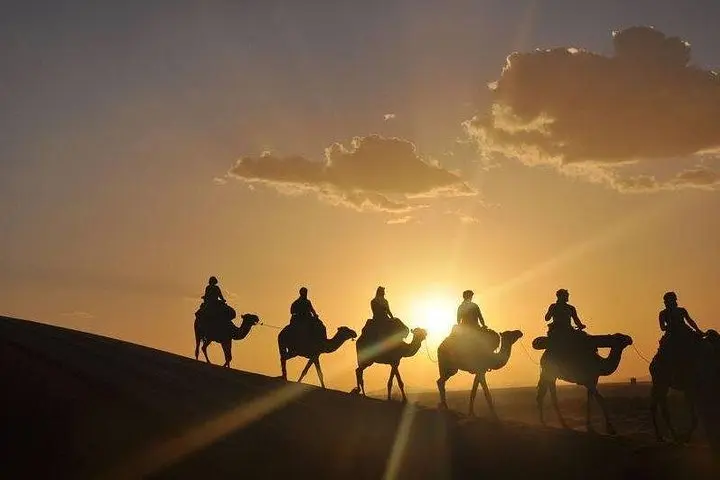
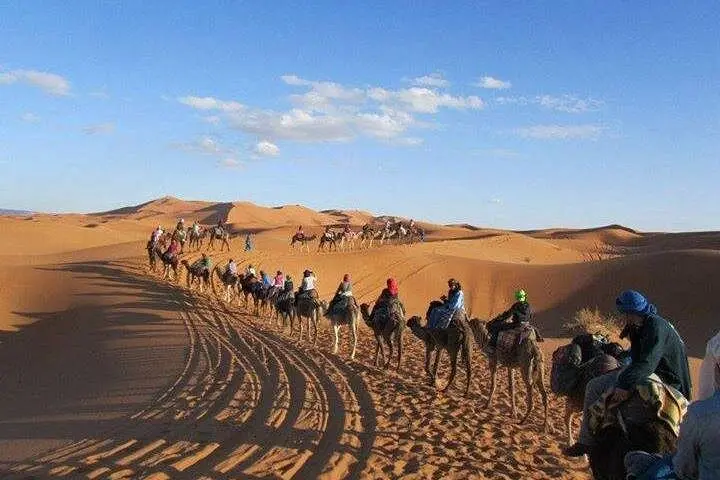
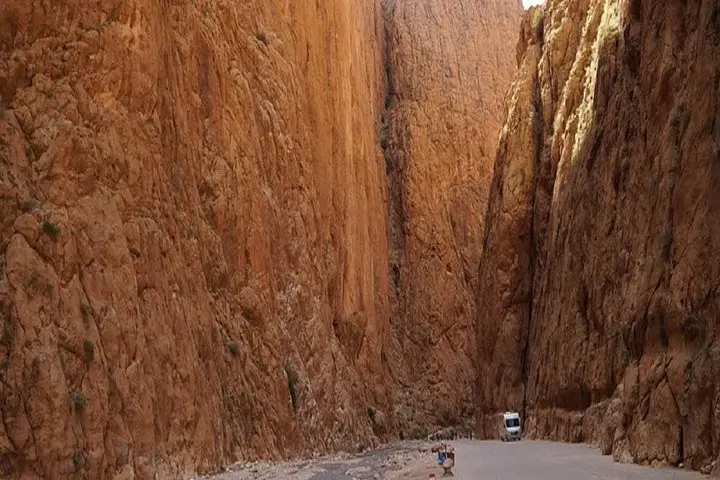
You crest a ridge of wind-sculpted sand as the sun drops—orange edges sharpen, shadows stretch into blue. The caravan moves at camel pace; the desert breathes around you. This three-day loop carries you from the red ochre alleys of Marrakech across High Atlas passes, down into the palm-lined canyons of Tinghir and the vertiginous Todra Gorges, finishing at the great dunes of Erg Chebbi where a Berber camp waits under an open sky.
You crest a ridge of wind-sculpted sand as the sun drops—orange edges sharpen, shadows stretch into blue. The caravan moves at camel pace; the desert breathes around you. This three-day loop carries you from the red ochre alleys of Marrakech across High Atlas passes, down into the palm-lined canyons of Tinghir and the vertiginous Todra Gorges, finishing at the great dunes of Erg Chebbi where a Berber camp waits under an open sky.
The route follows old caravan tracks and modern tarmac in equal measure. Ait Ben Haddou and Ouarzazate echo the region’s layered history of trans-Saharan trade, film sets and Amazigh (Berber) life. Geologically the landscape shifts quickly—folded volcanic and sedimentary ranges give way to river-cut oases and finally to quartz-sand seas that migrate with the wind.
Culturally the trip centers on hospitality: tagine meals, mint tea, and evening music around the campfire. Practicalities matter—expect long minivan transfers, short guided walks in canyons, and two camel treks timed for sunset and sunrise. Temperatures swing widely from daytime heat to chilly nights in the dunes, and the desert’s fine sand finds gear and seams.
Plan for sun protection, steady footwear for oasis and gorge walks, and layers for night. Bring a refillable water bottle, and allow time to sit into the silence—watch how dunes shift as the stars rotate overhead. For most travelers this itinerary is accessible and richly rewarding, an immersive introduction to Morocco’s southern landscapes and living desert traditions.