THE ADVENTURE COLLECTIVE® · Independent discovery and booking for outdoor travel

Drive the Road of a Thousand Kasbahs on a compact three-day loop from Marrakech to the towering Erg Chebbi dunes. Expect long scenic drives, a sunset camel trek, sandboarding, and an overnight under the desert stars.
Drive the Road of a Thousand Kasbahs on a compact three-day loop from Marrakech to the towering Erg Chebbi dunes. Expect long scenic drives, a sunset camel trek, sandboarding, and an overnight under the desert stars.
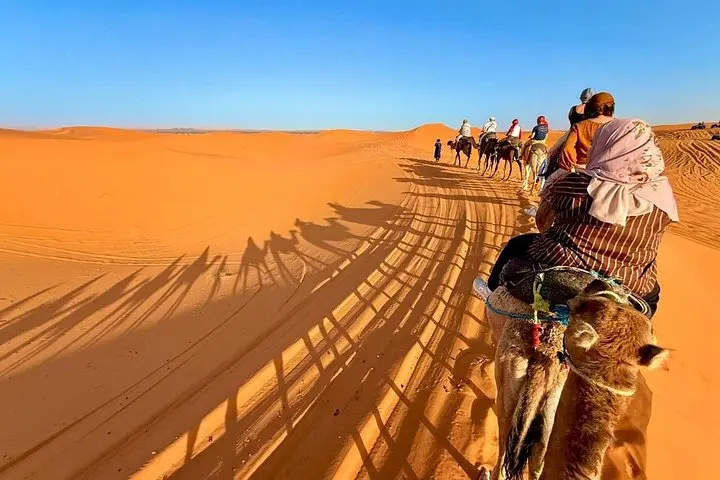
A wind-sanded ridge cuts the sky as you arrive at Erg Chebbi; camels move like slow punctuation across the orange slopes and the last light lamps the dunes in molten copper. Daylight on the road is a film of Atlas peaks, kasbahs and cliff-lined gorges — the type of route that asks you to slow down and look.
Verified experiences and guided adventures in the surrounding area.
Operated by Vita Morocco · Merzouga, Drâa-Tafilalet
A wind-sanded ridge cuts the sky as you arrive at Erg Chebbi; camels move like slow punctuation across the orange slopes and the last light lamps the dunes in molten copper. Daylight on the road is a film of Atlas peaks, kasbahs and cliff-lined gorges — the type of route that asks you to slow down and look.
This three-day loop follows the ancient caravan corridors between Marrakech and Merzouga, crossing the Tizi n’Tichka pass (about 2,260 m) and skirting UNESCO-listed Ait Ben Haddou and the valley of kasbahs. Geology here reads like chapters: folded Atlas ranges feeding alluvial plains, palm-filled oases in the Todra and Dades, then the sweeping Erg Chebbi dunes built by persistent northerly winds and sand supply. Berber villages and ksar (fortified villages) pepper the route; local families still farm roses and date palms in the valleys.
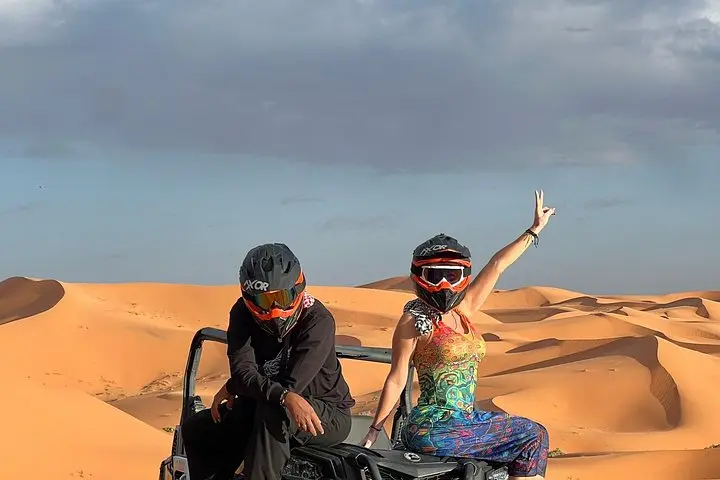
Expect long driving legs broken by short hikes and canyon walks, a 1.5-hour sunset camel trek into the dunes, optional sandboarding, and a night in a traditional desert camp with a fire and live Gnawa rhythms. Terrain shifts from paved mountain passes to packed desert tracks and soft sand; dune climbs are steep underfoot and weather can swing from hot days to cold nights.
Practical tips: carry 3–4 liters of water, sunscreen and lip protection, layered clothing for temperature swings, and sturdy boots for canyon walking. Plan early mornings for photography and sunrises, and leave ample time for stops at kasbahs and gorges — the route rewards a measured pace.
The standard camel trek into Erg Chebbi is about 1–1.5 hours at sunset, covering dune edges to the camp; return rides or 4x4 transfers can be arranged the next morning.
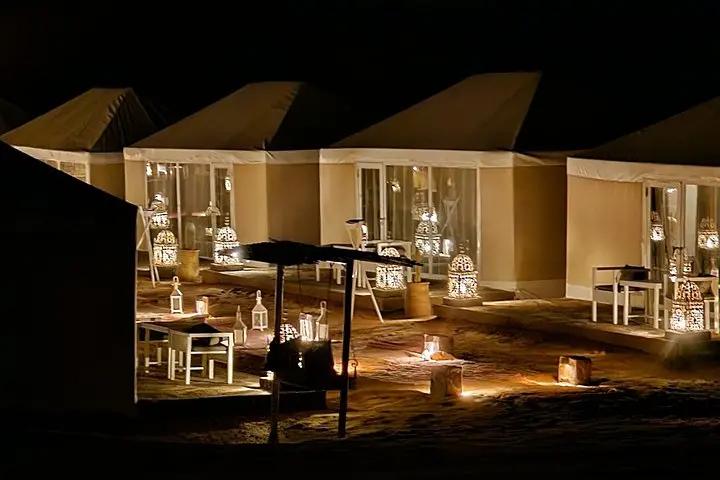
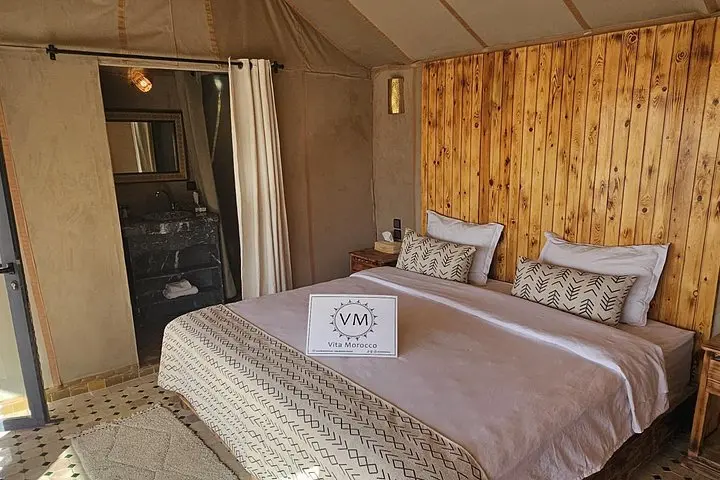
Camps offer traditional nomadic-style tents with mattresses and blankets; many camps provide private or shared tents and basic washroom facilities; luxury options have en-suite facilities.
The tour is marketed as accessible to most fitness levels but involves dune walking and camel riding which can be physically demanding; discuss mobility needs with the operator before booking.
Visitors should carry passport details for booking and a valid passport; visa requirements depend on nationality — check Moroccan entry rules before travel.
Vita Morocco operates guided outdoor trips and adventures with an emphasis on safety, stewardship, and memorable experiences.
A wind-sanded ridge cuts the sky as you arrive at Erg Chebbi; camels move like slow punctuation across the orange slopes and the last light lamps the dunes in molten copper. Daylight on the road is a film of Atlas peaks, kasbahs and cliff-lined gorges — the type of route that asks you to slow down and look.
A wind-sanded ridge cuts the sky as you arrive at Erg Chebbi; camels move like slow punctuation across the orange slopes and the last light lamps the dunes in molten copper. Daylight on the road is a film of Atlas peaks, kasbahs and cliff-lined gorges — the type of route that asks you to slow down and look.
This three-day loop follows the ancient caravan corridors between Marrakech and Merzouga, crossing the Tizi n’Tichka pass (about 2,260 m) and skirting UNESCO-listed Ait Ben Haddou and the valley of kasbahs. Geology here reads like chapters: folded Atlas ranges feeding alluvial plains, palm-filled oases in the Todra and Dades, then the sweeping Erg Chebbi dunes built by persistent northerly winds and sand supply. Berber villages and ksar (fortified villages) pepper the route; local families still farm roses and date palms in the valleys.
Expect long driving legs broken by short hikes and canyon walks, a 1.5-hour sunset camel trek into the dunes, optional sandboarding, and a night in a traditional desert camp with a fire and live Gnawa rhythms. Terrain shifts from paved mountain passes to packed desert tracks and soft sand; dune climbs are steep underfoot and weather can swing from hot days to cold nights.
Practical tips: carry 3–4 liters of water, sunscreen and lip protection, layered clothing for temperature swings, and sturdy boots for canyon walking. Plan early mornings for photography and sunrises, and leave ample time for stops at kasbahs and gorges — the route rewards a measured pace.