THE ADVENTURE COLLECTIVE® · Independent discovery and booking for outdoor travel
Leave Marrakech behind and cross the High Atlas to reach the red dunes of Erg Chebbi. This compact 3-day circuit pairs UNESCO-listed Ait Ben Haddou, Todra Gorges, and a desert camp under bright desert skies.
Leave Marrakech behind and cross the High Atlas to reach the red dunes of Erg Chebbi. This compact 3-day circuit pairs UNESCO-listed Ait Ben Haddou, Todra Gorges, and a desert camp under bright desert skies.
Sunlight slices through the High Atlas as the minivan climbs Tizi n'Tichka, the pass breathing cool air at 2,260 meters before the landscape opens out into ochre plateaus and wind-sculpted dunes. By late afternoon you cross the red-streaked palmeraies and arrive at Ait Ben Haddou, a clay kasbah that holds the weight of caravan history and cinema cameras alike.
Verified experiences and guided adventures in the surrounding area.
Operated by Great Travel Morocco · Merzouga, Drâa-Tafilalet
Sunlight slices through the High Atlas as the minivan climbs Tizi n'Tichka, the pass breathing cool air at 2,260 meters before the landscape opens out into ochre plateaus and wind-sculpted dunes. By late afternoon you cross the red-streaked palmeraies and arrive at Ait Ben Haddou, a clay kasbah that holds the weight of caravan history and cinema cameras alike.
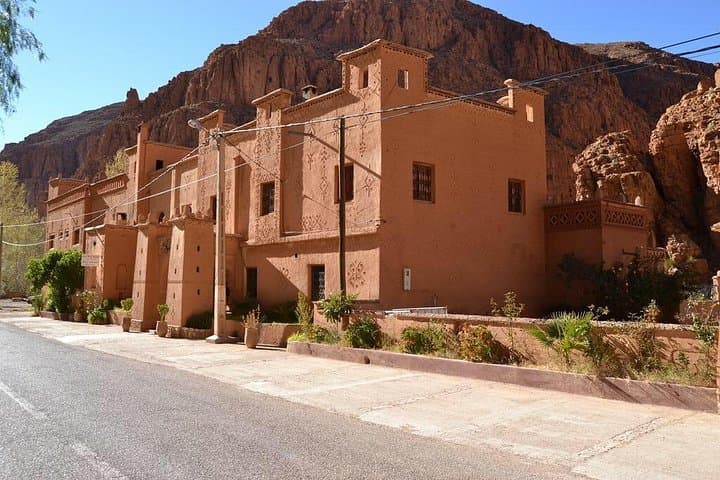
This 3-day mini-circuit threads geological contrasts: snow-worn peaks of the Atlas, river-carved gorges at Todra, and the Erg Chebbi sand sea whose dunes can reach 150 meters—an active landscape shaped by Atlantic winds and millennia of shifting grains. Culturally the route follows old caravan arteries, moving past Berber villages, market towns like Rissani, and Ouarzazate’s film studios, where kasbah walls double as movie sets.
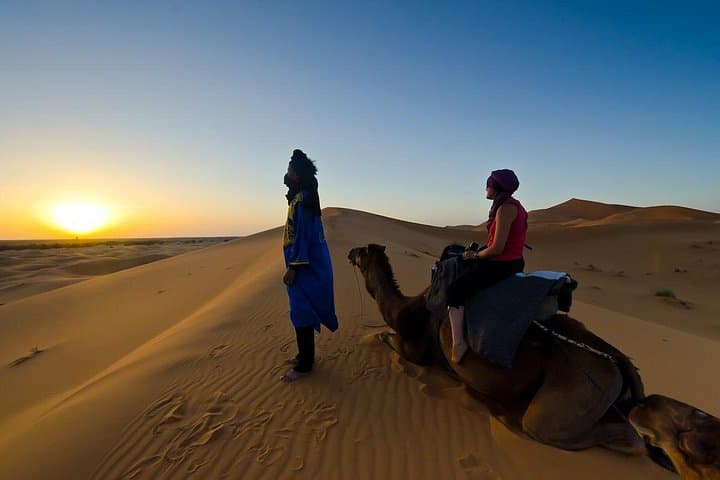
Expect practical rhythms: long road sections broken by photo stops, a 45-minute dromedary ride at sunset, a night in a desert camp with shared facilities, and a morning sand walk before the return drive. Nights in the camp are cold—bring a warm layer—and days are sun-intense; the desert will push your hydration and timing choices.
Plan for early departures, sunscreen and reusable water, sturdy shoes for rocky gorges, and respect for fragile dune ecology: stick to camel tracks, avoid trampling vegetation, and pack out trash. The tour is moderate in intensity—more about endurance than technical skill—and rewards travelers with wide, changeable views, star-filled nights, and a clear sense of the Sahara’s scale.
The camel ride is short (about 45 minutes) and gentle; the camp stay involves communal facilities and cold nights—no special skills required, but basic mobility helps.
Standard desert camps often provide limited charging points and intermittent signal; bring a power bank and download maps before departure.
Not recommended for those with serious spinal problems; camel saddles can be jostling; infants may travel but check with the operator for age limits and pickups.
Full refund if canceled at least 24 hours before departure; tours may be canceled for bad weather or low bookings—confirm timing with the provider.
Great Travel Morocco operates guided outdoor trips and adventures with an emphasis on safety, stewardship, and memorable experiences.
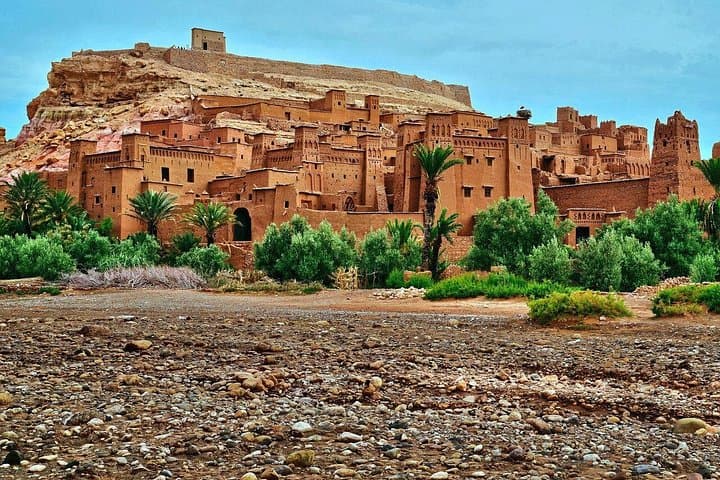
Sunlight slices through the High Atlas as the minivan climbs Tizi n'Tichka, the pass breathing cool air at 2,260 meters before the landscape opens out into ochre plateaus and wind-sculpted dunes. By late afternoon you cross the red-streaked palmeraies and arrive at Ait Ben Haddou, a clay kasbah that holds the weight of caravan history and cinema cameras alike.
Sunlight slices through the High Atlas as the minivan climbs Tizi n'Tichka, the pass breathing cool air at 2,260 meters before the landscape opens out into ochre plateaus and wind-sculpted dunes. By late afternoon you cross the red-streaked palmeraies and arrive at Ait Ben Haddou, a clay kasbah that holds the weight of caravan history and cinema cameras alike.
This 3-day mini-circuit threads geological contrasts: snow-worn peaks of the Atlas, river-carved gorges at Todra, and the Erg Chebbi sand sea whose dunes can reach 150 meters—an active landscape shaped by Atlantic winds and millennia of shifting grains. Culturally the route follows old caravan arteries, moving past Berber villages, market towns like Rissani, and Ouarzazate’s film studios, where kasbah walls double as movie sets.
Expect practical rhythms: long road sections broken by photo stops, a 45-minute dromedary ride at sunset, a night in a desert camp with shared facilities, and a morning sand walk before the return drive. Nights in the camp are cold—bring a warm layer—and days are sun-intense; the desert will push your hydration and timing choices.
Plan for early departures, sunscreen and reusable water, sturdy shoes for rocky gorges, and respect for fragile dune ecology: stick to camel tracks, avoid trampling vegetation, and pack out trash. The tour is moderate in intensity—more about endurance than technical skill—and rewards travelers with wide, changeable views, star-filled nights, and a clear sense of the Sahara’s scale.
