THE ADVENTURE COLLECTIVE® · Independent discovery and booking for outdoor travel

Swap Marrakech’s bustle for mountain passes, kasbahs and the wide dunes of Erg Chebbi on this three-day loop. Expect long drives, short canyon walks, a camel trek at sunset and a night in a traditional Berber camp under the stars.
Swap Marrakech’s bustle for mountain passes, kasbahs and the wide dunes of Erg Chebbi on this three-day loop. Expect long drives, short canyon walks, a camel trek at sunset and a night in a traditional Berber camp under the stars.
The sky hardens from violet to copper as camels stride across Erg Chebbi and the dunes push light like a slow tide. On this three-day circuit from Marrakech, travelers trade red city walls for mountain passes, palm-lined gorges and nights beneath an enormous, low-lying desert sky.
Verified experiences and guided adventures in the surrounding area.
Operated by Agoudal Travel · Merzouga, Errachidia Province
The sky hardens from violet to copper as camels stride across Erg Chebbi and the dunes push light like a slow tide. On this three-day circuit from Marrakech, travelers trade red city walls for mountain passes, palm-lined gorges and nights beneath an enormous, low-lying desert sky.
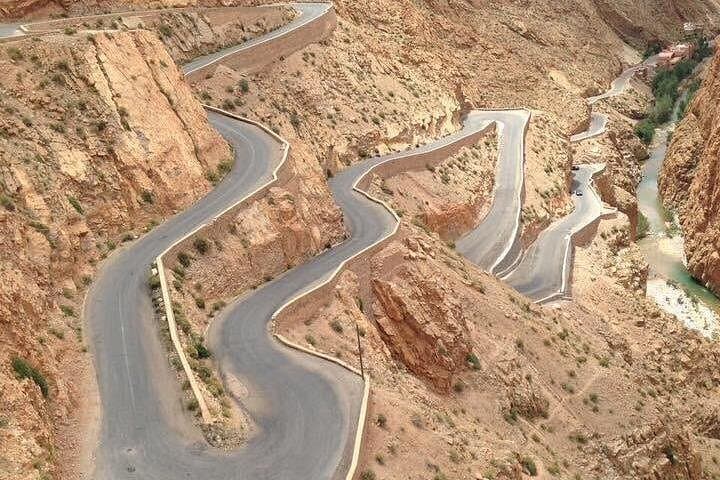
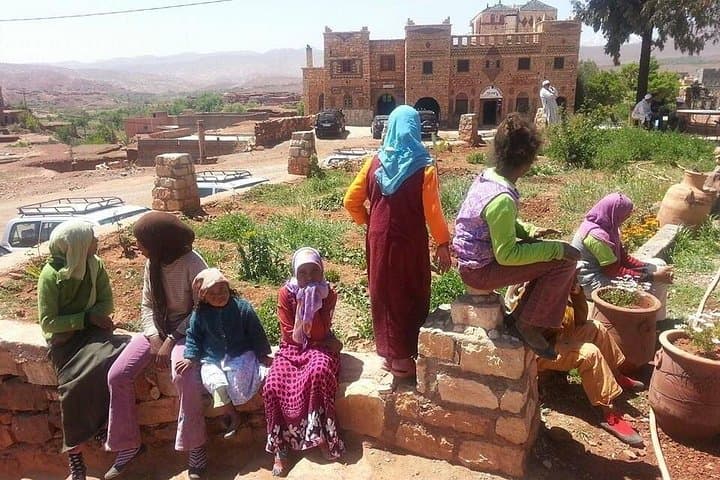
The route threads the High Atlas by way of the Tizi n’Tichka pass, passes the earthen towers of Ait Benhaddou—an age-old ksar on trans-Saharan caravan routes—and drops into the sculpted canyons of the Dades and Todra. Erg Chebbi itself is a live landscape of wind-sculpted sand: some dunes reach roughly 100–150 meters high, and the plain sits near 700–800 m elevation. Berber villages punctuate the drive; many local kasbahs and riads reflect centuries of adobe architecture adapted for thermal extremes.
Expect long driving segments—plan for several 4–6 hour road legs—and short guided walks through palm groves and canyon floors. Nights are in a desert bivouac under canvas with traditional music; mornings are built around sunrise on the dunes. Terrain alternates paved mountain roads, valley tracks, and soft sand where 4x4s and camels are the practical modes.
Practical edge: bring layered clothing for cold desert nights and strong daytime sun protection, carry at least 1.5–2 liters of water per person for dune walks, and schedule your camera for golden-hour sunrises. Mobility needs are low—this is accessible for most—but be ready for dusty conditions, uneven dune slopes and firm walking in oases. Rhythm here is slow and tactile: the desert invites patience and simple preparations.
Expect multiple long road legs—typically 4–6 hours between major stops—covering roughly 1,000–1,200 km round trip depending on route.
Camps are basic but well-equipped: mattress, shared or private tents vary by booking; bathrooms are usually shared and hot-water access is limited in remote camps.
Many operators allow families; infant seats and gentle camels rides are available but confirm pickup and accommodations when booking.
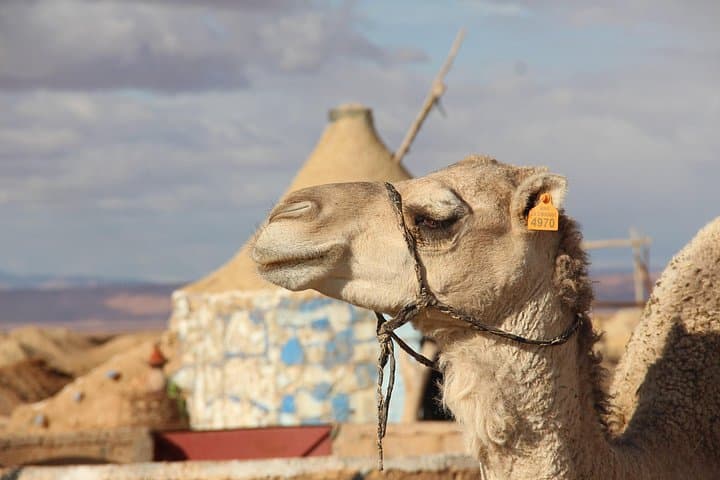
Camel rides are low-impact and paced for tourists; mounting can be abrupt—ask for assistance if you have mobility concerns.
Agoudal Travel operates guided outdoor trips and adventures with an emphasis on safety, stewardship, and memorable experiences.
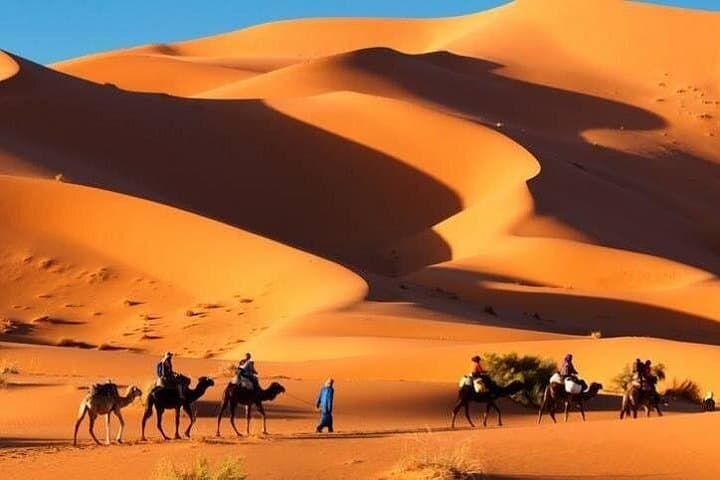
The sky hardens from violet to copper as camels stride across Erg Chebbi and the dunes push light like a slow tide. On this three-day circuit from Marrakech, travelers trade red city walls for mountain passes, palm-lined gorges and nights beneath an enormous, low-lying desert sky.
The sky hardens from violet to copper as camels stride across Erg Chebbi and the dunes push light like a slow tide. On this three-day circuit from Marrakech, travelers trade red city walls for mountain passes, palm-lined gorges and nights beneath an enormous, low-lying desert sky.
The route threads the High Atlas by way of the Tizi n’Tichka pass, passes the earthen towers of Ait Benhaddou—an age-old ksar on trans-Saharan caravan routes—and drops into the sculpted canyons of the Dades and Todra. Erg Chebbi itself is a live landscape of wind-sculpted sand: some dunes reach roughly 100–150 meters high, and the plain sits near 700–800 m elevation. Berber villages punctuate the drive; many local kasbahs and riads reflect centuries of adobe architecture adapted for thermal extremes.
Expect long driving segments—plan for several 4–6 hour road legs—and short guided walks through palm groves and canyon floors. Nights are in a desert bivouac under canvas with traditional music; mornings are built around sunrise on the dunes. Terrain alternates paved mountain roads, valley tracks, and soft sand where 4x4s and camels are the practical modes.
Practical edge: bring layered clothing for cold desert nights and strong daytime sun protection, carry at least 1.5–2 liters of water per person for dune walks, and schedule your camera for golden-hour sunrises. Mobility needs are low—this is accessible for most—but be ready for dusty conditions, uneven dune slopes and firm walking in oases. Rhythm here is slow and tactile: the desert invites patience and simple preparations.