THE ADVENTURE COLLECTIVE® · Independent discovery and booking for outdoor travel

Cross the High Atlas to reach Erg Chebbi on a compact three-day loop from Marrakech. Expect kasbahs, canyon walks, fossil stops, a camel trek, and an overnight under Sahara stars.
Cross the High Atlas to reach Erg Chebbi on a compact three-day loop from Marrakech. Expect kasbahs, canyon walks, fossil stops, a camel trek, and an overnight under Sahara stars.
You step out before dawn on the road to the High Atlas, windows fogging as the mountain pass sharpens the air. The vehicle climbs Tizi-n-Tichka and the landscape loosens: ochre kasbahs give way to scrub, then to the rolling orange of Erg Chebbi. By late afternoon the dunes rise like an organized crowd, each crest daring you to climb.
Verified experiences and guided adventures in the surrounding area.
Operated by Excu Marrakech · Merzouga, Drâa-Tafilalet
You step out before dawn on the road to the High Atlas, windows fogging as the mountain pass sharpens the air. The vehicle climbs Tizi-n-Tichka and the landscape loosens: ochre kasbahs give way to scrub, then to the rolling orange of Erg Chebbi. By late afternoon the dunes rise like an organized crowd, each crest daring you to climb.
This three-day loop threads Morocco’s geological and cultural seams. Ait Benhaddou’s clay kasbahs recall trans-Saharan trade routes; the Valley of Roses and Dadès Gorges expose folded rock and river-carved chasms. Merzouga and the Erg Chebbi dunes are younger — wind-crafted sand stacked into massive crescents that shift with every storm.
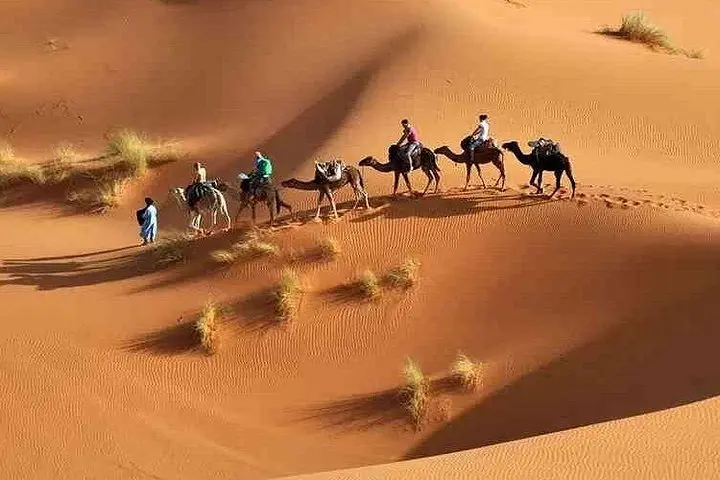
Local Berber communities keep living traditions visible: camel handlers, fossil workshops in Erfoud, and night-long camp music that echoes ancient caravan rhythms. The trip balances spectacle with logistics — long drives across remote highways, short canyon walks, a late-afternoon camel ride onto the dunes, and an overnight in a camp under broad desert sky.
Practical guidance: pack layered clothing for hot days and cold nights, bring 3 liters of water per day, and wear sturdy closed-toe shoes for dunes and gorges. Aim for sunrise or sunset on the dunes for the best light and cooler temperatures. If you’re sensitive to long vehicle transfers or extreme heat, plan travel in spring or fall when days are milder. With basic fitness and the right kit, this compact itinerary delivers Morocco’s desert heart in three memorable days.
The camel ride is gentle and suitable for most people; mounts are trained for short desert transfers and staff assist on mounting and dismounting.
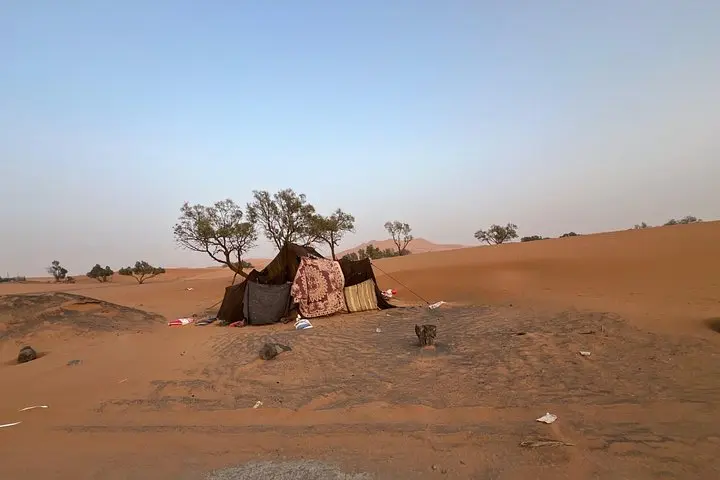
Options range from traditional nomadic tents to luxury bivouacs with private bathrooms—confirm your preferred level when booking.
Children can join, but check with the operator about infant seats and camel suitability; long drives may be tiring for very young kids.
Pay for the tour in advance as instructed; tipping local guides and camp staff is appreciated—small cash tips at each service point are common.
Excu Marrakech operates guided outdoor trips and adventures with an emphasis on safety, stewardship, and memorable experiences.
You step out before dawn on the road to the High Atlas, windows fogging as the mountain pass sharpens the air. The vehicle climbs Tizi-n-Tichka and the landscape loosens: ochre kasbahs give way to scrub, then to the rolling orange of Erg Chebbi. By late afternoon the dunes rise like an organized crowd, each crest daring you to climb.
You step out before dawn on the road to the High Atlas, windows fogging as the mountain pass sharpens the air. The vehicle climbs Tizi-n-Tichka and the landscape loosens: ochre kasbahs give way to scrub, then to the rolling orange of Erg Chebbi. By late afternoon the dunes rise like an organized crowd, each crest daring you to climb.
This three-day loop threads Morocco’s geological and cultural seams. Ait Benhaddou’s clay kasbahs recall trans-Saharan trade routes; the Valley of Roses and Dadès Gorges expose folded rock and river-carved chasms. Merzouga and the Erg Chebbi dunes are younger — wind-crafted sand stacked into massive crescents that shift with every storm.
Local Berber communities keep living traditions visible: camel handlers, fossil workshops in Erfoud, and night-long camp music that echoes ancient caravan rhythms. The trip balances spectacle with logistics — long drives across remote highways, short canyon walks, a late-afternoon camel ride onto the dunes, and an overnight in a camp under broad desert sky.
Practical guidance: pack layered clothing for hot days and cold nights, bring 3 liters of water per day, and wear sturdy closed-toe shoes for dunes and gorges. Aim for sunrise or sunset on the dunes for the best light and cooler temperatures. If you’re sensitive to long vehicle transfers or extreme heat, plan travel in spring or fall when days are milder. With basic fitness and the right kit, this compact itinerary delivers Morocco’s desert heart in three memorable days.