THE ADVENTURE COLLECTIVE® · Independent discovery and booking for outdoor travel

Three days of wide steppe, granite towers and nomad hospitality east of Ulaanbaatar. Visit Khugnu Khaan, the Chinggis Khaan Statue Complex, Terelj and Elsen Tasarkhai with ger stays and optional horse trekking.
Three days of wide steppe, granite towers and nomad hospitality east of Ulaanbaatar. Visit Khugnu Khaan, the Chinggis Khaan Statue Complex, Terelj and Elsen Tasarkhai with ger stays and optional horse trekking.
Morning light pulls across the steppe as the van leaves Ulaanbaatar and the city shrinks behind you—pines and larch give way to rounded granite towers and wind-sculpted dunes. On this three-day loop you move between contrasting geologies: the forested ridges of Khugnu Khaan, the river-carved terraces of the Tuul, and the low dunes of Elsen Tasarkhai. The Chinggis Khaan Statue rises on the riverbank, its metal flank catching the sun like a watchful ruler over the plains.
Verified experiences and guided adventures in the surrounding area.
Operated by Mongolian Vision Tours · Ulaanbaatar, Töv Province
Morning light pulls across the steppe as the van leaves Ulaanbaatar and the city shrinks behind you—pines and larch give way to rounded granite towers and wind-sculpted dunes. On this three-day loop you move between contrasting geologies: the forested ridges of Khugnu Khaan, the river-carved terraces of the Tuul, and the low dunes of Elsen Tasarkhai. The Chinggis Khaan Statue rises on the riverbank, its metal flank catching the sun like a watchful ruler over the plains.
This region carries layered history: nomadic herders have grazed these grasslands for centuries, Buddhist monasteries once clustered here (you'll pass a 300-year-old ruin), and Soviet-era road-building opened access to monuments and camps. Granite outcrops in Terelj are the work of long, slow erosion; the dunes of the Semi Gobi are recent and mobile, painted by wind.
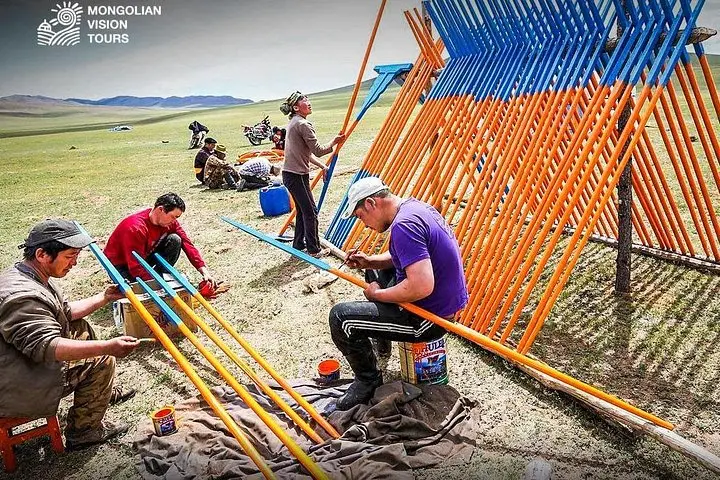
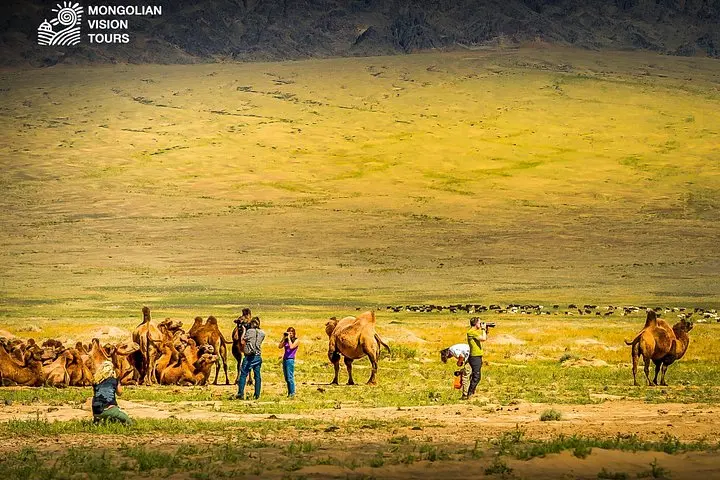
Culturally, expect hospitable ger stays—opportunities to learn milking, horseback basics, and Kazakh-hosted meals. Wildlife is lowland and elusive: gazelle, marmot, steppe birds; be ready for insects in summer and crisp air in shoulder seasons.
Practically: daily drives of up to 3–4 hours link sites; hiking ranges from easy meadow walks to short granite scrambles. Bring layered clothing, sturdy boots, and a daypack for water and snacks. Phone signal is patchy—download maps and carry cash for small local purchases. Plan arrival in Ulaanbaatar the day before, and allow a relaxed extra day if you want longer rides or an overnight with a nomadic family. This trip trades big technical challenge for cultural depth and wide, open landscapes that dare you to slow down and listen.
The statue complex is roughly 50–70 km east of Ulaanbaatar and typically a 1–2 hour drive depending on traffic and road conditions.
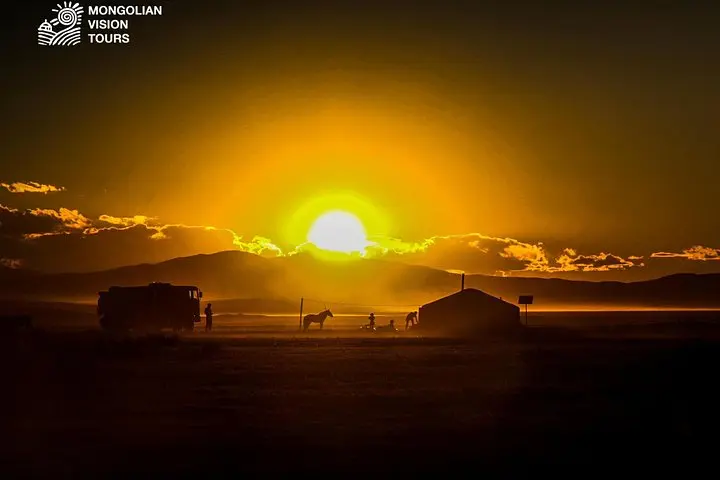
Gers are simple but warm and hospitable; tourist ger camps often provide beds, bedding, and shared facilities, while family stays are more rustic with authentic meals and the chance to participate in daily life.
Yes—physical demands are moderate, but consider the long drives and uneven ground; notify operators of mobility needs and request gentler activities if needed.
Carry Mongolian Tögrög for rural purchases; some hosts accept USD. Mongolian is primary; guides usually speak English, but learning basic Mongolian or Russian phrases is helpful.
Mongolian Vision Tours operates guided outdoor trips and adventures with an emphasis on safety, stewardship, and memorable experiences.
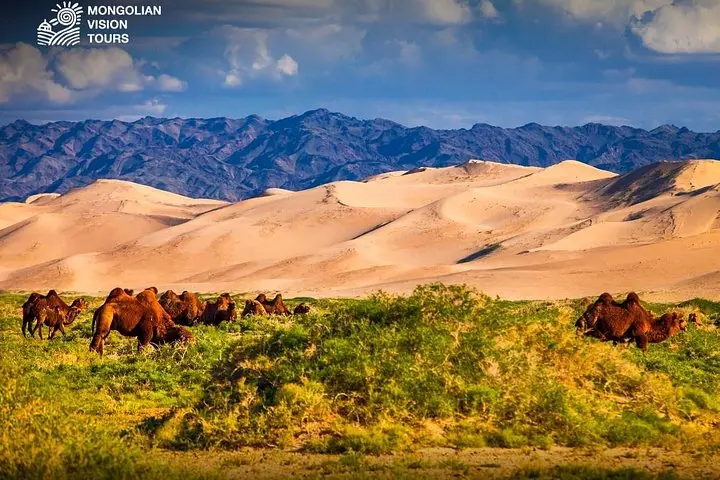
Morning light pulls across the steppe as the van leaves Ulaanbaatar and the city shrinks behind you—pines and larch give way to rounded granite towers and wind-sculpted dunes. On this three-day loop you move between contrasting geologies: the forested ridges of Khugnu Khaan, the river-carved terraces of the Tuul, and the low dunes of Elsen Tasarkhai. The Chinggis Khaan Statue rises on the riverbank, its metal flank catching the sun like a watchful ruler over the plains.
Morning light pulls across the steppe as the van leaves Ulaanbaatar and the city shrinks behind you—pines and larch give way to rounded granite towers and wind-sculpted dunes. On this three-day loop you move between contrasting geologies: the forested ridges of Khugnu Khaan, the river-carved terraces of the Tuul, and the low dunes of Elsen Tasarkhai. The Chinggis Khaan Statue rises on the riverbank, its metal flank catching the sun like a watchful ruler over the plains.
This region carries layered history: nomadic herders have grazed these grasslands for centuries, Buddhist monasteries once clustered here (you'll pass a 300-year-old ruin), and Soviet-era road-building opened access to monuments and camps. Granite outcrops in Terelj are the work of long, slow erosion; the dunes of the Semi Gobi are recent and mobile, painted by wind.
Culturally, expect hospitable ger stays—opportunities to learn milking, horseback basics, and Kazakh-hosted meals. Wildlife is lowland and elusive: gazelle, marmot, steppe birds; be ready for insects in summer and crisp air in shoulder seasons.
Practically: daily drives of up to 3–4 hours link sites; hiking ranges from easy meadow walks to short granite scrambles. Bring layered clothing, sturdy boots, and a daypack for water and snacks. Phone signal is patchy—download maps and carry cash for small local purchases. Plan arrival in Ulaanbaatar the day before, and allow a relaxed extra day if you want longer rides or an overnight with a nomadic family. This trip trades big technical challenge for cultural depth and wide, open landscapes that dare you to slow down and listen.