THE ADVENTURE COLLECTIVE® · Independent discovery and booking for outdoor travel

A compact multi-day route that pairs two classic northern circuit parks with a summit-side day hike on Kilimanjaro’s Marangu route. Expect close wildlife encounters, crater descents and a taste of mountain forest on a manageable, small-group itinerary.
A compact multi-day route that pairs two classic northern circuit parks with a summit-side day hike on Kilimanjaro’s Marangu route. Expect close wildlife encounters, crater descents and a taste of mountain forest on a manageable, small-group itinerary.
Dawn spreads pale gold across a wide, wind-scoured plain as your safari jeep eases into the Seronera area; giraffes silhouette themselves against the horizon while the guide scans for tracks. Over the next days the land changes from the endless grass of the Serengeti—home to more than a million wildebeest and roughly 250,000 zebras during migration—to the bowl of the Ngorongoro Crater, where you literally step down 600 meters into a dense micro-ecosystem ringed by steep walls.
Verified experiences and guided adventures in the surrounding area.
Operated by Telly Africa Safaris · Arusha, Arusha Region
Dawn spreads pale gold across a wide, wind-scoured plain as your safari jeep eases into the Seronera area; giraffes silhouette themselves against the horizon while the guide scans for tracks. Over the next days the land changes from the endless grass of the Serengeti—home to more than a million wildebeest and roughly 250,000 zebras during migration—to the bowl of the Ngorongoro Crater, where you literally step down 600 meters into a dense micro-ecosystem ringed by steep walls.
The route pairs natural history with culture: Maasai villages rim the highlands, their pasture traditions shaped by volcanic soils and seasonal rains. Geologically the Ngorongoro is a collapsed caldera, its rim preserving wetlands like Lake Magadi and attracting flocks of flamingos. Nights are spent under canvas at designated campsites with a guide and chef handling logistics; park fees and drinking water are included.
On day four the tone shifts to mountain air — Marangu Gate (approx. 1,860 m) is the trailhead for a day hike to Mandara Hut. The forest here holds colobus and blue monkeys; the trail gains roughly 800–1,000 meters before returning to the gate in the afternoon.
Practical notes: expect early starts, bumpy roads, and full-day game drives. Bring layered clothing for temperature swings, sun protection, a refillable water bottle, and a compact daypack for the Kilimanjaro hike. Small-group logistics (maximum six clients) make wildlife viewing flexible but carry motion-sickness remedies if you’re sensitive to long drives.
Yes—national park fees and taxes for Serengeti and Ngorongoro are included in the tour price.
The Mandara Hut hike from Marangu Gate is a steep, full-day outing with roughly 800–1,000 m of elevation gain; it requires moderate fitness but no technical climbing skills.
Camping at designated campsites (Seronera, Simba) with provided camping equipment and one 3-star hotel night in Arusha; the operator supplies a guide and chef.
The hike reaches Mandara Hut (~2,700 m) from Marangu Gate (~1,860 m); for most people this short exposure is manageable, but monitor symptoms and inform your guide if you feel unwell.
Telly Africa Safaris operates guided outdoor trips and adventures with an emphasis on safety, stewardship, and memorable experiences.
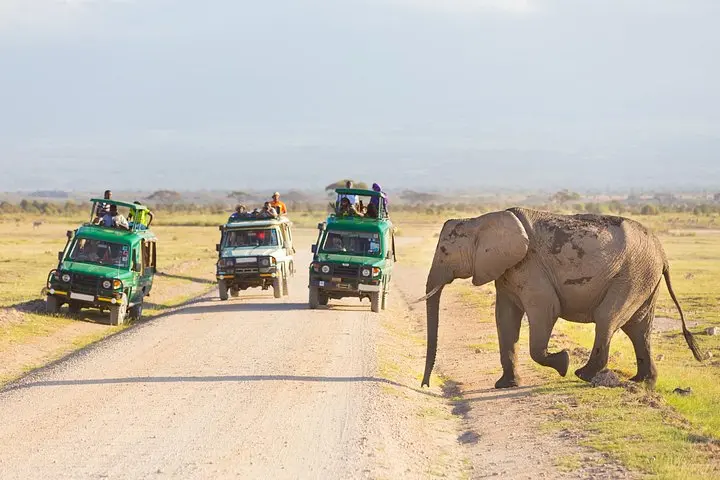
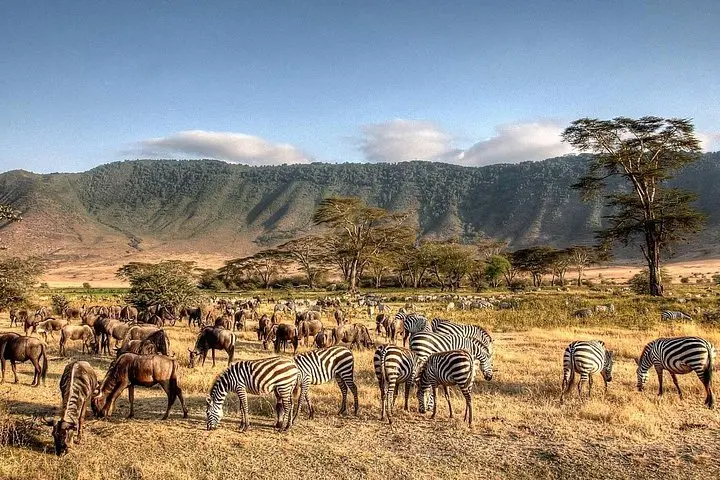
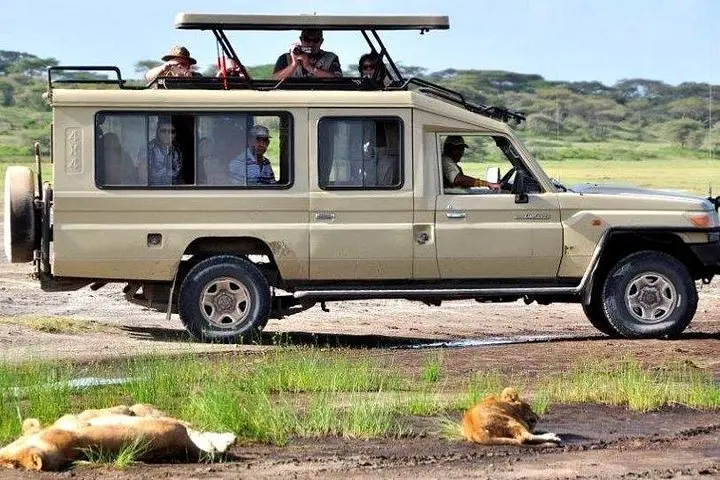
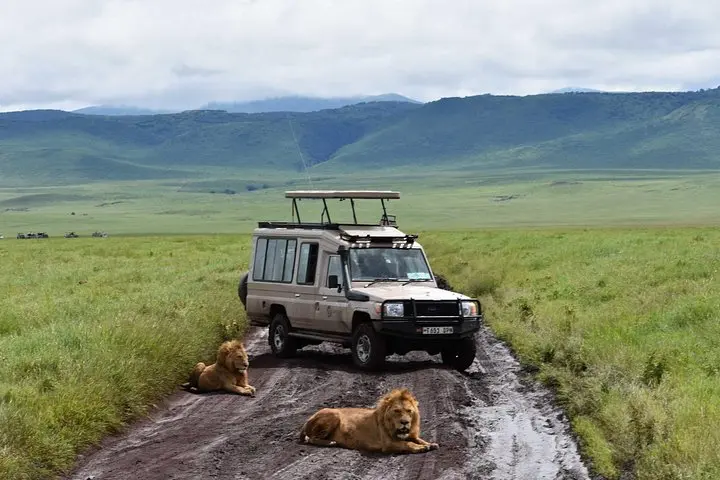
Dawn spreads pale gold across a wide, wind-scoured plain as your safari jeep eases into the Seronera area; giraffes silhouette themselves against the horizon while the guide scans for tracks. Over the next days the land changes from the endless grass of the Serengeti—home to more than a million wildebeest and roughly 250,000 zebras during migration—to the bowl of the Ngorongoro Crater, where you literally step down 600 meters into a dense micro-ecosystem ringed by steep walls.
Dawn spreads pale gold across a wide, wind-scoured plain as your safari jeep eases into the Seronera area; giraffes silhouette themselves against the horizon while the guide scans for tracks. Over the next days the land changes from the endless grass of the Serengeti—home to more than a million wildebeest and roughly 250,000 zebras during migration—to the bowl of the Ngorongoro Crater, where you literally step down 600 meters into a dense micro-ecosystem ringed by steep walls.
The route pairs natural history with culture: Maasai villages rim the highlands, their pasture traditions shaped by volcanic soils and seasonal rains. Geologically the Ngorongoro is a collapsed caldera, its rim preserving wetlands like Lake Magadi and attracting flocks of flamingos. Nights are spent under canvas at designated campsites with a guide and chef handling logistics; park fees and drinking water are included.
On day four the tone shifts to mountain air — Marangu Gate (approx. 1,860 m) is the trailhead for a day hike to Mandara Hut. The forest here holds colobus and blue monkeys; the trail gains roughly 800–1,000 meters before returning to the gate in the afternoon.
Practical notes: expect early starts, bumpy roads, and full-day game drives. Bring layered clothing for temperature swings, sun protection, a refillable water bottle, and a compact daypack for the Kilimanjaro hike. Small-group logistics (maximum six clients) make wildlife viewing flexible but carry motion-sickness remedies if you’re sensitive to long drives.