THE ADVENTURE COLLECTIVE® · Independent discovery and booking for outdoor travel

Cross the High Atlas, sleep under Sahara stars, and ride camels across Erg Chebbi on a compact 3‑day shared tour from Marrakech. Expect canyon viewpoints, a night in a luxury Berber camp, and easy‑paced desert crossings.
Cross the High Atlas, sleep under Sahara stars, and ride camels across Erg Chebbi on a compact 3‑day shared tour from Marrakech. Expect canyon viewpoints, a night in a luxury Berber camp, and easy‑paced desert crossings.
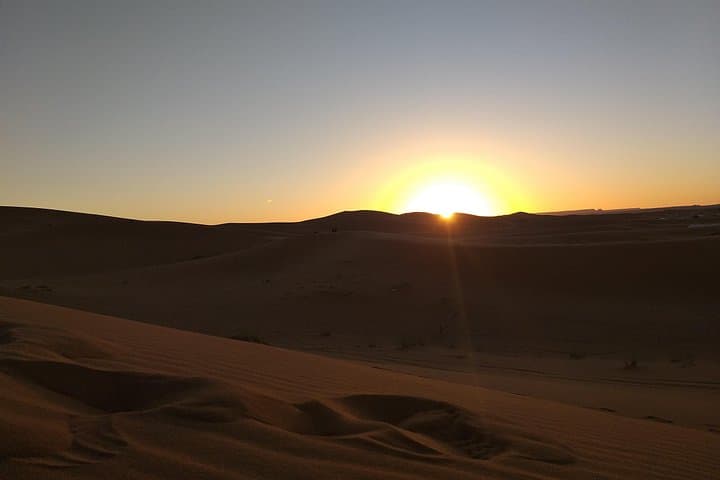
A low sun bleaches the High Atlas ridgeline as your air‑conditioned minivan slips through the Tizi n’Tichka pass, and the city noise thins to wind and rock. By late afternoon the road unfurls into red gorges and then into the wide sweep of Erg Chebbi: towering dunes that shift like a living sea.
Verified experiences and guided adventures in the surrounding area.
Operated by Marrakech Desert Line · Merzouga, Drâa-Tafilalet
A low sun bleaches the High Atlas ridgeline as your air‑conditioned minivan slips through the Tizi n’Tichka pass, and the city noise thins to wind and rock. By late afternoon the road unfurls into red gorges and then into the wide sweep of Erg Chebbi: towering dunes that shift like a living sea.
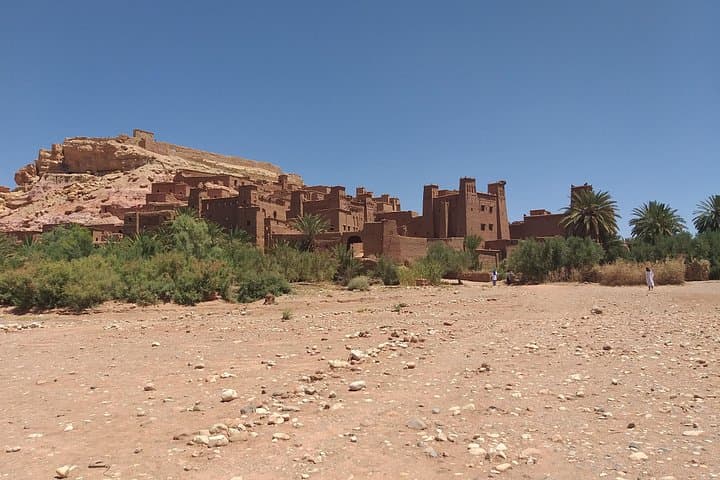
This three‑day circuit links Marrakech’s historic medina with Morocco’s eastern Sahara, threading Ait Ben Haddou’s mudbrick kasbahs, the sculpted walls of Todra and Dades Gorges, and the fossil workshops of Erfoud before arriving at Merzouga. Geologically, the Erg Chebbi dunes are recent wind‑built forms on older fluvial and lacustrine deposits — sand that keeps moving, rearranged daily by wind and temperature.
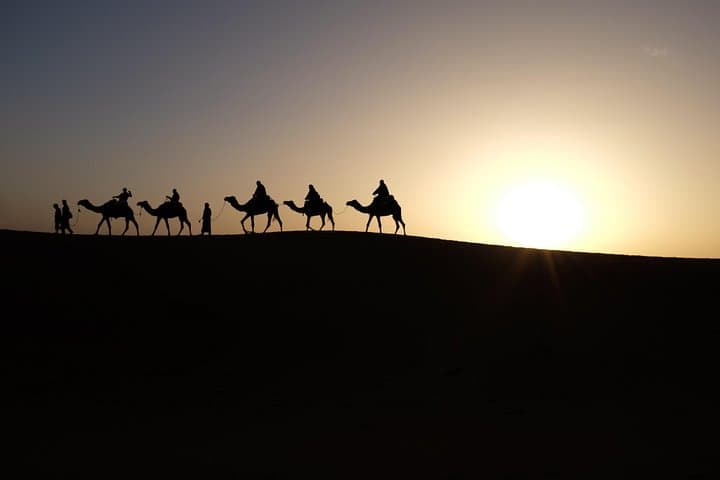
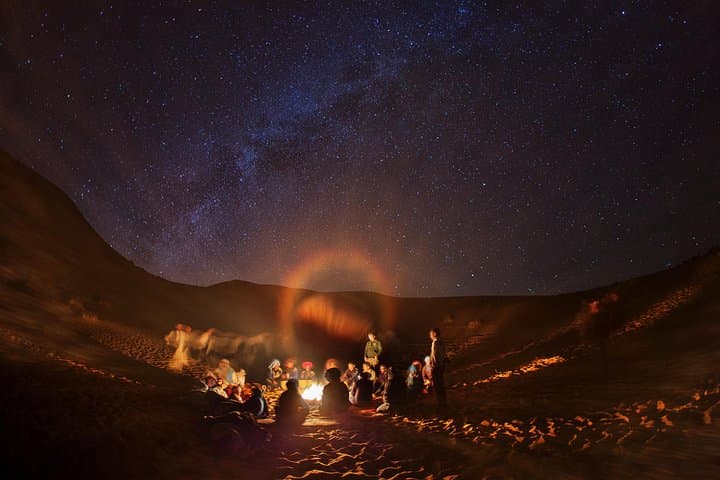
Culturally the route highlights Berber hospitality: family‑run riads, shared tagines, and an evening of Gnawa rhythms in Khamlia village. In the desert, camps blend traditional tents with comfortable bedding and communal dinners under the sky; camel caravans remain the simplest way to cross soft, steep dunes.
Practical notes: pack sun protection and layers — desert days are hot, nights can be cold. Camel treks are low‑impact but expect uneven footing and 1–2 hours riding during the main dune crossing. Bring a small daypack, refillable water, and a headlamp for camp. If you’re sensitive to dust, a neck gaiter helps.
This shared tour suits travelers who want an accessible but authentic Sahara experience — photography, short hikes at gorge walls, and a chance to sleep under stars without backpacking logistics.
The camel trek is low‑intensity; rides last up to 1–2 hours with slow paces across dunes. Follow the guide and expect sudden rocking when camels sit or stand.
Two breakfasts and two dinners are included, with one night in a hotel/riad and one night in a luxury Berber camp equipped with beds and communal facilities.
Expect roughly 8–10 hours of driving spread over two days with stops at Tizi n’Tichka, Ait Ben Haddou, Dades and Todra Gorges; the tour schedules rest and photo stops.
Fall and spring offer the most comfortable temperatures; early mornings in winter are cold while summer afternoons can be very hot.
Marrakech Desert Line operates guided outdoor trips and adventures with an emphasis on safety, stewardship, and memorable experiences.
A low sun bleaches the High Atlas ridgeline as your air‑conditioned minivan slips through the Tizi n’Tichka pass, and the city noise thins to wind and rock. By late afternoon the road unfurls into red gorges and then into the wide sweep of Erg Chebbi: towering dunes that shift like a living sea.
A low sun bleaches the High Atlas ridgeline as your air‑conditioned minivan slips through the Tizi n’Tichka pass, and the city noise thins to wind and rock. By late afternoon the road unfurls into red gorges and then into the wide sweep of Erg Chebbi: towering dunes that shift like a living sea.
This three‑day circuit links Marrakech’s historic medina with Morocco’s eastern Sahara, threading Ait Ben Haddou’s mudbrick kasbahs, the sculpted walls of Todra and Dades Gorges, and the fossil workshops of Erfoud before arriving at Merzouga. Geologically, the Erg Chebbi dunes are recent wind‑built forms on older fluvial and lacustrine deposits — sand that keeps moving, rearranged daily by wind and temperature.
Culturally the route highlights Berber hospitality: family‑run riads, shared tagines, and an evening of Gnawa rhythms in Khamlia village. In the desert, camps blend traditional tents with comfortable bedding and communal dinners under the sky; camel caravans remain the simplest way to cross soft, steep dunes.
Practical notes: pack sun protection and layers — desert days are hot, nights can be cold. Camel treks are low‑impact but expect uneven footing and 1–2 hours riding during the main dune crossing. Bring a small daypack, refillable water, and a headlamp for camp. If you’re sensitive to dust, a neck gaiter helps.
This shared tour suits travelers who want an accessible but authentic Sahara experience — photography, short hikes at gorge walls, and a chance to sleep under stars without backpacking logistics.